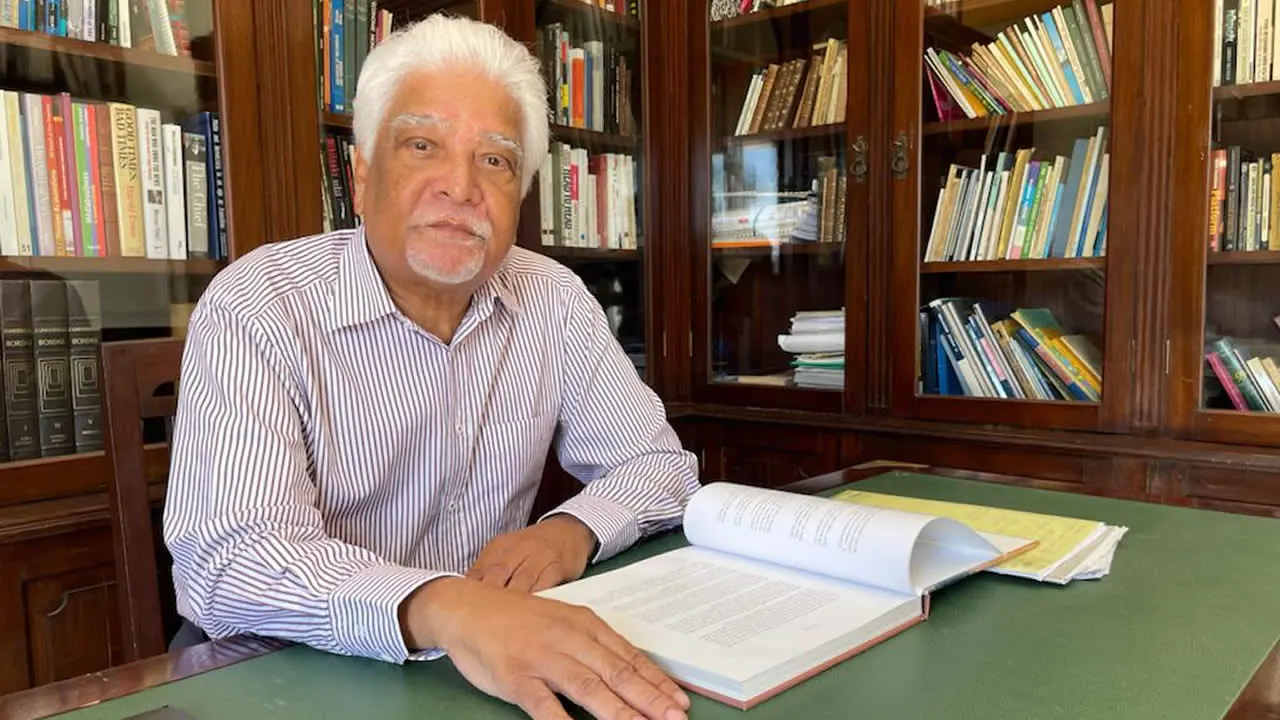
Mauritius is experiencing a surge in tensions as citizens express frustration over various issues, including pension reforms, cost of living, and unfulfilled promises. According to Jean-Claude de L'Estrac, these tensions are a manifestation of accumulated frustrations and a deep-seated social malaise. He emphasizes that it is essential to distinguish between legitimate manifestations and acts of vandalism, which only exacerbate the problems.
De L'Estrac notes that several subjects of discontent and frustration have been building up over months, with the water crisis crystallizing these pent-up angers. He believes that manifestations aimed at drawing the authorities' attention to these problems are legitimate. However, he draws a clear line between manifestations or even riots and acts of vandalism that target public and private property.
The situation is further complicated by the perception that some riots may be organized, with a modus operandi reminiscent of mafiosi who control several regions. De L'Estrac stresses that when governing, everything is a priority, and it is the government's responsibility to address these diverse problems. He acknowledges that some issues are more pressing than others but emphasizes that the government must tackle all of them.
De L'Estrac highlights the complexity of the pension issue, which is a significant source of discontent. He notes that while a pension reform is necessary, it was imposed in poor conditions and poorly managed in terms of communication, ultimately deteriorating the social climate. He also draws parallels with the 1999 Kaya riots, which were sparked by a similar combination of social and communal tensions.
Reflecting on the 1999 Kaya riots, de L'Estrac identifies commonalities with the current situation, including issues of ghettoization, marginalization, and ethnic prejudice. He emphasizes that these underlying problems remain relevant today and must be addressed. To avoid further escalation, de L'Estrac advocates for listening to legitimate demands, responding concretely, and distinguishing between legitimate manifestations and acts of vandalism.
De L'Estrac proposes that the authorities take immediate, medium-term, and long-term measures to alleviate tensions. He suggests that the government consider providing direct financial assistance to those in need, rather than relying on subsidies that can distort prices. He also stresses the importance of responsible communication from authorities, who must be seen to be taking concrete actions to address the population's concerns.
Ultimately, de L'Estrac emphasizes that preserving social cohesion requires acknowledging that divisions within society create tensions. He warns that the authorities must not neglect the fundamental issues that threaten social cohesion, including the perceived disconnect between the population and the police force. By addressing these underlying concerns, the government can work towards restoring trust and stability in Mauritius.
Key points
- The Mauritian government faces growing tensions as citizens express frustration over various issues, including pension reforms, cost of living, and unfulfilled promises.
- Distinguishing between legitimate manifestations and acts of vandalism is crucial to addressing the situation effectively.
- The authorities must take concrete actions to address the population's concerns and restore trust.