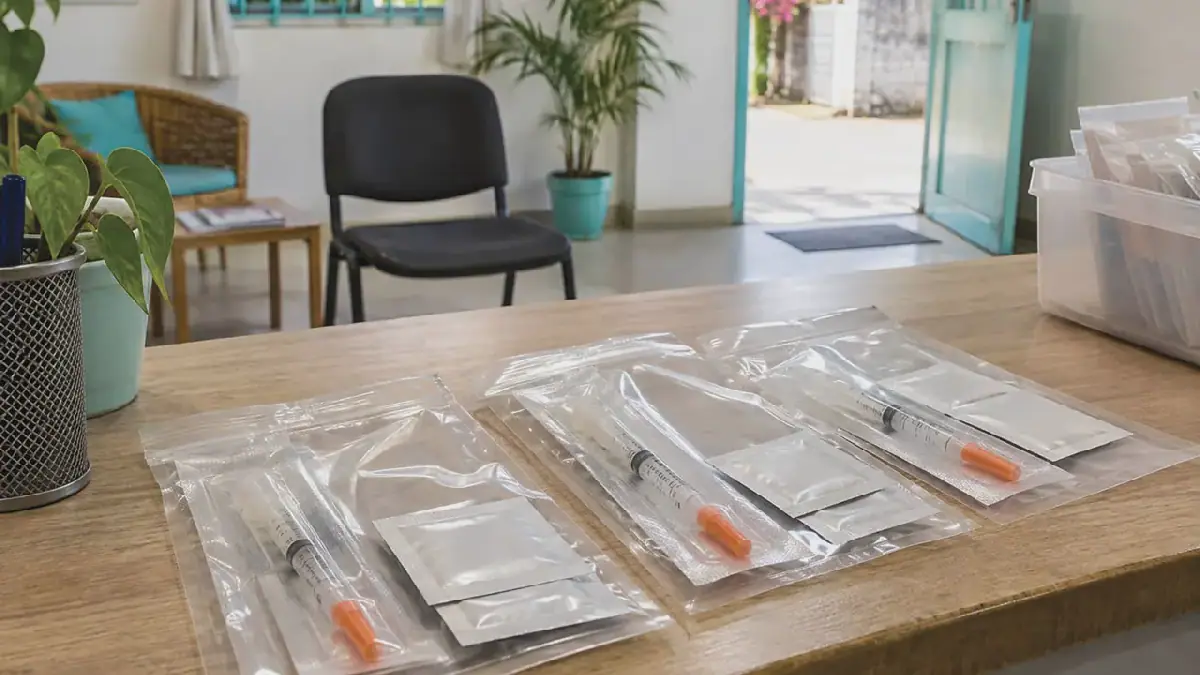
Non-governmental organizations (NGOs) in Mauritius are sounding the alarm on a gradual decline in users accessing harm reduction services. At certain sites operated by Collectif Urgence Toxida (CUT), users are less present, failing to collect their syringes, avoiding screenings, and showing reluctance to seek services. CUT director Jamie Cartick attributes this distancing to police arrests near some NGO sites, which has led to a decrease in users accessing vital services.
The consequences of this decline are immediate and far-reaching. Without access to clean syringes, users are more exposed to sharing equipment, which increases the risk of disease transmission. By avoiding screenings, users also miss out on opportunities for follow-up and prevention. Furthermore, when users distance themselves from NGOs, the possibilities of referring them to rehabilitation centers decrease. Cartick emphasizes the central challenge of maintaining a connection with individuals that these services aim to protect.
The loss of contact with users is not limited to syringe exchange sites. Ashvin Gungaram, director of A.I.L.E.S., reports interruptions in follow-up services for beneficiaries, particularly those engaged in methadone programs. Some users may stop attending services due to relocation or other circumstances, but organizations sometimes lose track of them. This disruption occurs as teams face the challenge of dealing with substances whose effects and consequences seem increasingly difficult to manage.
Gungaram notes that the quality of substances available on the market has deteriorated, and his organization has been warning about this trend for some time. Certain substances render users more dependent, and the effects on behavior and mental health are a growing concern. The therapeutic management of users is also a challenge, particularly with the emergence of new synthetic substances. Gungaram stresses that while programs exist for individuals dependent on opioids, cocaine, or cannabis, treatments adapted to new synthetic products remain difficult to define.
Ragini Rungen, from Lakaz A, highlights another aspect of this reality: the constraints faced by teams when accompanying individuals whose behavior may change under the influence of substances. She observes unpredictable reactions from some users, which poses a risk to staff safety. The distribution of meals has been adapted to mitigate these risks, with meals now served in the courtyard rather than inside the house. Rungen also expresses concern about the availability of drugs, particularly among young people.
Rungen calls for greater resources for rehabilitation structures, enabling them to accommodate and support more beneficiaries. She also advocates for the availability of naloxone in health centers and community organizations to allow for rapid intervention in case of overdose. Furthermore, she emphasizes the need for social workers to be trained in emergency procedures and for rapid information dissemination when new substances emerge on the market.
In response to these challenges, CUT is taking steps to address the needs of users. The organization regularly sensitizes consumers to overdose risks, particularly those who smoke synthetic drugs or consume multiple substances. Discussions have also taken place with the National Agency for Drug Control (NADC) to organize training sessions on emergency procedures for field workers and NGOs. These sessions are expected to take place soon.
Key points
- NGOs in Mauritius report a decline in users accessing harm reduction services due to fear of police arrests and changing substance landscape.
- The decline in users accessing services increases the risk of disease transmission, overdose, and hampers rehabilitation efforts.
- Organizations are calling for greater resources, including training for social workers, availability of naloxone, and improved information dissemination to address the evolving substance landscape.
Reporting sources
- Drogues : Quand les usagers désertent les dispositifs d’aide · Le Défi Plus