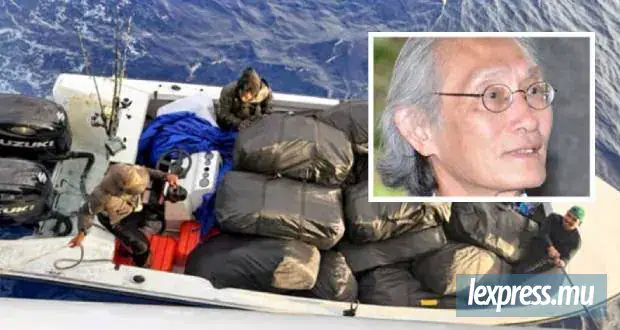
The alleged smuggling of 1.5 tons of cannabis and hashish into Mauritius has brought attention to the country's struggle to control its maritime borders. This issue was previously highlighted in 2018 by the Lam Shang Leen commission, which identified vulnerabilities in the country's coastal surveillance. The commission's report emphasized the need for better monitoring of small boats, improved coordination between agencies, and enhanced technology to track suspicious vessels.
The Lam Shang Leen commission's findings revealed that certain areas, such as ports and coastal zones, lacked adequate monitoring. The report also noted that some units responsible for protecting the territory did not have effective systems to track vessel movements. These weaknesses create opportunities for criminal networks to transfer drugs without immediately attracting the attention of authorities. The commission recommended stricter regulations for boat owners, improved monitoring of vessel movements, and increased penalties for non-compliance.
In response to these concerns, the Mauritius Police Force has announced plans to enhance its capabilities. The police are investing in new equipment, strengthening regional cooperation, and providing additional training to officers. The police are working closely with international partners, including those in the Indian Ocean region, to share intelligence and best practices. This cooperation includes participation in the Indian Ocean Commission and collaboration with the Regional Maritime Information Fusion Centre in Madagascar.
The Police Press Office has emphasized the importance of regional cooperation in combating drug trafficking. Mauritius participates in various regional mechanisms, including the Regional Coordination Operations Centre in the Seychelles and the Information Fusion Centre – Indian Ocean Region. The country also maintains a collaborative relationship with La Réunion within the framework of the Mauritius-Réunion Security Contact Group. These partnerships aim to enhance the sharing of information and coordination of efforts to combat maritime crime.
Despite these efforts, concerns remain about the effectiveness of Mauritius' maritime surveillance. The country's vast Exclusive Economic Zone (EEZ) of 2.3 million km² poses significant challenges for monitoring. While new infrastructure and technology are being introduced, it remains to be seen whether these measures will adequately address the vulnerabilities identified by the Lam Shang Leen commission. The government faces the challenge of balancing the need for security with the limitations of resources and technology.
The Mauritian government has announced plans to strengthen its maritime security capabilities as part of its 2025-2029 program. The creation of the National Maritime Information Sharing and Coordination Centre, scheduled for 2027, aims to centralize intelligence and improve coordination between agencies. This development is expected to enhance the country's ability to respond to maritime threats, including drug trafficking and other transnational crimes.
The effectiveness of Mauritius' maritime surveillance will be closely watched in the coming months. The country's ability to intercept and disrupt drug trafficking operations will depend on its capacity to coordinate efforts, share intelligence, and deploy resources effectively. The government faces a significant challenge in ensuring that its maritime borders are secure and that the country's territory is not used as a transit point for illicit goods.
Key points
- The Lam Shang Leen commission's 2018 report highlighted vulnerabilities in Mauritius' maritime surveillance, including inadequate monitoring of small boats and poor coordination between agencies.
- The Mauritius Police Force is investing in new equipment, training, and regional cooperation to enhance its maritime surveillance capabilities.
- The creation of the National Maritime Information Sharing and Coordination Centre in 2027 aims to centralize intelligence and improve coordination between agencies to combat maritime threats.