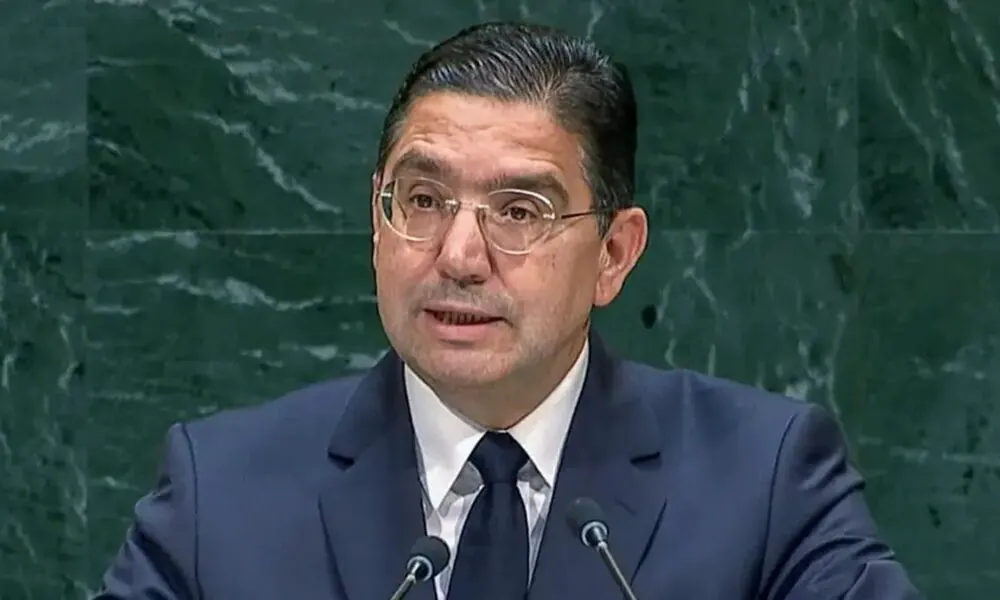
The Republic of Mauritius has reevaluated its stance on the Western Sahara issue, with its Foreign Minister, Dhananjay Ramful, expressing support for Morocco's autonomy plan under Moroccan sovereignty. This shift in position was announced during a meeting with Moroccan Foreign Minister Nasser Bourita at the 81st session of the United Nations General Assembly in New York. Ramful described the autonomy plan as the "most realistic, just, and durable" solution to the dispute.
According to Ramful, the Mauritian government's decision to revise its position on Western Sahara was made during a recent Council of Ministers meeting, following the adoption of UN Security Council Resolution 2797. The resolution is seen as a pragmatic approach to resolving the dispute, and Mauritius now recognizes that autonomy under Moroccan sovereignty offers a viable solution. This development aligns with the vision of Moroccan King Mohammed VI, who has promoted autonomy under Moroccan sovereignty as the sole solution to the regional dispute.
The change in Mauritius' position on Western Sahara reflects a significant shift in the international landscape, with more countries acknowledging Morocco's sovereignty over the disputed territory. The autonomy plan, which was initially proposed by Morocco in 2007, has gained traction in recent years, with several countries expressing support for the initiative. The plan aims to grant the Western Sahara region a degree of autonomy while maintaining Moroccan sovereignty.
Ramful's meeting with Bourita in New York provided an opportunity for the two ministers to discuss bilateral relations and regional issues. The Mauritian Foreign Minister praised the strong ties between Mauritius and Morocco, which have been strengthened in recent years through cooperation in various fields. The two ministers also discussed ways to enhance economic and cultural exchanges between their countries.
The international community has been engaged in efforts to resolve the Western Sahara dispute for decades, with the UN playing a key role in mediating negotiations between Morocco and the Polisario Front. The dispute has led to a longstanding humanitarian crisis, with thousands of refugees displaced and a significant impact on regional stability. A peaceful resolution to the conflict is seen as essential to promoting stability and prosperity in the region.
The shift in Mauritius' position on Western Sahara is seen as a positive development in the region, with potential implications for the international community's approach to resolving the dispute. The Mauritian government's decision to support Morocco's autonomy plan may encourage other countries to reevaluate their positions on the issue. The UN Security Council's adoption of Resolution 2797 has provided a framework for resolving the dispute, and Mauritius' support for the autonomy plan is seen as a step in the right direction.
The Western Sahara dispute remains a complex and contentious issue, with multiple stakeholders and competing interests. However, the shift in Mauritius' position and the international community's continued efforts to resolve the conflict offer hope for a peaceful and sustainable solution. The autonomy plan, which has gained support from several countries, may provide a viable path forward for resolving the dispute and promoting regional stability.
Key points
- Mauritius has revised its position on Western Sahara, supporting Morocco's autonomy plan as the "most credible" solution to the regional dispute.