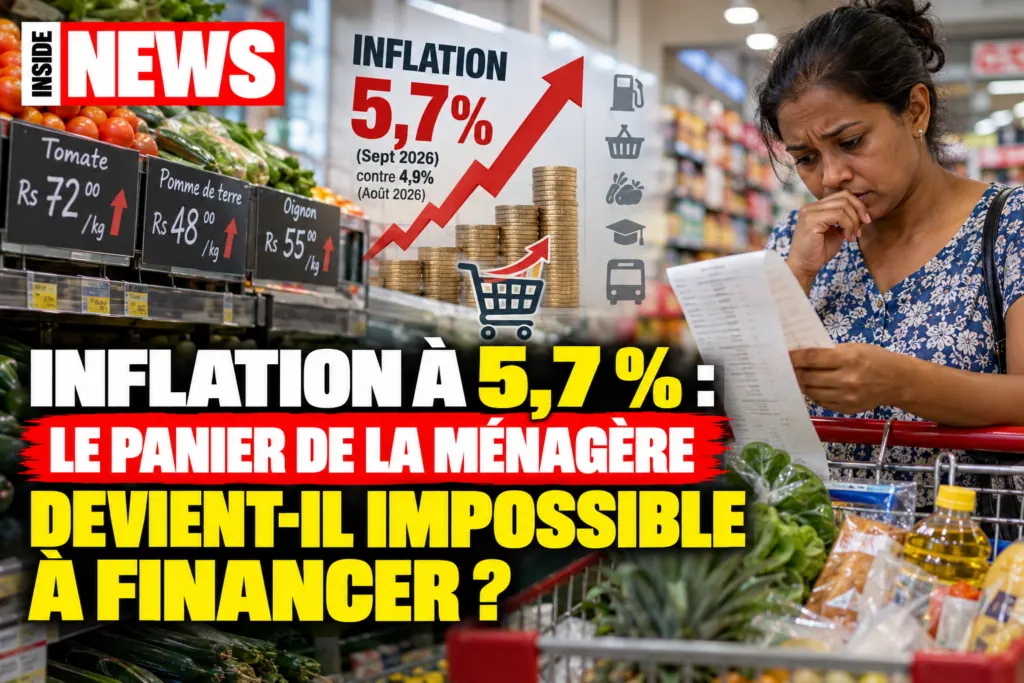
The inflation rate in Mauritius has increased to 5.7% in September 2026, up from 4.9% in August, according to recent data. This surge is largely attributed to the rising costs of essential items such as fuel, food products, vegetables, and university fees. As a result, many Mauritian families are finding it increasingly difficult to manage their household expenses. The continuous increase in prices is putting a significant strain on household budgets, particularly for low-income families.
The impact of rising fuel prices is being felt across various sectors of the economy. The increase in fuel costs is not only affecting households at the pump but also has a ripple effect on transportation, delivery services, agricultural production, and supermarket prices. As transportation costs rise, it has a domino effect on the overall economy, making it challenging for businesses to maintain stable prices. This, in turn, affects the cost of living for households.
Food products, especially vegetables, have also become significant contributors to the financial burden on households. For families with modest incomes, every price increase has an immediate and noticeable impact on their budget. The rising cost of living is forcing many households to re-evaluate their spending habits, with some families having to cut back on essential items or forego certain products altogether.
University fees add another layer of financial pressure on parents who are funding their children's education. In many households, a substantial portion of the income is already allocated towards education, transportation, housing, and food. As expenses continue to rise, it is becoming increasingly challenging for families to make ends meet. The question now is whether salaries and benefits are keeping pace with the rising cost of living.
The situation highlights a concerning trend where economic growth indicators may look positive, but a segment of the population is gradually becoming impoverished. The real test lies in determining whether Mauritian families can maintain a dignified standard of living with their current incomes. As inflation continues to rise, it is essential to assess whether wages and support systems are adequately adjusting to reflect the changing economic reality.
The Mauritian economy is facing a critical challenge in balancing growth with equitable distribution of wealth. While economic indicators may suggest overall growth, the reality for many households is one of financial strain and uncertainty. To address this issue, it is crucial to consider the impact of inflation on vulnerable populations and explore measures to support those who are most affected.
As the situation continues to unfold, it is essential for policymakers and stakeholders to engage in meaningful discussions about the long-term implications of rising inflation on household budgets and the overall economy. By understanding the complexities of the issue and working collaboratively, it may be possible to find solutions that mitigate the effects of inflation and support the well-being of Mauritian families.
Key points
- Mauritius' inflation rate has increased to 5.7% in September 2026.
- Rising fuel, food, and education costs are straining household budgets.
- The situation highlights concerns about equitable economic growth and the impact on vulnerable populations.