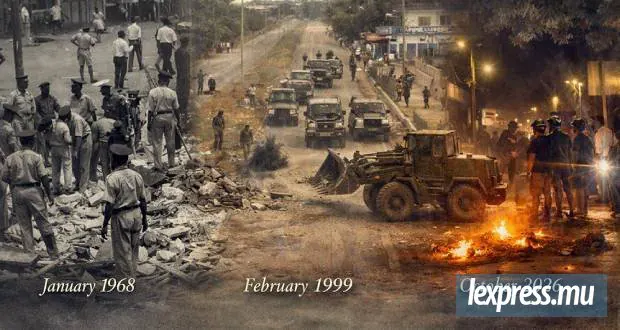
Mauritius has experienced three major episodes of civil unrest over the past six decades, each exposing deep social fractures and testing the nation's resilience. The first erupted in January 1968, just weeks before independence, with communal tensions between Creole and Indo-Mauritian Muslim communities escalating into open street violence in Port-Louis. Dozens were killed, hundreds injured, and mixed neighbourhoods such as Plaine-Verte and Cité-Martial were permanently reshaped.
A ten-day state of emergency was declared, and order was restored only after British troops from the King's Shropshire Light Infantry were flown in from Singapore. The riots cast a long shadow over the young nation's birth on 12 March 1968, underscoring the fragility of communal coexistence. According to witnesses, the 1968 unrest left a lasting impact on the nation, with many Creoles leaving the island due to feelings of insecurity and hopelessness.
The second major rupture came in February 1999, following the death of musician and activist Kaya in police custody. Kaya was arrested after performing at a concert advocating cannabis decriminalisation, and his death – officially attributed to self-inflicted injuries but contradicted by an independent autopsy showing severe blunt force trauma – triggered widespread grief and anger, particularly within the Creole community. Days of violent clashes, burning barricades, and paralysed commercial centres followed, disrupting schools and daily life.
The unrest exposed longstanding institutional failures and systemic marginalisation. Subsequent inquiries, including the Lam Shang Leen Commission, attempted to address these grievances, while Kaya's legacy endured as a symbol of cultural dignity and resistance. The incident highlighted the need for police accountability, transparency, and reform, issues that would resurface in future episodes of unrest.
The most recent crisis unfolded after the shooting of 27-year-old Élodie Thomas in CampLevieux on 9 October 2026. Occurring amid severe water shortages, inflation, rising energy prices, and growing distrust toward authorities, the incident sparked nationwide protests and a temporary curfew. Schools again closed as tensions rose, and the shooting intensified demands for police accountability, transparency, and reform.
Seven witnesses, including a 81-year-old Australian immigrant, an 80-year-old man who grew up in police quarters, and a 65-year-old media observer, recall what those days left behind. They shared their experiences of the 1968, 1999, and 2026 riots, highlighting the ongoing struggles with communal tensions, police brutality, and social inequality. Their testimonies underscore the need for Mauritius to address its deep-seated issues and work towards a more equitable and just society.
The witnesses' accounts also highlight the human cost of the unrest, with many families affected by the violence and displacement. As Mauritius looks to the future, the testimonies serve as a reminder of the importance of learning from the past and working towards a more peaceful and prosperous future. The country's leaders face a significant challenge in addressing the systemic issues that have contributed to the unrest.
Key points
- Three major episodes of civil unrest have tested Mauritius' resilience over the past six decades.
- The unrest has highlighted deep social fractures, including communal tensions and police brutality.
- Witnesses' testimonies underscore the need for Mauritius to address its deep-seated issues and work towards a more equitable and just society.