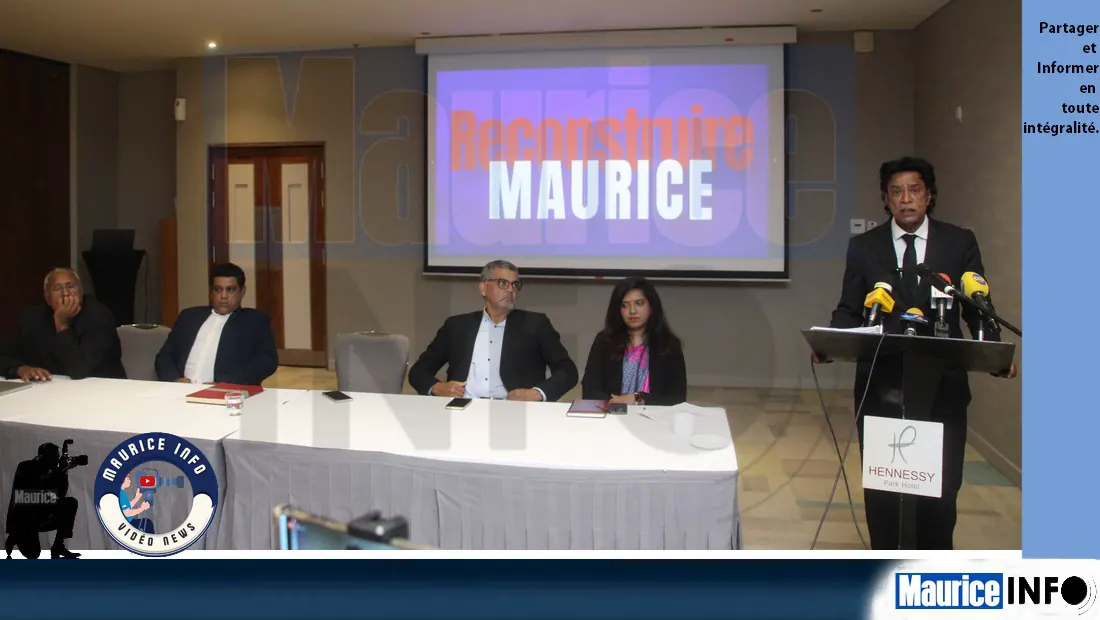
On September 22, 2026, the Rassemblement Mauricien (RM) party held a press conference to express concerns over the National Crime Agency (NCA) Interim Bill. Party representatives Nando Bodha and Me Kailash Trilochun argued that the bill poses a threat to the rule of law in Mauritius. The proposed legislation would establish a new agency with a budget of 200 million rupees to tackle serious crime.
A major point of contention is the mechanism for appointing the future Director General of the NCA. Under the interim bill, the Prime Minister would have the exclusive power to designate the head of the agency, bypassing the advisory bodies provided for in the main legislation. Nando Bodha warned that this concentration of power could lead to the creation of a hyper-powerful institution that could be manipulated for political purposes rather than serving the fight against major crime.
Me Kailash Trilochun, a lawyer, raised concerns about the constitutionality of certain provisions in the bill. He argued that the text would allow the new agency to encroach on the traditional prerogatives of the Police Commissioner, as enshrined in Article 71 of the Constitution. Additionally, the bill would permit intrusive surveillance, including wiretapping and data interception, without adequate judicial oversight.
The RM party also objects to the bill's provisions on civil asset forfeiture, which would allow for the seizure of assets before a criminal conviction is obtained. Me Trilochun believes this undermines the principle of the presumption of innocence. In light of these concerns, the Rassemblement Mauricien has called for the outright withdrawal of the National Crime Agency Interim Bill.
Instead, the party advocates for a national consultation involving civil society, the legal community, and the entire political class. This would aim to establish an effective framework for combating corruption and drug trafficking while preserving the rule of law and the Constitution. Nando Bodha and Me Trilochun emphasized the need for a strong, coherent, and reform-oriented government.
The Rassemblement Mauricien's priorities include addressing the cost of living, promoting economic growth, and restoring institutional independence. The party seeks to position citizens at the heart of economic priorities and to build a more ethical and principled opposition. This approach is seen as essential for regaining public trust and implementing structural reforms.
The debate over the National Crime Agency bill reflects broader concerns about governance and the balance of power in Mauritius. The Rassemblement Mauricien's stance highlights the need for careful consideration of the bill's implications for the country's institutions and citizens. The party's proposals for a national consultation and a more inclusive approach to governance are likely to be closely watched in the coming weeks.
Key points
- The Rassemblement Mauricien party calls for the withdrawal of the National Crime Agency Interim Bill due to concerns over its constitutionality and potential for political manipulation.
- The party advocates for a national consultation to establish an effective framework for combating corruption and drug trafficking while preserving the rule of law.
- The Rassemblement Mauricien prioritizes addressing the cost of living, promoting economic growth, and restoring institutional independence.