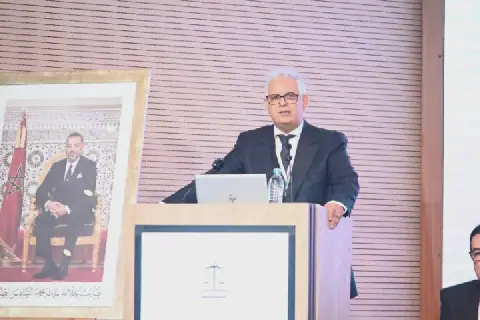
The Mauritian government has proposed the establishment of a National Crime Agency (NCA) to replace the Financial Crimes Commission (FCC) and enhance the country's fight against organized crime, money laundering, cybercrime, and financial networks. The NCA's mandate includes intercepting communications, collecting data, recovering assets, and taking over certain police investigations. Nine bills and a constitutional amendment are currently under review to outline the agency's framework. Attorney General Gavin Glover has sought to alleviate concerns, stating that the NCA will not diminish the powers or investigative capabilities of the Police Commissioner.
The proposed NCA has sparked debate among stakeholders, with some experts expressing concerns about the concentration of significant investigative, surveillance, and asset recovery powers in one institution. Dave Kissoondoyal, a politician and technology expert, has circulated a document outlining his proposals for the agency, emphasizing the need for a clear separation of functions and independent oversight. Aurélien Oudin, director of FindLaw Consultants, also contributed to the discussion, highlighting the importance of checks and balances to prevent potential abuses of power.
According to Dave Kissoondoyal, the issue lies not with the NCA's extensive powers, but with the potential lack of adequate separation between investigative, authorization, and control functions. He suggests that the agency's ability to take over police investigations and exercise powers granted to the police or Commissioner under other laws raises concerns. Kissoondoyal proposes introducing judicial authorization for intrusive measures, such as search warrants, and establishing independent controls to ensure accountability.
Aurélien Oudin agrees that the fight against organized crime and financial crimes requires effective tools, but emphasizes that such powers must be balanced with robust oversight mechanisms. He notes that the NCA's role as a "lead investigative agency" for financial crimes, cybercrime, and complex crimes could lead to an accumulation of powers without sufficient checks. Oudin stresses that a democratic system relies not only on the good faith of those in power but also on institutions that can withstand potential abuses of authority.
Both experts agree on the importance of establishing a robust framework to prevent potential abuses of power. Dave Kissoondoyal outlines several essential safeguards, including operational independence, transparent appointment processes for the Director-General, judicial authorization for intrusive measures, and protection against self-incrimination. He also emphasizes the need to preserve existing constitutional roles, such as those of the Police Commissioner and the Director of Public Prosecutions.
The proposed NCA aims to enhance Mauritius' capacity to combat complex crimes, but its implementation will depend on striking a balance between effective investigative powers and robust accountability mechanisms. The Attorney General has expressed openness to amendments, and the government will need to address concerns about oversight and control to ensure the agency's legitimacy and effectiveness.
As the government moves forward with the NCA's establishment, it will be crucial to consider the recommendations of experts like Kissoondoyal and Oudin. By incorporating their suggestions, Mauritius can create an institution that effectively combats crime while upholding democratic values and protecting citizens' rights.
Key points
- The proposed National Crime Agency in Mauritius aims to combat organized crime and financial crimes, but its broad powers have raised concerns about accountability and oversight.
- Experts Dave Kissoondoyal and Aurélien Oudin emphasize the need for a clear separation of functions, independent oversight, and robust checks and balances to prevent potential abuses of power.
- The government will need to address concerns about oversight and control to ensure the agency's legitimacy and effectiveness.