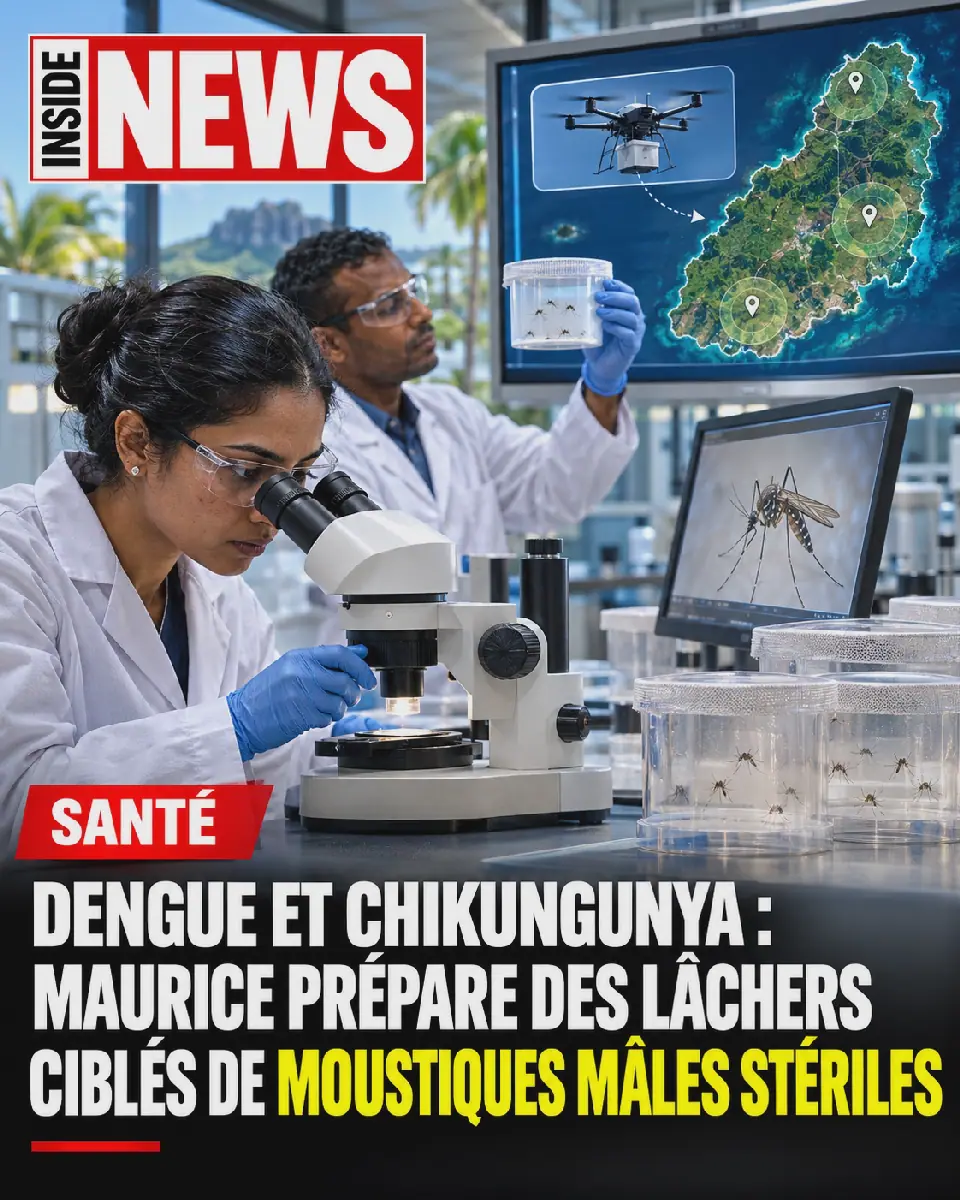
The government of Mauritius has given the green light to a project aimed at controlling the Aedes mosquito population, which is a potential vector of dengue and chikungunya. The project, dubbed OptiMoustik, involves a multi-faceted approach including predictive mapping, drone operations, and the release of sterile male mosquitoes. The Cabinet has authorized the signing of an agreement with the Centre de coopération internationale en recherche agronomique pour le développement (CIRAD) to provide €60,000 in funding for laboratory and field equipment, as well as drone operation costs.
The technique of releasing sterile male mosquitoes involves breeding and sterilizing the insects, then releasing them into the wild. When they mate with wild female mosquitoes, the resulting offspring are not viable, which can lead to a gradual decline in the target population. It's worth noting that male mosquitoes do not bite, and this method is not a replacement for eliminating standing water, monitoring for mosquito breeding sites, and individual protection measures. The effectiveness of this approach depends on several factors, including the number and frequency of releases, the chosen area, and scientific monitoring.
The Ministry of Health in Mauritius will be responsible for selecting and characterizing sites for the project, training teams in predictive mapping and drone operations, and organizing the release of sterile male mosquitoes on the ground and by air. The project also includes an evaluation of results, as well as technical and financial reporting. However, the Cabinet's decision does not yet specify the locations, timeline, number of insects, or indicators of success. Therefore, it is premature to announce a national campaign or rapid elimination of the mosquito population.
The OptiMoustik project aims to transfer tools and expertise to a regional approach, linking the Caribbean and Indian Ocean. This regional dimension can facilitate the comparison of methods in island environments facing the same vectors. Before the first releases, authorities will need to inform residents of the affected areas, explain the health monitoring process, and publish results, including when the observed effectiveness is lower than expected.
Aedes albopictus, the target species of the project, is a potential vector of dengue and chikungunya, two significant public health concerns. The mosquito population can be controlled using a combination of methods, including the elimination of standing water, surveillance of breeding sites, and individual protection measures. The release of sterile male mosquitoes is a supplementary approach that can help reduce the population over time.
The CIRAD, a French research center, will provide €60,000 in funding for the OptiMoustik project, which will be used to purchase laboratory and field equipment, as well as cover drone operation costs. The project will also involve collaboration with local authorities and stakeholders to ensure its success. The Ministry of Health will be responsible for implementing the project and monitoring its effectiveness.
The Mauritius government has taken a proactive approach to addressing the issue of dengue and chikungunya by approving the OptiMoustik project. The project has the potential to reduce the Aedes mosquito population, which can help prevent the spread of these diseases. Key aspects of the project include the release of sterile male mosquitoes, predictive mapping, and drone operations. The project's success will depend on several factors, including the number and frequency of releases, as well as scientific monitoring.
Key points
- The project involves a multi-faceted approach, including predictive mapping, drone operations, and the release of sterile male mosquitoes.
- The technique of releasing sterile male mosquitoes can lead to a gradual decline in the target population over time.
- The project aims to transfer tools and expertise to a regional approach, linking the Caribbean and Indian Ocean.