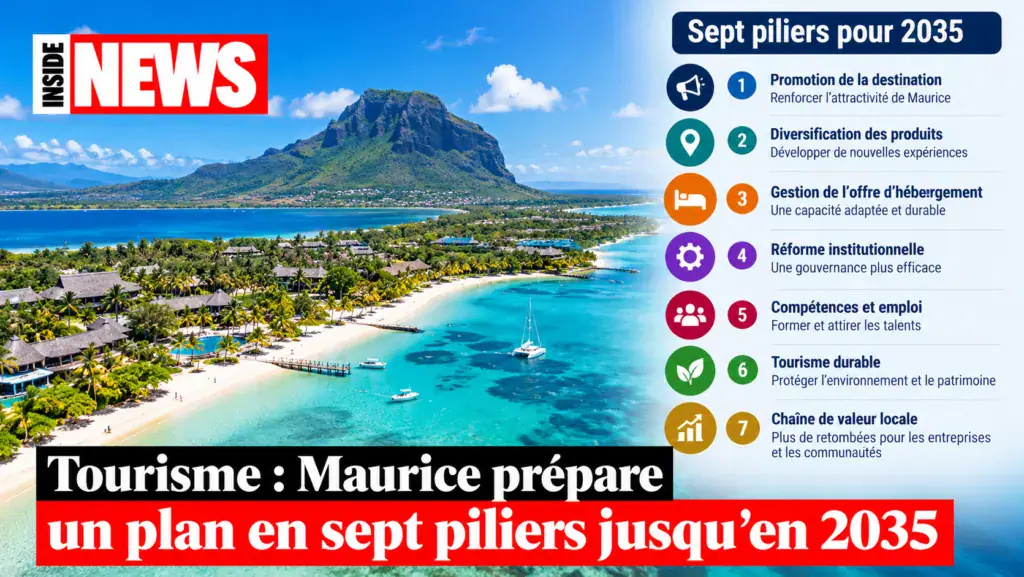
The Mauritian government is working on a strategic document and action plan to develop the tourism sector until 2035. This plan is based on a 10-year blueprint submitted by the World Bank in April 2026. The tourism ministry has identified seven key areas to focus on, including promoting the destination, diversifying products, and managing accommodation supply.
The seven pillars of the plan are aimed at addressing several challenges facing the tourism sector, including dependence on certain markets, a shortage of qualified personnel, pressure on coastal areas, and the need to improve benefits for local businesses and communities. These challenges have been identified as key areas for improvement in the sector.
The plan's focus areas also include institutional reform, skills development, sustainable tourism, and strengthening the local value chain. These priorities are expected to guide the development of the tourism sector over the next decade. The government aims to boost the sector's contribution to the economy.
The 2026-2027 budget document sets a target of Rs 112 billion in tourism revenue. However, this target is not guaranteed and will depend on various factors, including visitor arrivals, spending per visitor, air capacity, and the international economic situation. The government is working to achieve this target.
Despite the announcement of the seven pillars, the government has not yet published the specific actions, budgets, and indicators that will be used to measure the plan's success. The timeline for adoption and the agencies responsible for implementing the plan have also not been announced. This information is crucial for the plan's implementation.
The World Bank's blueprint, which the Mauritian plan is based on, had previously faced criticism over delays in its finalization and approval. The success of the new plan will depend on the publication of a detailed implementation plan with clear responsibilities, budgets, and timelines. Without these elements, the seven pillars will remain general guidelines rather than an operational program.
The tourism sector is a significant contributor to the Mauritian economy, and the development of a comprehensive plan is expected to have a positive impact on the sector's growth and sustainability. The government is working to ensure that the plan is effective in addressing the challenges facing the sector and achieving its goals.
Key points
- The plan has seven key areas of focus, including promotion of the destination and sustainable tourism.
- The 2026-2027 budget document sets a target of Rs 112 billion in tourism revenue.
- A detailed implementation plan with clear responsibilities, budgets, and timelines is yet to be announced.