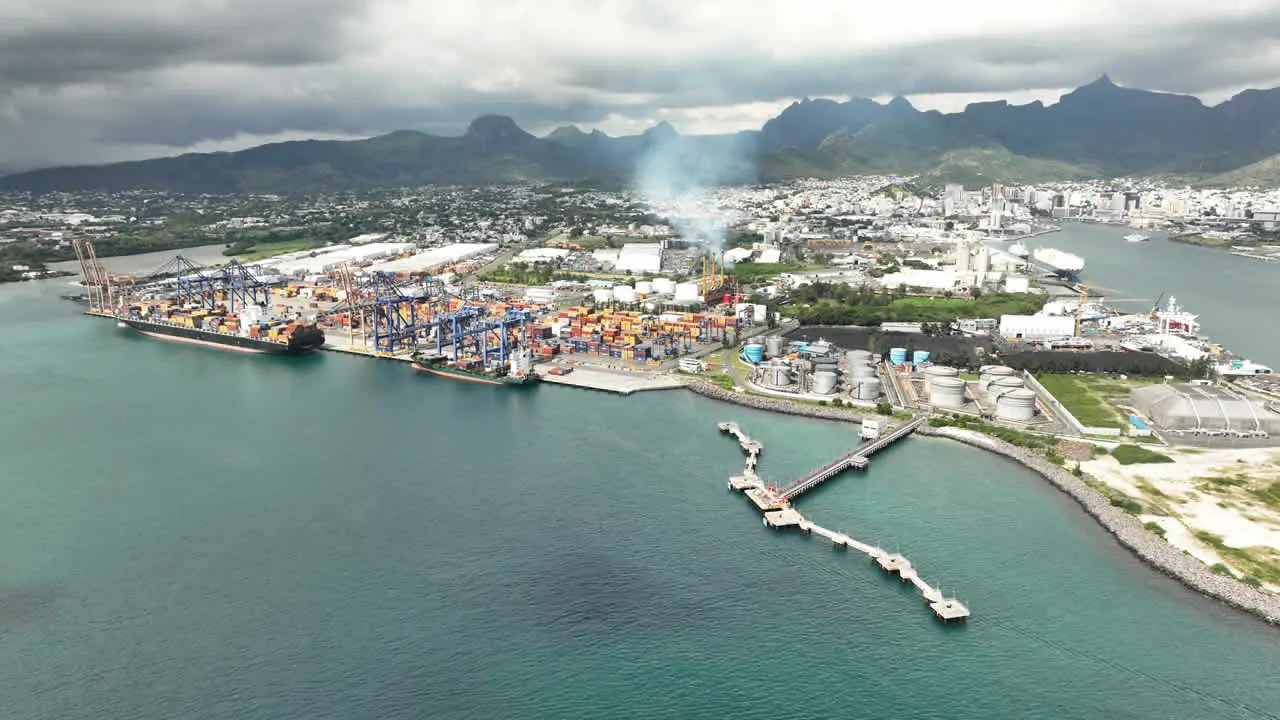
The Port of Port-Louis in Mauritius has achieved a significant milestone, surpassing 1 million tonnes of marine fuel delivered to ships in the 2024/25 financial year. This growth is part of the port's modernization efforts and expansion of its petroleum infrastructure. Bunkering, or the supply of fuel to ships, is a crucial operation for vessels covering long distances. The port offers bunkering services at the quay or at anchor, utilizing specialized barges.
Historically, Mauritius has played a supplementary role in bunkering, with ships primarily refueling at major international hubs like Singapore. However, the market has shifted since the sector's liberalization in 2014. The removal of the MID levy on bunker fuel in 2015, certain tax exemptions, and preferential port tariffs have enhanced the port's attractiveness. The crisis in the Red Sea has further accelerated this growth, with many ships rerouting via the Cape of Good Hope, increasing demand for fuel in the Indian Ocean.
The rerouting of ships around the Cape of Good Hope due to attacks in the Red Sea has created an opportunity for the Port of Port-Louis. More ships on this route translate to a larger potential market for fuel suppliers. In 2024, the bunkering sector experienced significant growth, with 1,016,138 tonnes of bunker fuel supplied, a 34.9% increase from 753,063 tonnes in 2023/24. The number of ships serviced also rose from 2,365 to 2,987.
Shipping agents highlight that the growth in bunkering must be considered in the context of shipping companies' economic logic. Shipowners choose refueling points based on factors including fuel price, availability, speed of operation, weather conditions, congestion, and service reliability. The main factors influencing bunkering at Mauritius, according to agents, are geopolitical developments, fuel prices, adverse weather, port congestion, and regional competition.
The sustainability of this growth is uncertain, as seen in the case of Algoa Bay, where bunkering operations were disrupted due to a fiscal and regulatory dispute. Some suppliers shifted or strengthened operations in other ports, including Mauritius. The question remains whether the Port of Port-Louis can maintain this activity level as regional conditions evolve and competitors improve their offerings.
To convert this opportunity into a lasting advantage, the Port of Port-Louis must ensure a regular supply of fuel, competitive prices, and reliable services. Constraints to growth include limited storage capacity and anchorage space, which can lead to congestion and longer waiting times. Weather conditions, such as strong swells, can also interrupt bunkering operations.
The Mauritius Ports Authority (MPA) is working to address these challenges as the country prepares to overhaul its port infrastructure under the new Port Master Plan 2024. The plan aims to enhance the port's competitiveness and efficiency, enabling it to capitalize on the growing demand for bunkering services in the region.
Key points
- The Port of Port-Louis has delivered over 1 million tonnes of marine fuel in the 2024/25 financial year.
- Growth in bunkering is driven by the crisis in the Red Sea and the port's liberalized sector.
- The port faces challenges including limited storage capacity, anchorage space, and regional competition.