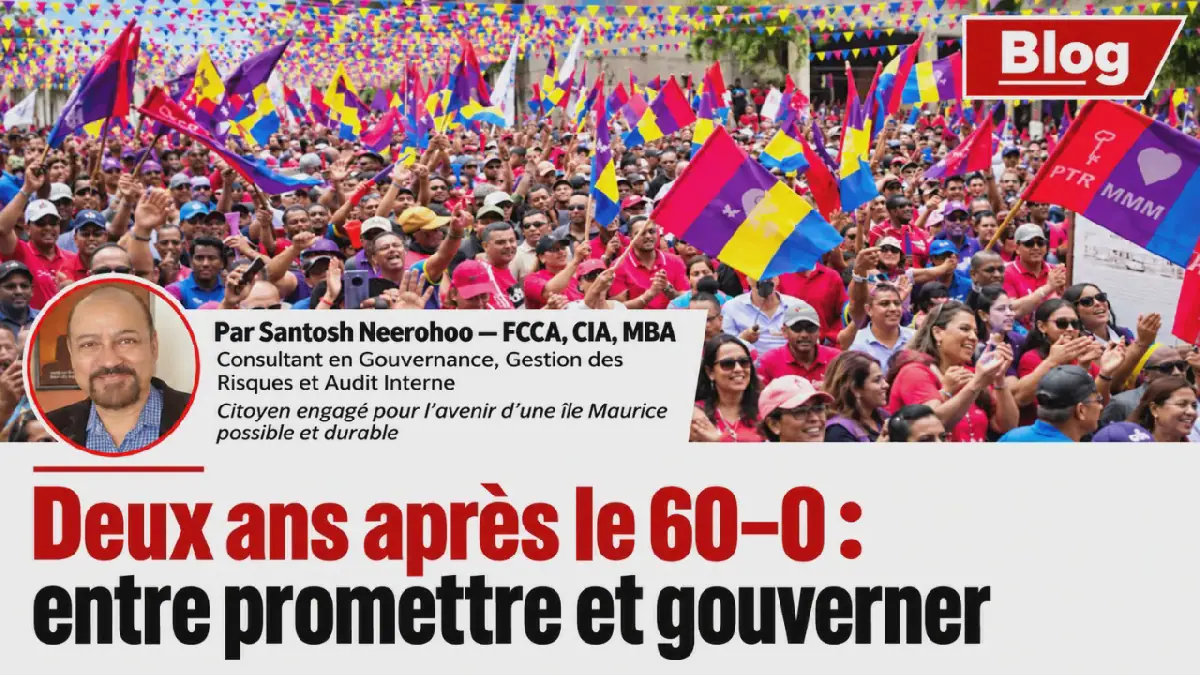
Mauritius has undergone significant changes in its political landscape since the historic 60-0 election in November 2024. The Alliance du Changement, led by Prime Minister Navinchandra Ramgoolam, won all 20 constituencies, securing 60 seats in the 66-member parliament. This landslide victory was not just a change in government but also a reflection of the public's desire for a new way of exercising power, managing public resources, and respecting institutions. The election outcome gave the new government a considerable mandate for reform.
Two years later, the situation has evolved, with the ruling coalition experiencing internal tensions and eventual ruptures. Paul Bérenger, the former Deputy Prime Minister, left the Mouvement Militant Socialiste (MMM) in March 2026 and formed the Fron Militan Progresis (FMP), which became the leader of the opposition in August. The FMP, along with other opposition parties, now holds seven seats in parliament. This shift in the opposition's composition reflects the challenges of sustaining coalitions and the dynamic nature of Mauritian politics.
The government's commitment to its economic and institutional reform agenda remains, despite internal tensions. The administration has continued with its plans for public finance reform, pension reform, and economic modernization. While some decisions have been adjusted or faced significant opposition, the overall direction has remained intact. This continuity demonstrates that even in the face of internal conflicts, the government can continue to function and implement its policies.
However, the effectiveness of these policies and their impact on the population remain a subject of debate. The government's ability to balance its reform agenda with social concerns and economic realities will be crucial in determining its success. With the opposition and civil society playing an active role in scrutinizing the government's actions, the dynamics of Mauritian politics have become more complex and multifaceted.
The economic challenges facing Mauritius, including rising prices, continue to affect the daily lives of its citizens. The government's efforts to address these issues, while pursuing its reform agenda, will be critical in maintaining public support and trust. As the country navigates these complexities, the role of institutions, transparency, and accountability will be essential in ensuring that the government's actions align with the public's expectations.
The evolution of Mauritius' politics since the 60-0 election highlights the difficulties of translating electoral mandates into tangible change. While the government has made efforts to pursue its agenda, the complexities of coalition politics, social expectations, and economic realities have presented significant challenges. As the country moves forward, its ability to adapt and respond to these challenges will be crucial in determining the long-term success of its democratic institutions.
Ultimately, the test of the government's success will lie in its ability to deliver on its promises and improve the lives of Mauritian citizens. With the opposition, civil society, and institutions playing active roles in holding the government accountable, the country's democratic fabric is likely to become more robust. As Mauritius continues to navigate its complex political landscape, the focus on governance, transparency, and accountability will remain essential in ensuring that the country achieves its full potential.
Key points
- The Mauritian government has continued its reform agenda despite internal tensions within the ruling coalition.
Reporting sources
- [Blog] Deux ans après le 60–0 : entre promettre et gouverner · Le Défi Plus