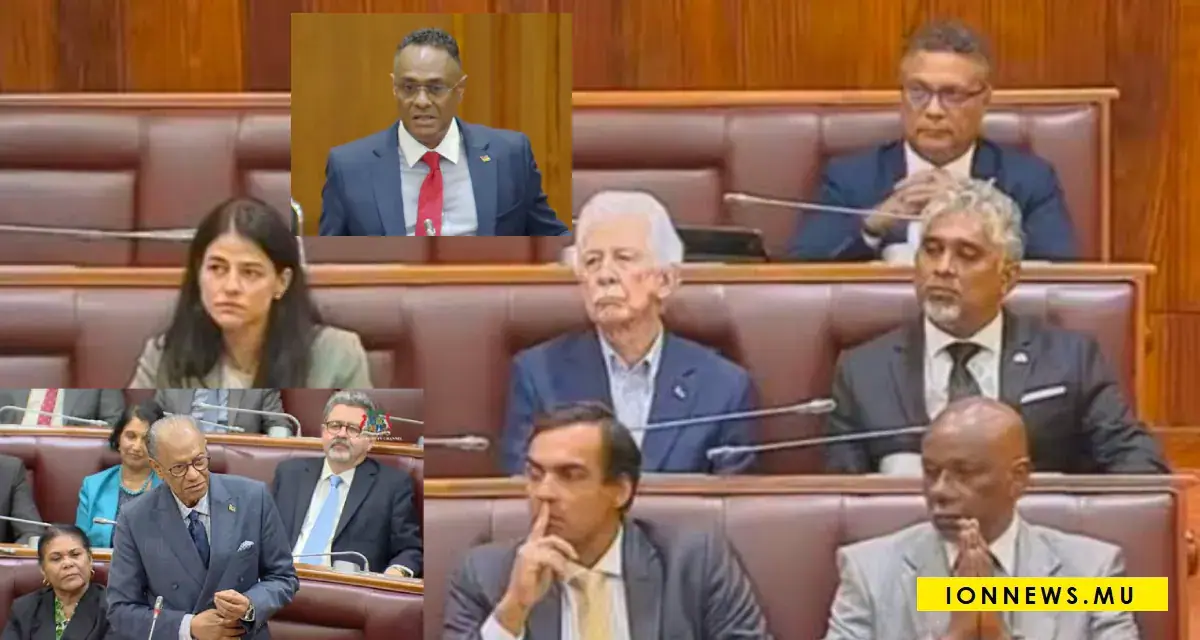
The political scene in Mauritius has experienced a substantial transformation over the past two years, following the arrival of the Alliance du changement. This period has seen several high-profile departures, party splits, and changes in allegiance, significantly altering the balance of power within the National Assembly. One of the most notable cases is that of Paul Bérenger, who served as Deputy Prime Minister but left the Mouvement Militant Mauricien (MMM) on April 13, 2026.
Paul Bérenger's departure from the MMM was due to disagreements over the party's participation in the government. His decision was followed by his daughter, Joanna Bérenger, who also quit the MMM on the same day. Together, they were instrumental in the formation of the Fron Militan Progresis (FMP) in May 2026, alongside Chetan Baboolall. The creation of the FMP marked a significant rupture in the political landscape, as it joined the parliamentary opposition. Chetan Baboolall subsequently became the leader of the opposition, while Joanna Bérenger took on the role of Opposition Whip.
Another significant episode in this period of political realignment was the departure of Franco Quirin from the MMM in February 2025. Quirin's exit followed disagreements with the party leadership, after which he continued to serve as an independent deputy. His case differs from that of the Bérengers, as he did not join the FMP. Nonetheless, his departure was one of the first fractures within the former political bloc. These changes reflect the extensive shifts that have occurred over the past two years, leading to a new political configuration within the National Assembly.
The Parti travailliste has also experienced a defection recently. Sydney Pierre resigned from the PTr on October 16, 2026, and joined the opposition. He now sits alongside the FMP, although he has stated that he has not yet officially joined the party. These repositionings illustrate the scale of the changes that have taken place, moving beyond the electoral alliances of 2024 to a new political setup.
The creation of the FMP and the subsequent shifts in allegiance have significantly impacted the balance of power in the National Assembly. The FMP's emergence as a force in the opposition has changed the dynamics of Mauritian politics. The involvement of key figures such as Paul Bérenger, Joanna Bérenger, and Chetan Baboolall has added momentum to the opposition's efforts.
The changes in the political landscape of Mauritius over the past two years have been substantial. From the departure of key figures to the formation of new political movements, the scene has been dynamic. These developments reflect the evolving nature of political alliances and the challenges faced by parties in maintaining unity.
As the political landscape continues to evolve, it will be crucial to monitor the impact of these changes on future elections and governance in Mauritius. The emergence of new political forces and the repositioning of existing parties will likely play a significant role in shaping the country's political trajectory.
Key points
- Paul Bérenger and his daughter Joanna Bérenger left the MMM to form the Fron Militan Progresis (FMP), a new opposition party.
- Franco Quirin was expelled from the MMM in February 2025 and now serves as an independent deputy.
- Sydney Pierre recently defected from the Parti travailliste to join the opposition, aligning with the FMP.