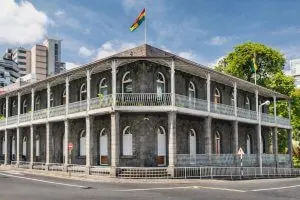
The Prime Minister's Office (PMO) in Mauritius has implemented new security measures, effective immediately, restricting staff movement and access within the New Treasury Building. A memorandum dated September 25, 2026, signed by Senior Chief Executive M.J.S. Valère-Bolli, outlines the new rules. Staff are required to remain at their workstations during working hours and avoid unnecessary movement or gatherings in corridors. These measures aim to maintain a professional environment and enhance security and access control, particularly when visitors are present.
The new directives, part of the "Compliance with Office Conduct and Security Requirements New Treasury Building," mandate that office doors remain closed at all times, except when necessary for official business or access. Staff must also wear and visibly display their official access passes at all times while on the premises. The memorandum emphasizes that these measures are crucial when visitors are present. The changes have been introduced after a recent meeting between Prime Minister Navin Ramgoolam and Reform Party leader Roshi Bhadain.
The meeting between Ramgoolam and Bhadain, which was not publicly disclosed initially, was revealed by Scoop.mu, a local news outlet. According to sources, the meeting was organized discreetly, with arrangements made to avoid detection. Bhadain later stated that he had met Ramgoolam transparently, using the proper channels, and that the meeting took place when the entire staff was present. However, these claims have raised questions about the level of secrecy surrounding the meeting.
In addition to the new security protocols, it has been reported that the PMO has potentially activated the audio recording function of cameras installed in the corridors. This development has sparked concerns that the office may now be able to monitor and record conversations in these areas. While the exact reasons behind these measures are unclear, they coincide with a recent change in leadership at the National Security Service (NSS).
The introduction of these new security measures has created a climate of fear among PMO staff. The restrictions on movement and access, combined with the potential for audio recording, have raised concerns about the level of surveillance and monitoring within the office. The staff is expected to adhere to these new rules, which are designed to maintain a professional environment and enhance security.
The timing of these developments has sparked speculation about a possible connection between the Ramgoolam-Bhadain meeting and the new security measures. While the PMO has not provided an official explanation, the coincidence of these events has raised questions about the motivations behind the changes. The situation remains unclear, with many awaiting further clarification on the reasons behind these new protocols.
The new security measures at the PMO reflect a broader trend of enhanced security and surveillance in government offices. The impact of these changes on staff and the overall work environment remains to be seen. As the situation continues to unfold, it is essential to consider the implications of these developments on the functioning of the PMO and the rights of its staff.
Key points
- The PMO has introduced new security measures, including restricted staff movement and potential audio recording by cameras, following a meeting between Prime Minister Navin Ramgoolam and Reform Party leader Roshi Bhadain.