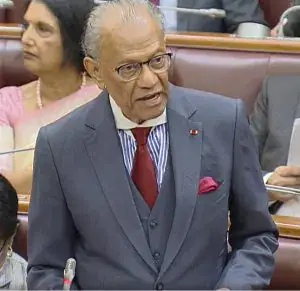
The Prime Minister of Mauritius, Navin Ramgoolam, has stated that the country will not consider legalizing cannabis for now. During a Private Notice Question (PNQ) session in Parliament on November 17, Ramgoolam emphasized that it would not be suitable to hastily adopt reforms without addressing the consequences of each recommendation. This response came after opposition leader Chetan Baboolall inquired about the government's stance on cannabis legalization.
Ramgoolam's response was part of a broader discussion on narcotics in Mauritius. The Prime Minister provided some key statistics, revealing that 27 police officers and five prison guards have been arrested for drug-related offenses since January 2025. Additionally, several police officers have been suspended with pay for over ten years, a situation Ramgoolam promised to rectify. These disclosures highlight the ongoing challenges Mauritius faces in addressing narcotics.
The PNQ session also touched on the issue of drug-related deaths in Mauritius. Ramgoolam was unable to provide the exact number of deaths linked to drug consumption, the types of drugs involved, and the demographics of the victims. He promised to submit this information to Parliament soon. The National Agency for Drug Control (NADC) reportedly has this data, but it was not readily available during the session.
The discussion also involved the National Coast Guard (NCG) and its potential reorganization following the Dreamer case, in which two NCG members were implicated. Ramgoolam assured that the NCG would be restructured and hinted that the next commander might be a Mauritian, breaking a decades-long tradition of appointing an Indian to the position. This move could signify a shift in the country's approach to national appointments.
Ramgoolam's government has been working to address various issues, including narcotics and national appointments. The Prime Minister recently secured a loan from the French Development Bank for the Pipe Replacement Programme, instead of opting for the State Bank of India. This decision may indicate a change in the government's strategy for international partnerships.
The NADC has completed its report on narcotics, which was submitted to Ramgoolam two months ago. However, the report has not yet been examined by the National Drug Control Commission. Ramgoolam promised that this would occur before the end of the year. The report's findings and recommendations are expected to guide future policy decisions on narcotics in Mauritius.
The government's stance on cannabis legalization contrasts with some previous statements. Paul Bérenger, a prominent figure, had noted that the NADC did not recommend legalizing or decriminalizing cannabis. Ramgoolam's recent statements align with Bérenger's assertions, indicating a cautious approach to reforming narcotics laws in Mauritius.
Key points
- The Prime Minister of Mauritius, Navin Ramgoolam, has ruled out immediate cannabis legalization.
- Ramgoolam cited the need to address consequences before adopting reforms.
- The government will focus on addressing narcotics through other measures, including reorganizing the National Coast Guard.