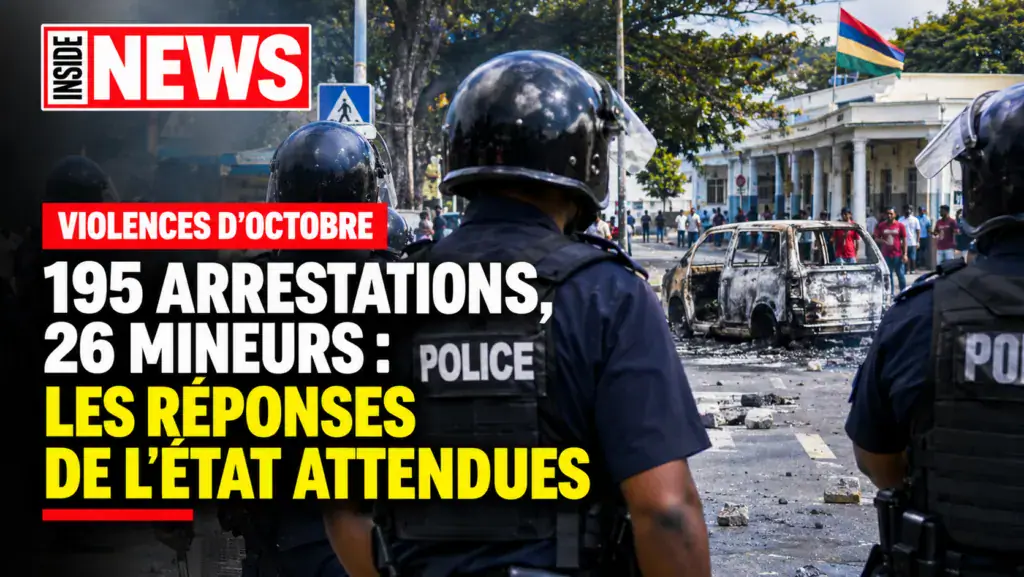
The recent wave of violence in Mauritius has led to 195 arrests, including 26 minors, according to Prime Minister Navin Ramgoolam. The unrest, which began with water shortages and economic difficulties, escalated into clashes, vandalism, and violent acts. The situation has raised concerns about social stability and the government's response to the crisis. Ramgoolam addressed the issue in the National Assembly on October 27.
The violence resulted in significant damage, including the destruction of over 17,000 tonnes of sugar cane, the burning of a police station, looting of shops, and vandalism of metro installations. Fifteen police officers were injured during the clashes. The government has attributed some of the violence to organized crime networks, but these claims require further evidence and judicial scrutiny.
One of the most concerning incidents occurred in Camp-Levieux, where 27-year-old Élodie Thomas was seriously injured by a police officer on October 9. The officer involved was arrested, and an investigation was launched. The incident has highlighted the need for police accountability and the importance of addressing the root causes of social unrest.
The government has faced criticism for its response to the crisis, with concerns about the proportionality of the arrests and the treatment of minors. The use of anti-terrorism laws to prosecute some individuals has also raised concerns about human rights. Ramgoolam has emphasized the need to balance law and order with respect for individual rights and the protection of minors.
The Prime Minister has called for calm and emphasized the importance of restoring order and stability. However, he has also acknowledged that addressing the underlying causes of the unrest is crucial to rebuilding trust between the government and the public. The authorities have a responsibility to investigate individual cases and hold those responsible accountable.
The events in Mauritius have sparked a wider debate about social inequality, economic hardship, and access to basic services like water. The government faces challenges in addressing these underlying issues, which have contributed to growing frustration and discontent among some segments of the population.
As the situation in Mauritius continues to unfold, the government will face scrutiny over its handling of the crisis and its efforts to prevent similar incidents in the future. The authorities must balance the need to maintain law and order with the need to address the root causes of social unrest and rebuild trust with the public.
Key points
- 195 people, including 26 minors, were arrested in connection with the October violence in Mauritius.
- The violence resulted in significant damage, including the destruction of over 17,000 tonnes of sugar cane and the burning of a police station.
- The government faces challenges in addressing the underlying causes of social unrest, including economic hardship and access to basic services.