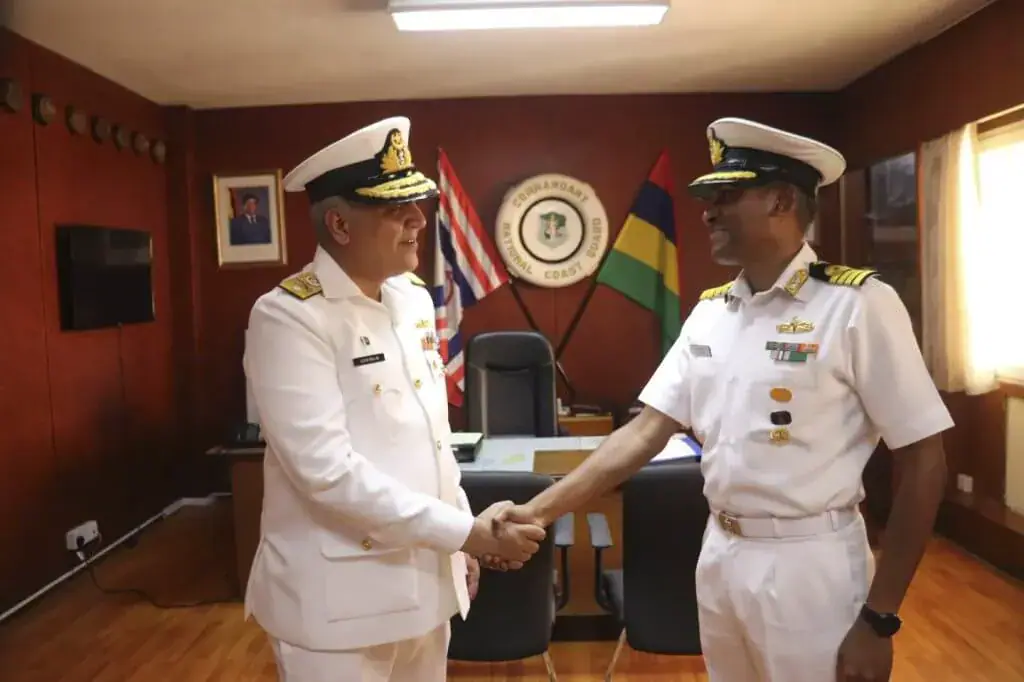
The handling of the Dreamer yacht case by the Mauritius National Coast Guard (NCG) has raised concerns, with Prime Minister Navin Ramgoolam disclosing that the coast guard received an alert about a suspect speedboat on October 20, but failed to intercept it. The yacht itself was only reported and spotted the next day, on October 21, at 10 am, by an NCG patrol at Baie-du-Tombeau.
According to Ramgoolam, the captain of the yacht, a Thai national, claimed that the vessel had experienced mechanical issues since October 19, while near the island of Ronde, approximately 22 km north of Mauritius. The captain stated that he was seeking assistance from a local maritime agent. An investigation found that the yacht remained immobilized for 20 hours without being noticed by anyone.
The NCG's response to the situation has been questioned, as it took six hours for the coast guard to board the yacht after spotting it. Ramgoolam's explanation that exchanges between the NCG and the captain were likely done via phone has raised further concerns. The Maritime Intelligence Cell, the Anti-Drug and Smuggling Unit (ADSU), and the Customs Anti-Narcotics Section (CANS) of the Mauritius Revenue Authority were only involved subsequently, boarding the yacht at 4:30 pm.
Ramgoolam revealed that the captain's confession, obtained after interrogation, indicated that 1.5 tons of cannabis, valued at Rs 2.7 billion, had been transferred to two speedboats on October 20. However, the prime minister did not specify whether this occurred before or after the initial alert. The exact details of the incident remain unclear, with Ramgoolam citing the need for secrecy in the investigation.
Ramgoolam acknowledged that there were serious lapses within the NCG and announced that an audit would be conducted by the police commissioner and French authorities. In the meantime, a reallocation of tasks with clear objectives is being implemented. The NCG's capabilities and equipment have also come under scrutiny, with Ramgoolam stating that the coast guard's resources may be insufficient or in poor condition.
The NCG has a significant arsenal, comprising three ships, three Dornier aircraft, ten interception boats, six high-speed boats, and 76 small craft for maritime surveillance and interception. Additionally, the Police Helicopter Squadron patrols the island, and drones are used to search for cannabis plantations. The NCG also utilizes systems like SeaVision, Big, Ocean Data, Skylight, and Albatros for surveillance.
Ramgoolam emphasized that Mauritius benefits from collaboration with India, the US, France, and Japan to monitor its Exclusive Economic Zone (EEZ). A new Coastal Surveillance Radar System and Coastal AIS, funded by Japan, were recently installed. However, despite these efforts, Ramgoolam expressed concerns about the entry of narcotics into the country by sea, citing potential shortcomings in the NCG's equipment and capabilities.
Key points
- The Mauritius National Coast Guard faces scrutiny over its handling of the Dreamer yacht case, with concerns raised about its response to alerts and potential complicity with narcotraffickers.
- The incident has led to an audit of the NCG and a reallocation of tasks to improve its effectiveness.
- Mauritius is collaborating with international partners to enhance its surveillance and interception capabilities in its Exclusive Economic Zone.