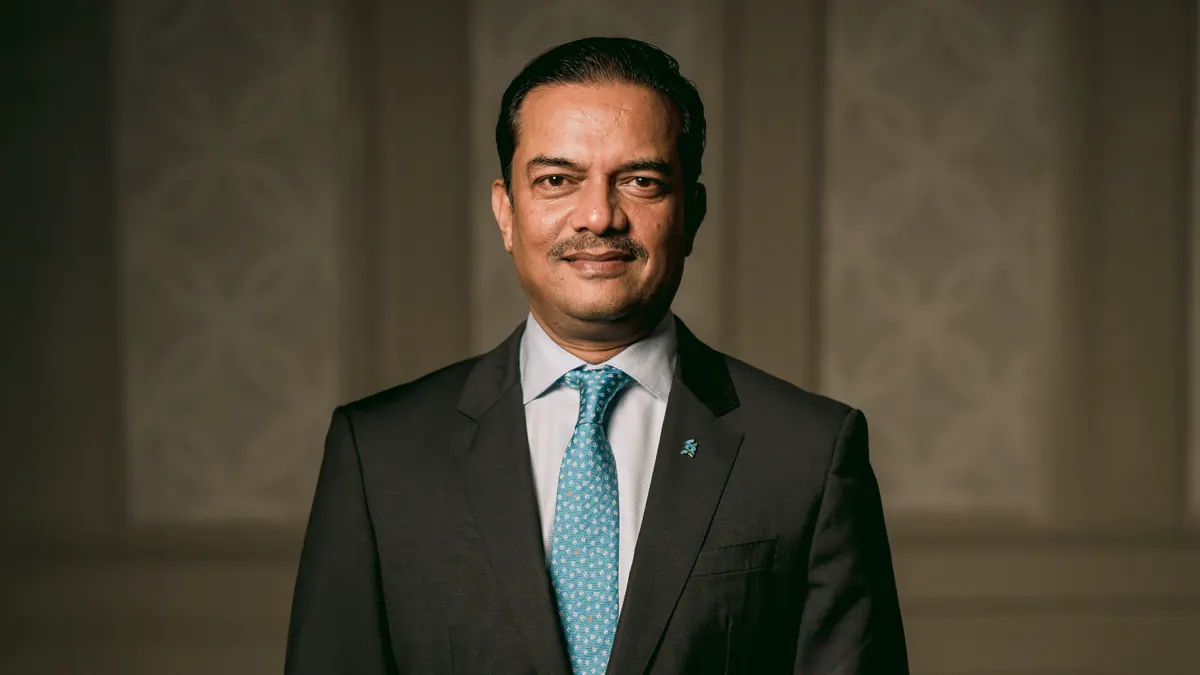
Mauritius has historically succeeded by asking difficult questions about its economy and global position. As the world enters a new phase of global trade, the island nation must again assess its role and prepare for the future. According to Abrar A. Anwar, CEO and Head of Coverage, Corporate & Investment Banking at Standard Chartered Mauritius, the country's success has been driven by its ability to diversify its economy, remain competitive despite its small size, and build connections to larger markets.
The Standard Chartered's Future of Trade 2026 Report highlights the shifts in global trade, including the rewiring of supply chains, new investment corridors, and the increasing importance of technology in reducing distances between markets. The report suggests that connectivity is becoming a source of competitive advantage, and Mauritius must ask itself if it is connected to tomorrow's growth markets. The country's position in East Africa, a region emerging as one of the continent's most compelling growth stories, makes this question particularly relevant.
One of the key questions Mauritius must ask is whether it is making it easy enough for global capital to reach Africa through the country. The report emphasizes that opportunity alone does not attract investment; confidence does. Investors look for trusted pathways into growth markets, transparency, predictability, strong governance, and efficient access to opportunity. Mauritius has built a strong reputation in this regard, but the country must continuously assess whether it is making it as easy as possible for international investors to access African opportunities.
The report also highlights that trade today encompasses more than just the movement of containers through ports; it includes digital commerce, data flows, renewable energy investment, sustainable finance, technology-enabled services, and cross-border capital movements. As a result, Mauritius must ask itself if it is preparing its workforce, institutions, and infrastructure for these emerging realities. The country must invest in skills, innovation, and digital capabilities to participate in the industries that will define the next decade.
In an increasingly uncertain world, resilience is crucial for a highly open and globally connected island economy like Mauritius. The country must assess whether its trade relationships, energy systems, investment flows, and economic partnerships are sufficiently diversified to withstand future shocks. If not, Mauritius must take steps to strengthen them. The report emphasizes that efficiency alone is no longer enough; resilience matters.
Perhaps the most important question for Mauritius is what role it wants to play in the future global economy. Does the country simply want to participate in global trade, or does it want to help shape it? The report suggests that economies that will thrive in the years ahead will be those that act as connectors, linking people, markets, capital, and ideas across borders. Mauritius possesses many of the qualities needed to play such a role, including stability, strong international relationships, and a unique position between Africa, Asia, and the Middle East.
The questions about Mauritius' future in global trade are too important for any single institution to answer alone. They require input from policymakers, regulators, investors, entrepreneurs, academics, development partners, and the next generation of leaders. Standard Chartered is committed to contributing to the national dialogue on Mauritius' future competitiveness, resilience, and role in the global economy. The company's international network and visibility into markets across Asia, Africa, and the Middle East make it well-positioned to facilitate important conversations about the country's future.
Key points
- Mauritius must assess its connectivity to tomorrow's growth markets.
- The country must make it easy for global capital to reach Africa through Mauritius.
- Mauritius must prepare its workforce, institutions, and infrastructure for emerging realities in global trade.