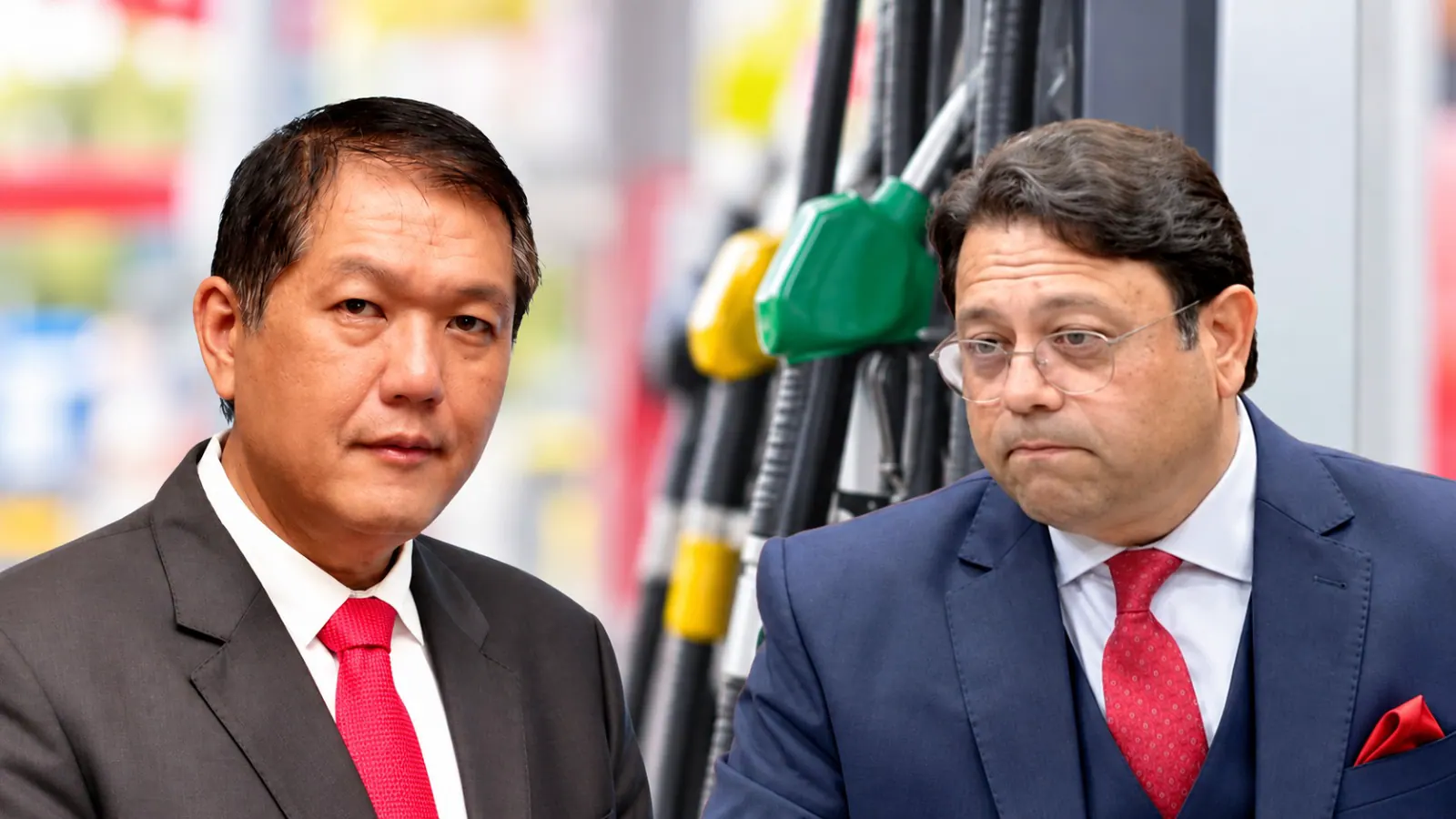
Mauritius' Minister of Commerce and Consumer Protection, Michael Sik Yuen, has responded to a proposal by Deputy Kushal Lobine to temporarily reduce fuel taxes to alleviate pressure on purchasing power. Sik Yuen stated that he would have considered the proposal if he were in Lobine's position. Lobine had previously suggested reducing taxes on fuel in April and reintroduced the idea on Tuesday.
The proposal aims to temporarily and targetedly reduce taxation on gasoline and diesel, taking into account the country's public finance situation. Sik Yuen also addressed the issue of international market price drops not translating to lower pump prices in Mauritius. He noted that the country's situation should be compared to others where fuel prices can exceed Rs 100 per liter.
Sik Yuen explained that Mauritius cannot lower prices because it already sells at a loss. This comes as the first shipment of petroleum products from Indian Oil arrived in Mauritius on Wednesday. The shipment is part of a five-year government-to-government agreement between Mauritius and India to secure the country's petroleum product supply.
The agreement with Indian Oil guarantees that Mauritius will receive petroleum products regardless of circumstances. Sik Yuen emphasized that the global petroleum market is experiencing high instability. The initial shipment does not include heavy fuel oil used by the Central Electricity Board (CEB), but a request has been made to Indian Oil to explore this possibility.
The shipment, transported by the MT Torm Splendid, consists of approximately 9,047 metric tons of Mogas, 10,262 tons of Gas Oil, 15,505 tons of Jet A-1, and 4,933 tons of Marine Gas Oil (MGO). The cargo was loaded at the Paradip refinery. The arrival of this shipment occurs as the Petroleum Pricing Committee (PPC) prepares to review fuel price developments.
The PPC meeting, initially scheduled for this week, has been postponed to next week to account for the cost of the new shipment. According to previous indications, the gap between pump prices and those derived from the pricing mechanism was around 10% for both gasoline and diesel. The Ministry of Commerce stated that the arrival of this shipment does not alone lead to a change in retail fuel prices.
Sik Yuen noted that Mauritius does not import crude oil but refined petroleum products, as the country lacks a refinery. The minister also mentioned that prices can be renegotiated at the end of the war, as per the contract, and new negotiations can be initiated after ten months.
Key points
- Mauritius' government is considering a temporary fuel tax cut proposal.
- The country has secured a five-year petroleum product supply agreement with Indian Oil.
- The global petroleum market is experiencing high instability, affecting fuel prices.