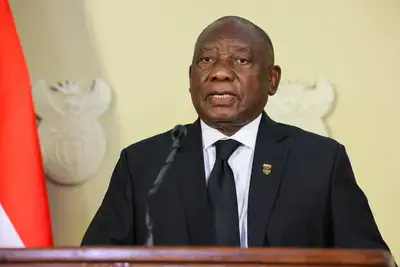
Former Mauritian Prime Minister Pravind Jugnauth has returned to the Central Criminal Investigation Department (CCID) for questioning as part of an investigation into alleged surveillance equipment. The probe focuses on devices acquired during his tenure as Prime Minister, sparking concerns over potential breaches of private communications, national security, and state surveillance. The case has raised several questions, including the acquisition and authorization of the equipment and who could have used it.
The investigation centers on establishing a material link between the examined equipment and recordings released under the label Moustass Leaks, which have caused a stir in the country. Critics argue that while the existence of interception equipment has been established, it remains unclear whether it was used to produce the leaked recordings. Pravind Jugnauth has called for an independent inquiry, demanding that the origin of the recordings be determined and that the files be examined for technical evidence.
Key questions remain unanswered, including who recorded the conversations, where the original files are located, and whether they underwent complete technical expertise. It is also unclear who possessed the recordings before they were released and what technical evidence links the files to the equipment being examined. These questions are crucial, as the discovery of interception-capable equipment does not automatically prove its connection to a specific recording.
The case has significant implications, extending beyond Pravind Jugnauth to involve multiple personalities and officials whose private conversations were allegedly recorded. A fundamental question persists: who was behind the recordings? The demand for an independent inquiry warrants examination, as a criminal investigation can identify potential infractions but may not fully address the circumstances surrounding the recordings.
The CCID must continue its work, but after weeks of revelations and controversy, the debate can no longer remain at the level of suspicion. Authorities must establish whether a link exists between the examined equipment and the Moustass Leaks recordings. If such a link is found, it must be demonstrated; if not, this too must be established. The public needs clarity on the matter.
Critics argue that Mauritius requires more than just suspects; the country needs to know who actually recorded the Moustass Leaks and with what evidence. The issue at hand is not only about identifying potential wrongdoing but also about understanding how conversations were recorded, distributed, and made public. A thorough investigation is necessary to address these concerns.
The Moustass Leaks scandal has sparked a national conversation about surveillance, privacy, and accountability. As the investigation unfolds, it is essential that authorities prioritize transparency and provide the public with clear answers about the equipment, the recordings, and those involved. Ultimately, the goal must be to establish the truth and ensure that those responsible are held accountable.
Key points
- Pravind Jugnauth demands an independent inquiry into the Moustass Leaks scandal.
- Authorities must establish a link between alleged surveillance equipment and the leaked recordings.
- The investigation must prioritize transparency and accountability to address public concerns.