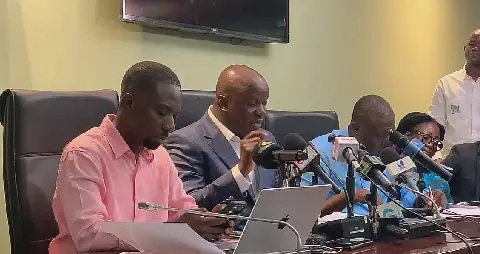
Mauritius Environment Minister Rajesh Bhagwan has outlined the country's key priorities for the upcoming COP31 climate conference in Antalya. He emphasized that the island nation is seeking concrete climate action and financial support to address the devastating impacts of climate change. As a small island developing state, Mauritius is highly vulnerable to climate-related disasters, including rising sea levels and intense weather events.
Bhagwan noted that Mauritius has formed alliances with other small island developing states, African countries, and the G77 and China group to push for a unified voice in climate negotiations. The country's national climate response plan requires significant investment, particularly in infrastructure adaptation, coastal resilience, water resources, and agriculture. However, Bhagwan stressed that Mauritius cannot afford to fund these efforts alone and needs international cooperation, financing, technology, and capacity building.
The Mauritian government has conducted two months of consultations with citizens ahead of COP31, gathering input on the country's climate priorities. The consultations involved various stakeholders, including women, youth, fishermen, and farmers, who emphasized the need for nature-based solutions, climate-resilient infrastructure, and support for sustainable agriculture. The government's position is built around eight strategic pillars, including mitigation, adaptation, and climate resilience, oceans, food security, and a just energy transition.
Bhagwan highlighted that the country's Nationally Determined Contributions (NDC) 3.0 requires $5.7 billion in climate financing by 2035. However, he expressed concerns that the global community has not met its previous financial commitments, and access to climate finance remains a significant challenge for small island developing states. Mauritius is seeking a simplified and direct access to international financing, as well as technology transfer, to support its climate efforts.
The minister emphasized that Mauritius is committed to a green economy and sustainable development, with a focus on environmentally friendly growth. The government has implemented a climate budget tagging system to track climate-related expenditures and mobilize additional financing for adaptation and mitigation efforts. Bhagwan expressed hope that the COP31 conference will yield concrete results, despite geopolitical tensions and challenges.
Bhagwan also stressed that the country's youth are playing a crucial role in shaping its climate priorities, with proposals focusing on strengthening environmental laws, integrating climate justice into education, and enhancing healthcare resilience. The government is seeking support for initiatives such as solar panels, water harvesting, and pollution reduction, as well as measures to address the impacts of climate change on vulnerable communities.
The outcome of COP31 will be critical for Mauritius and other small island developing states, which are disproportionately affected by climate change. Bhagwan's participation in the conference underscores the country's commitment to pushing for urgent and concrete climate action, as well as increased financial support from the international community. The success of these efforts will depend on the level of cooperation and solidarity among countries.
Key points
- Mauritius is seeking $5.7 billion in climate financing by 2035 to support its Nationally Determined Contributions (NDC) 3.0.