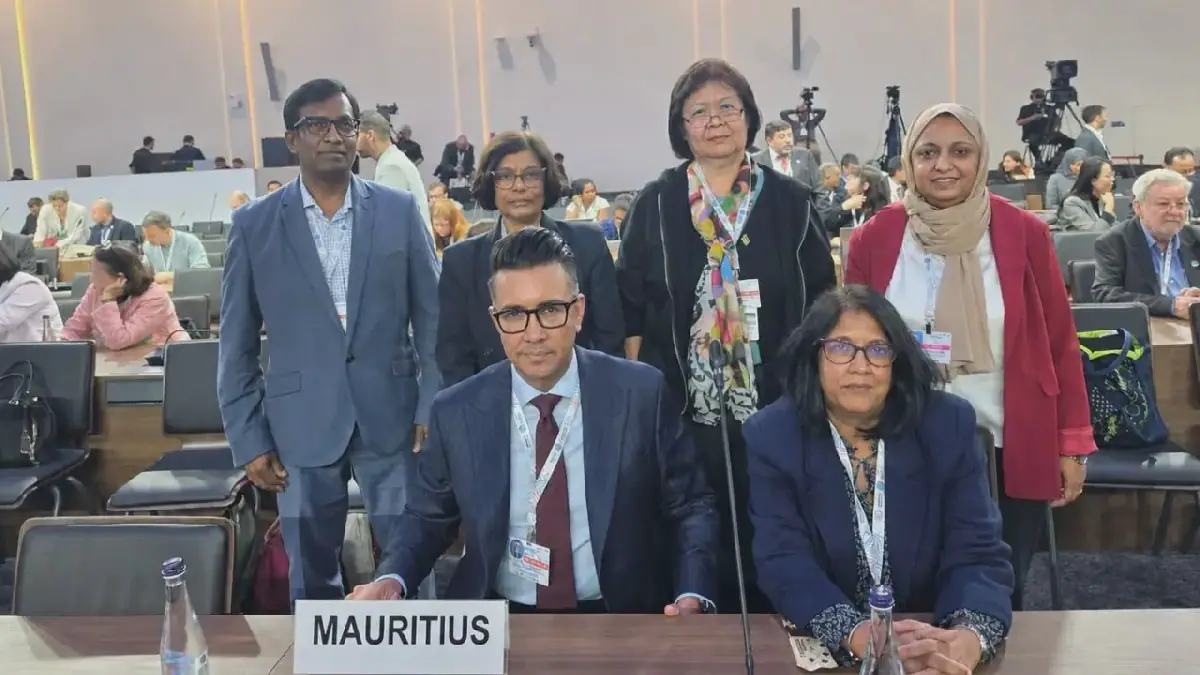
Mauritius Minister of Housing and Lands Shakeel Mohamed has called for greater climate justice and equitable access to international financing for climate adaptation. Speaking at a ministerial roundtable on buildings and climate in Antalya, Turkey, on November 12, 2026, Mohamed emphasized the vulnerability of small island developing states like Mauritius to extreme weather events. He cited recent examples, including floods caused by Cyclone Belal in January 2024 and damage from Cyclone Chido in December 2024.
Mohamed highlighted the disparity between developed countries' financial commitments and the difficulties faced by nations like Mauritius in accessing promised funds. He stressed that countries most affected by climate change are not necessarily those responsible for it. The minister urged countries with significant financial resources and high greenhouse gas emissions to take responsibility for their actions. This call for action comes as COP31 aims to address pressing climate issues.
The minister emphasized the need for resilient and affordable housing. He noted that developing such projects requires adequate financial resources, technical expertise, qualified labor, and strong local institutions. Mohamed advocated for predictable and accessible subsidies to finance the construction of resilient housing, risk assessments, project preparation, and long-term infrastructure maintenance.
Mohamed invited the International Coalition for Buildings and Climate (ICBC), UN agencies, and international financial partners to collaborate with Mauritius on a national adaptation program. This initiative aims to enhance the country's resilience to climate change and serve as a model for other small island developing states and vulnerable countries.
The minister stressed the importance of COP31 leading to concrete financing rather than just statements of intent. He reaffirmed Mauritius' commitment to planning, implementation, and transparency but emphasized that national efforts require commensurate international financial support. Mohamed's statement reflects the concerns of many developing countries struggling to address climate change.
Mohamed's call for climate justice is rooted in the understanding that financing for adaptation is essential for making communities safer and more resilient. He urged participants to move beyond rhetoric and achieve tangible results. The minister's message resonated with the need for urgent and effective climate action.
In conclusion, Shakeel Mohamed's intervention at COP31 underscored the critical need for equitable climate finance. His advocacy for vulnerable island nations like Mauritius highlights the importance of international cooperation in addressing the pressing challenges of climate change. The outcome of COP31 will be closely watched to see if it translates into concrete actions and support for countries on the frontlines of climate change.
Key points
- Mauritius Minister Shakeel Mohamed calls for concrete climate finance at COP31.
- Small island developing states face significant climate change vulnerabilities.
- Equitable access to climate finance is essential for climate justice.