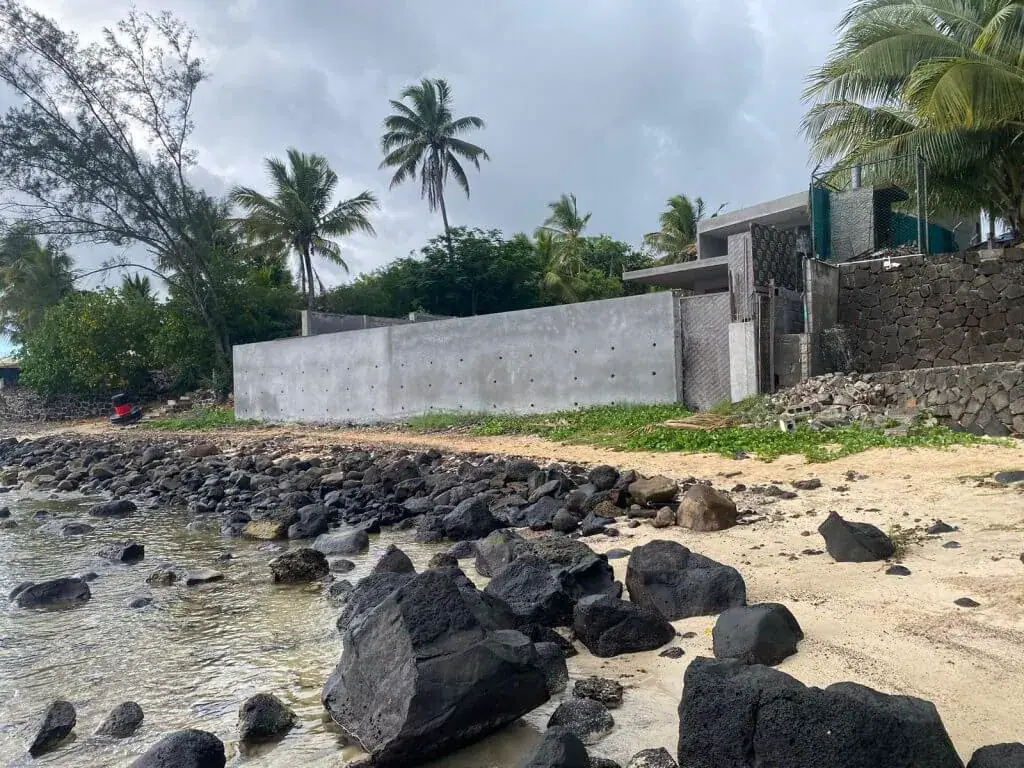
The construction of seawalls along Mauritius' coastline has become a contentious issue, with concerns that these structures can exacerbate erosion on adjacent beaches. Despite these concerns, Minister of Environment Rajesh Bhagwan has approved three seawalls, including one at the Le Palmiste Resort & Spa in Mont-Choisy. The seawall, constructed of reinforced concrete, has already begun to cause erosion between the wall and the sea.
The Environment Act 2024 allows for the construction of seawalls without an Environmental Impact Assessment (EIA) certificate in cases of "urgent rehabilitation works" following adverse weather conditions. Minister Bhagwan utilized this provision to approve the seawall at Le Palmiste Resort & Spa, as well as two others at Palmar, in April 2026. This decision was made despite opposition from outgoing Minister Joanna Bérenger, who had rejected the proposal in February 2026.
The seawall at Le Palmiste Resort & Spa was touted as a permeable structure, with small holes intended to prevent erosion. However, an engineer noted that the holes were actually designed to facilitate water drainage within the hotel's courtyard, rather than protect the beach from erosion. The construction of seawalls can have unintended consequences, including increased erosion on adjacent beaches and loss of public beach access.
In addition to the seawall at Le Palmiste Resort & Spa, Minister Bhagwan also approved two seawalls at Palmar, in front of the Ambre hotel, which is managed by the Sunlife group. The hotel had previously constructed an 180-meter seawall in 2022, following Cyclone Batsirai, without the necessary permits. The Ministry of Environment offered the State Law Office (SLO) two options: approve the 120-meter seawall and regularize the existing 180-meter structure or pursue Ambre for constructing the 180-meter seawall without a permit.
The SLO ultimately recommended that the Ministry approve the construction of the 120-meter seawall and regularize the existing 180-meter structure. This decision was based on the Ministry's argument that demolishing the seawall "may not be a viable option as it would worsen erosion at the site." The Ministry's stance has raised concerns that it is prioritizing the interests of hotel owners over environmental protection.
The construction of seawalls along Mauritius' coastline has significant implications for the environment and public access to beaches. While hotel owners argue that these structures are necessary to protect their properties from erosion, critics contend that they can have devastating consequences for adjacent beaches and the ecosystem as a whole. The issue has sparked calls for greater clarity on the term "rehabilitation" and the need for more stringent regulations on seawall construction.
Minister Bhagwan's approval of the three seawalls has raised questions about the government's commitment to environmental protection. The Ministry of Environment has yet to comment on the issue, citing a busy schedule and other engagements. The controversy highlights the need for greater transparency and accountability in the government's decision-making process regarding seawall construction and environmental protection.
Key points
- Minister Rajesh Bhagwan approved three seawalls on Mauritius' beaches, sparking concerns over coastal erosion and environmental impact.
- The seawalls were approved under a provision allowing for urgent rehabilitation works following adverse weather conditions.
- The construction of seawalls can have unintended consequences, including increased erosion on adjacent beaches and loss of public beach access.