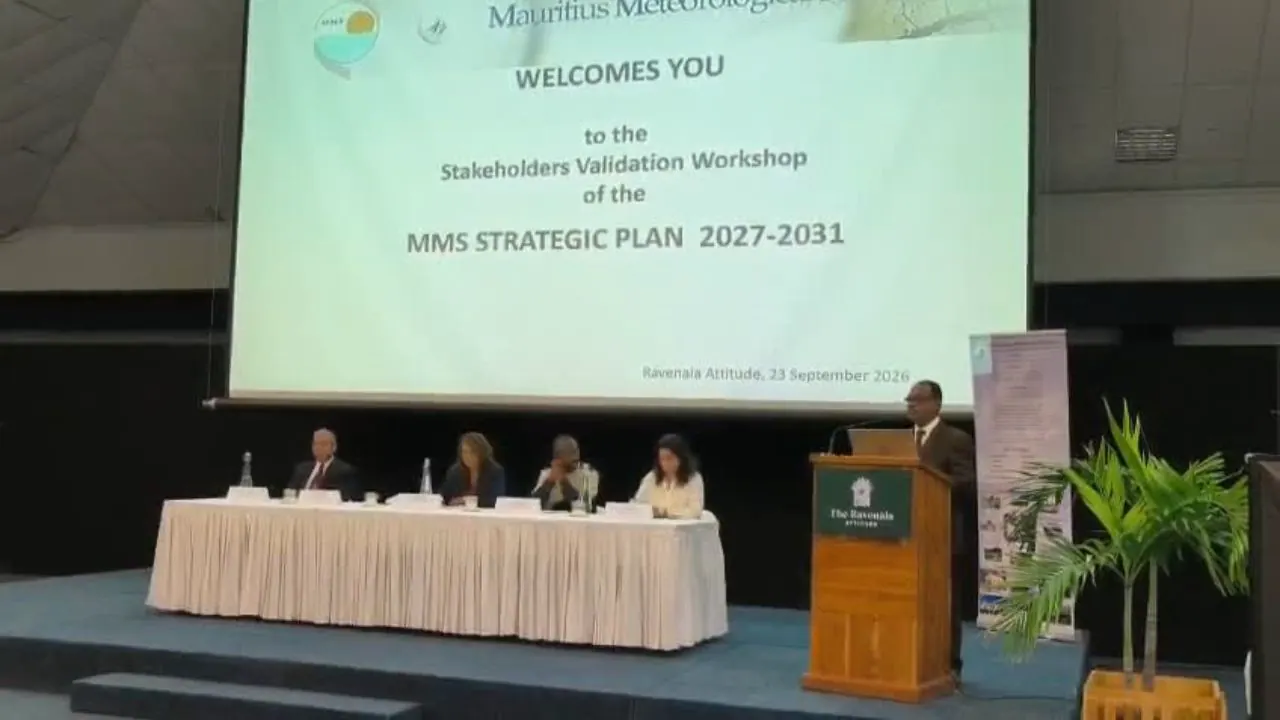
The Mauritian Meteorological Service recently held a workshop to discuss and validate its new strategic plan for 2027-2031. The plan was developed over three months, taking into account the guidelines of the World Meteorological Organization (WMO) and an analysis of the climate challenges Mauritius may face in the coming years. These challenges include droughts, global warming, changes in precipitation patterns, and the risk of flash floods and cyclones.
The strategic plan was developed by consultant Fareed Jaunboccus, who emphasized that the service must go beyond its traditional forecasting role and meet the growing needs of the government, various economic sectors, the private sector, and the public. Jaunboccus added a fifth objective to the WMO's four main goals, focusing on strengthening the capacities of the meteorological services. This objective is crucial to the plan's success, according to Jaunboccus.
The WMO reviewed the strategic plan and provided a favorable assessment, describing it as a "very good strategic plan." The consultant was also approached by the WMO to work on similar projects in the region. However, Jaunboccus stressed that the real challenge lies in implementing the plan, which requires collective involvement and active participation from the institution's leaders.
The workshop was attended by various stakeholders, including Dr. P. Booneeady, the Acting Director of the Meteorological Service. One of the main focuses of the future strategic plan is strengthening early warning systems, which is part of the "Early Warnings for All" initiative launched by UN Secretary-General António Guterres in 2022. The goal is to provide populations with access to alerts for various risks, including multi-hazard phenomena.
The changing climate conditions in Mauritius and Rodrigues necessitate a review of the Meteorological Service's capabilities. The service must consider factors such as changes in rainfall patterns, temperature fluctuations, sea-level rise, and shifts in precipitation patterns. The future alert system will also be based on impact-based forecasting, which aims to communicate not only the intensity of a meteorological phenomenon but also its potential consequences.
The future alert system will be more accessible, using visual elements and color codes to help the public quickly identify the level of risk. The transformation of the Meteorological Service will require the participation of numerous actors, including the government, private sector, economic sectors, local authorities, experts, and public representatives. These stakeholders will need to work together to determine the needs and operational modalities of the future system.
The strategic plan will be accompanied by an implementation plan that outlines the actions to be taken, as well as the necessary investments and resources. The Meteorological Service's transformation will require significant investments to improve its capabilities and meet the challenges posed by climate change. The implementation of the plan will be crucial in ensuring that the service can effectively adapt to these changes and provide essential services to the public.
Key points
- The plan focuses on adapting to climate change and improving early warning systems.
- The Meteorological Service must go beyond its traditional forecasting role and meet the growing needs of various stakeholders.
- The implementation of the plan will require significant investments and collective involvement from various stakeholders.