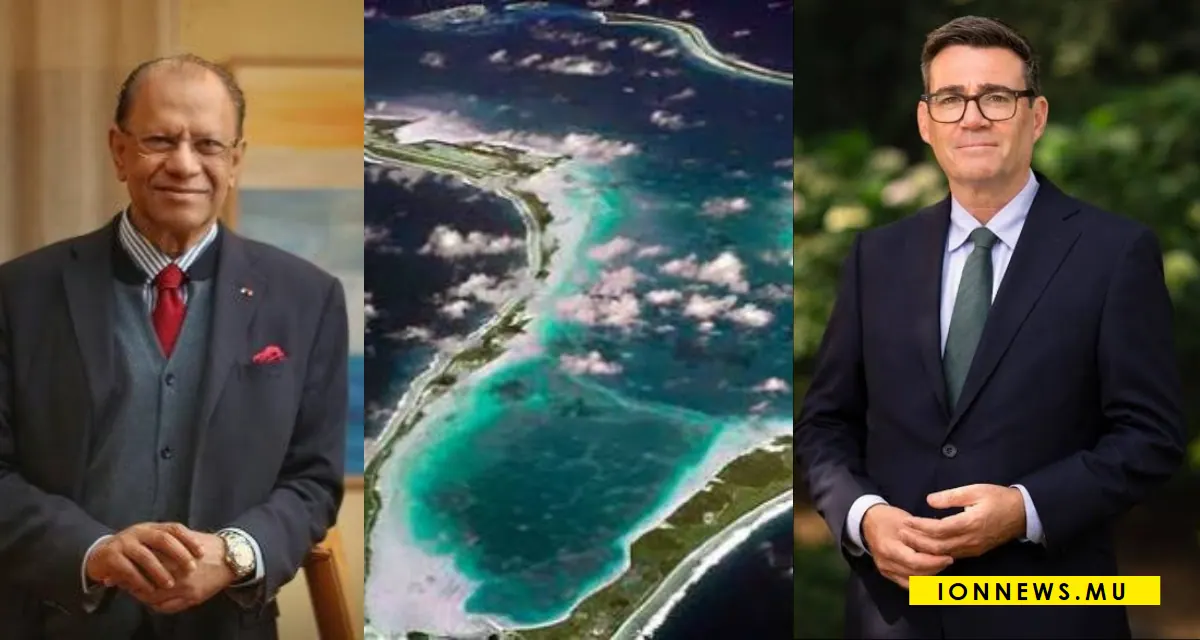
The debate over the Chagos archipelago continues in Mauritius, with three experienced politicians offering differing views on the matter. Former Prime Minister Paul Bérenger, leader of the FMP, has expressed concerns over Mauritius being excluded from discussions between London and Washington. He believes that Prime Minister Navin Ramgoolam's decision not to speak at the UN General Assembly was a mistake. Bérenger's comments highlight the divisions within the Mauritian government over the best approach to take in negotiations.
Prime Minister Navin Ramgoolam has defended his approach, citing the need for "quiet diplomacy" in negotiations. He chose not to respond to comments from US President Donald Trump, who described the agreement as "terrible". Ramgoolam's strategy has been supported by the Attorney General, Me Gavin Glover, who has urged restraint in public comments. Glover believes that many people are speaking out without being aware of the behind-the-scenes efforts being made.
However, not everyone agrees with Ramgoolam's approach. Xavier-Luc Duval, leader of the PMSD, has accused the Prime Minister of compromising the agreement through arrogance. Duval believes that Ramgoolam's attitude was encouraged by Paul Bérenger. The differing views on the best approach to take in negotiations have highlighted the challenges facing the Mauritian government in its efforts to secure sovereignty over the Chagos archipelago.
The agreement signed in 2025, which included significant compensation for Mauritius, has been put on hold. The UK government has announced that it will re-examine the agreement, and payments have been suspended. The situation has left the Mauritian government under pressure to secure a better deal. The country's leaders must navigate complex diplomatic relationships with the UK and US to achieve their goals.
The Attorney General's call for restraint in public comments has been met with skepticism. While the Mauritian government is pursuing a quiet diplomacy approach, its partners in the UK and US are speaking out publicly. Donald Trump's comments on the agreement have added to the uncertainty surrounding the negotiations. The Mauritian government must balance the need for public pressure with the need for discreet diplomatic efforts.
The Chagos archipelago has been a source of contention for many years. Mauritius has long claimed sovereignty over the islands, which were separated from the country in 1965. The agreement signed in 2025 was intended to provide compensation to Mauritius and pave the way for the country's claim to the archipelago. However, the agreement's fate is now uncertain, and the Mauritian government must work to secure a better deal.
The outcome of the negotiations will have significant implications for Mauritius. The country's leaders are under pressure to secure a better deal, but the process is complex and challenging. The Mauritian government must navigate the diplomatic relationships with the UK and US while also managing internal divisions over the best approach to take. The future of the Chagos archipelago and the country's claim to sovereignty remain uncertain.
Key points
- The Mauritian government is divided over the best approach to take in negotiations over the Chagos archipelago.
- The agreement signed in 2025 has been put on hold, and payments have been suspended.
- The outcome of the negotiations will have significant implications for Mauritius's claim to sovereignty over the Chagos archipelago.