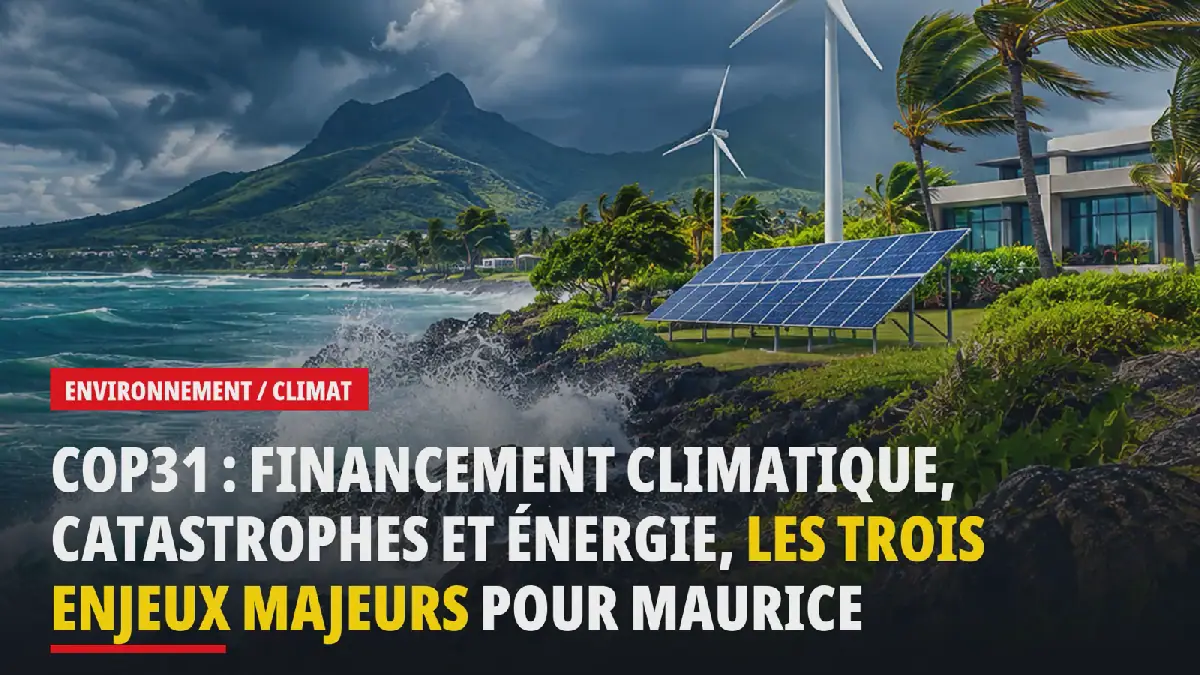
The COP31 negotiations in Antalya, Turkey, have entered their decisive phase with disagreements over fossil fuels and adaptation financing. For Mauritius and other small island states, three main issues dominate the discussions: effective access to financing, protection from disasters, and credible climate commitments. A draft decision proposes a roadmap for adaptation and resilience financing, as well as monitoring the challenges faced by small island developing states in accessing climate funds.
The draft document, obtained from the negotiations, outlines an "Antalya-Addis Abeba" roadmap on adaptation and resilience financing. It also addresses the difficulties encountered by small island developing states in accessing climate funds. However, the document is only a draft decision and not a definitive agreement. As of November 20, discussions were ongoing, and the possibility of extending the negotiations beyond the scheduled closure date was being considered.
Access to financing is a significant concern for Mauritius and other small island nations. Although large amounts of funding have been announced, the actual accessibility of these funds is crucial. Small administrations often face complex procedures for project development, obtaining guarantees, and tracking disbursements. The draft decision acknowledges the need to address regional obstacles and the specific challenges faced by vulnerable countries.
For Mauritius, practical concerns include financing for drainage infrastructure, water security, coastal protection, and infrastructure exposed to extreme weather events. The country's focus is on tangible responses to climate risks, such as early warning systems, continuity plans for essential services, and flood prevention measures. The effectiveness of international commitments will be measured by their translation into concrete projects, timelines, and identifiable budget allocations.
A controversy surrounding the proposed compromise on fossil fuels has sparked criticism due to the lack of explicit language on phasing out fossil fuels. This debate highlights the persistent differences between countries on the pace of energy transition. The positions taken and draft texts do not necessarily reflect the final outcome of the negotiations.
Once the final decisions are officially published, Mauritius will assess the adopted provisions, operational financing mechanisms, and access possibilities. It is essential to distinguish between political announcements, draft decisions, and actually available funds. The evaluation will focus on the concrete outcomes and their implications for Mauritius.
The final outcome of COP31 will have significant implications for Mauritius and other small island nations. The country's ability to access financing, protect itself from disasters, and achieve credible climate commitments will depend on the agreements reached in Antalya. The negotiations' final texts and decisions can be consulted on the official website of the United Nations Framework Convention on Climate Change (UNFCCC).
Key points
- Effective access to climate financing is crucial for Mauritius and other small island nations.
- Credible climate commitments and disaster protection are also key concerns for Mauritius at COP31.
- The final outcome of COP31 will significantly impact Mauritius' ability to address climate change and its associated challenges.