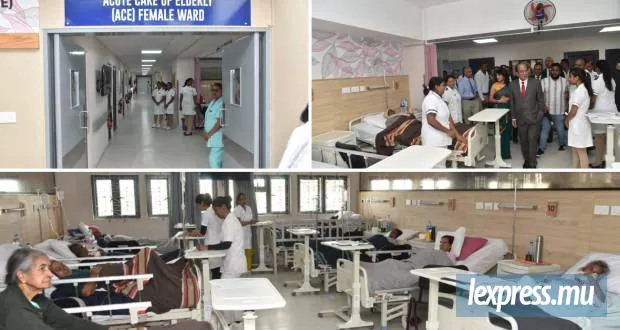
The Mauritian government has taken a significant step towards enhancing healthcare services for the elderly population with the inauguration of two Acute Care of Elderly Wards (ACE) at Jawaharlal Nehru Hospital in Rose-Belle. The units, one for men and one for women, were officially opened by Minister of Health Anil Bachoo on September 21, 2026, marking a new milestone in the country's healthcare system. This development coincides with World Alzheimer's Day and World Dementia Day, highlighting the importance of specialized care for elderly patients.
The two ACE wards at Jawaharlal Nehru Hospital have a combined capacity of 80 beds, with 40 beds in each unit. This brings the total number of ACE wards in the country's five regional hospitals to five, with similar units already operational at SSRN Hospital, Flacq Hospital, Victoria Hospital, and Dr. A.G. Jeetoo Hospital. The project is supported by Absa Bank, demonstrating collaborative efforts between the government and private sector to address healthcare needs.
The ACE wards are designed to provide comprehensive care to elderly patients with acute health issues, focusing on preserving their autonomy, mobility, and quality of life. These units adopt a multidisciplinary approach, bringing together medical professionals, nurses, health assistants, and paramedical staff to deliver specialized care. The Ministry of Health emphasizes that these wards are not limited to treating specific pathologies but aim to address the complex needs of elderly patients.
The demographic landscape of Mauritius is undergoing a significant shift, with nearly one in five citizens aged 60 or older, totaling approximately 280,000 people. This aging population necessitates a strengthened healthcare system that can cater to their unique needs. Minister Bachoo stressed the importance of having specialists, including geriatricians, psychiatrists, psychologists, and social workers, to provide quality care.
To ensure standardized care, the Ministry of Health has developed Standard Operating Procedures in collaboration with the World Health Organization (WHO). Additionally, weekly training sessions have been conducted for staff at the five regional hospitals. A holistic medical evaluation sheet has been introduced to assess patients' cognitive abilities, mobility, nutritional status, chronic diseases, and risks of falls, neglect, or abuse.
Dementia, including Alzheimer's disease, affects around 18,000 Mauritians, highlighting the need for early detection and intervention. The government has implemented the ICOPE (Integrated Care for Older People) program, enabling over 1,000 screenings per month in health facilities, hospitals, and communities. Early diagnosis clinics have also been established in all five regional hospitals, expanding services previously limited to Victoria Hospital and SSRN Hospital.
The government is committed to enhancing services for the elderly, as evident from the 2026-2027 Budget announcement to increase the Carer's Allowance from Rs 3,500 to Rs 4,200 per month. Minister Bachoo emphasized the importance of early detection and intervention, despite limited resources, and the efforts to strengthen specialized services across the country.
Key points
- The new ACE wards in Rose-Belle and other regional hospitals will provide specialized care to elderly patients.
- The units focus on preserving autonomy, mobility, and quality of life for elderly patients.
- The government has introduced initiatives for early detection and intervention for dementia and other age-related conditions.