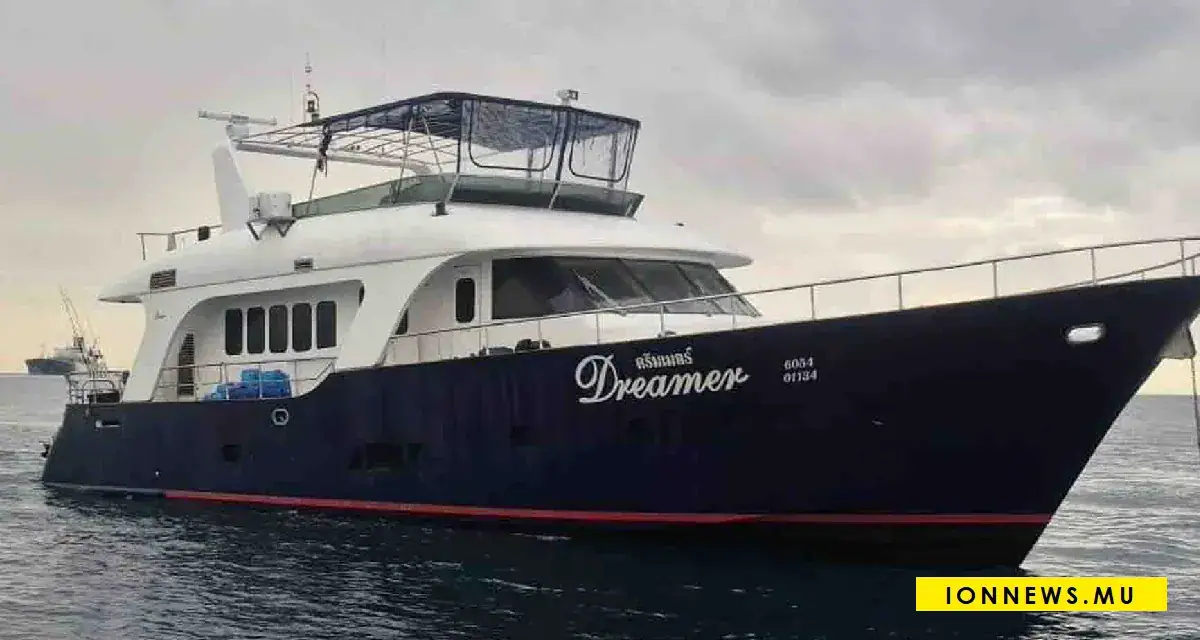
The recent case of the yacht Dreamer, suspected of being involved in the transportation of 1.5 tons of cannabis from Thailand to Mauritius, has reignited concerns about the country's maritime border surveillance. According to investigators, the cargo was likely transferred at sea to speedboats before being landed on the Mauritian coast. This incident highlights the complexities of policing Mauritius' extensive maritime zone, which spans approximately 2.3 million square kilometers.
The vastness of Mauritius' maritime zone poses significant challenges for the National Coast Guard (NCG). In 2025, the police commissioner emphasized the enormity of this area and the difficulties it presents for surveillance and intelligence gathering. The NCG faces considerable hurdles in effectively monitoring and responding to potential threats within this expansive zone. The commissioner's comments underscored the need for enhanced capabilities to tackle these challenges.
In response to these concerns, the Mauritian government has announced several measures aimed at bolstering its maritime capabilities. These include the installation of a coastal radar system, the acquisition of additional naval assets, and the establishment of a maritime information-sharing center. The center is expected to enhance coordination among various agencies and facilitate more effective response to maritime threats.
Significant progress has been made in implementing these measures. By September 2026, seven radar stations and five Automatic Identification System (AIS) stations had been installed. The maritime information-sharing center is slated to become operational in 2027. These developments are expected to improve the country's ability to detect and respond to suspicious maritime activities.
However, effective maritime surveillance requires more than just equipment and infrastructure. It also demands seamless coordination among various agencies, including the NCG, the Anti-Drug and Smuggling Unit (ADSU), customs, and regional partners. Moreover, rigorous tracking of suspect vessels is crucial to preventing and disrupting drug trafficking networks.
The Dreamer case serves as a stark reminder of the importance of a sustainable strategy to safeguard Mauritian waters against transnational trafficking networks. While the government has taken steps to enhance its maritime capabilities, the complexities of policing a vast maritime zone necessitate a multi-faceted approach that balances resources with operational effectiveness.
As Mauritius continues to address these challenges, the focus will be on ensuring that its enhanced surveillance capabilities translate into tangible results in the fight against drug trafficking. The country's experience with the Dreamer case underscores the need for vigilance and cooperation in protecting its maritime borders and preventing the misuse of its waters for illicit activities.
Key points
- The Mauritian government has invested in a coastal radar system and additional naval assets to enhance maritime surveillance.
- The country's extensive maritime zone spans approximately 2.3 million square kilometers, posing significant surveillance challenges.
- Effective maritime surveillance requires coordination among various agencies and rigorous tracking of suspect vessels.