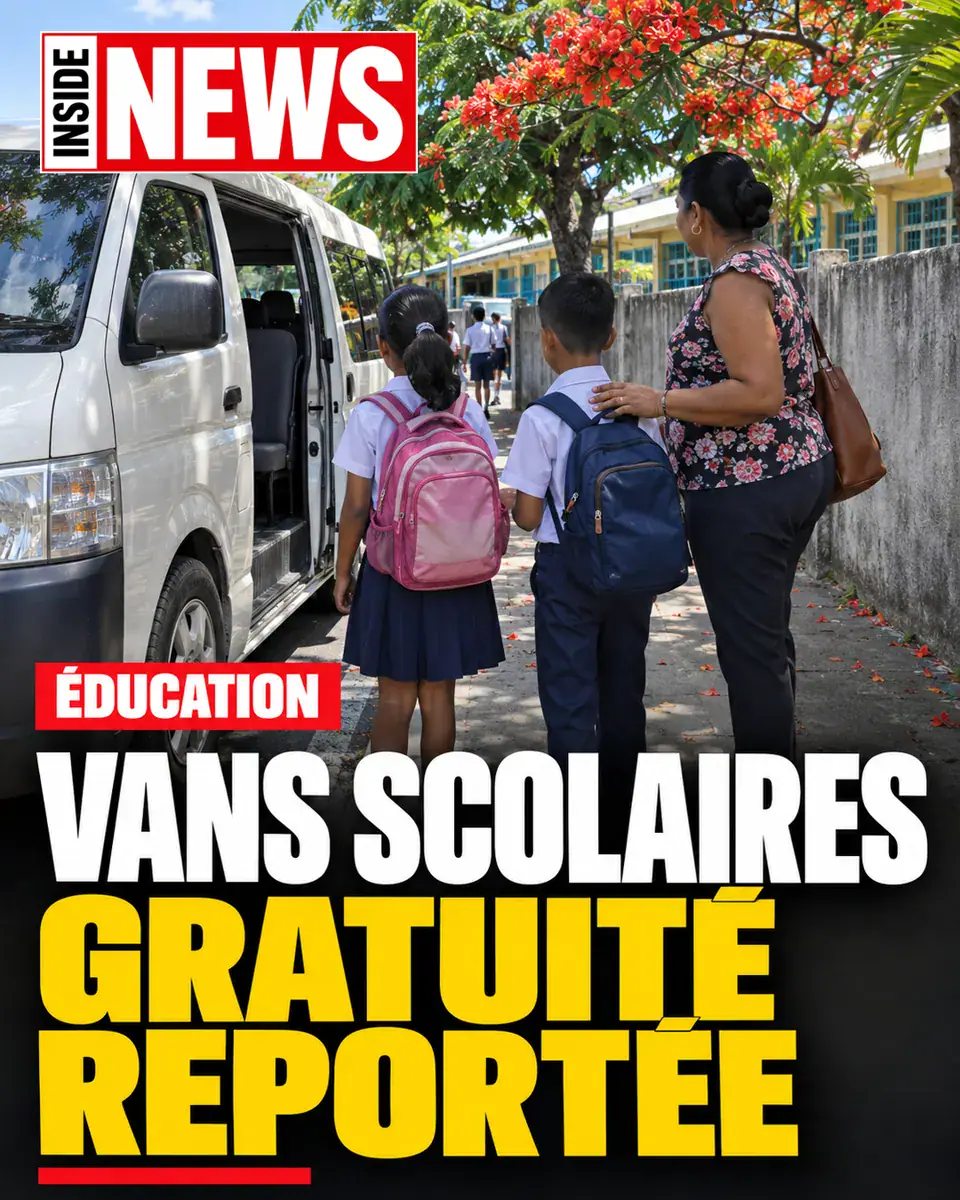
The Mauritius government has confirmed the postponement of its free school van project, citing economic constraints. The project, which was part of the Alliance du changement's electoral manifesto, aimed to provide free transportation for students who rely on vans to get to school. The decision was announced by Prime Minister Navin Ramgoolam in the National Assembly on November 17.
The free school van project was designed to support families whose children struggle to access schools due to limited public transportation options. The vans offer a door-to-door service, taking into account the students' addresses, school schedules, and safety requirements. However, with the postponement, parents will continue to bear the cost of transportation, which varies depending on the route, distance, and service provided by private operators.
According to Prime Minister Ramgoolam, the existing free public transportation system for students and seniors costs the government around Rs 1.6 billion annually. However, this figure does not represent the estimated cost of implementing the free school van project. The government has expressed its intention to maintain the existing assistance program while exploring options for the postponed project.
The postponement of the free school van project has raised concerns about the impact on families who rely on the service. While some students may have access to free public transportation, others may not have equivalent alternatives. The vans provide a vital service, particularly for students living in areas with limited public transportation or those with non-standard school schedules.
The government has not provided a revised timeline, estimated costs, or eligibility criteria for the free school van project. The lack of information has left parents uncertain about the future of the project and its potential benefits. The government's decision to postpone the project has sparked debate about the prioritization of budget allocations and the need for transparent planning.
The situation on the island of Rodrigues, which has unique transportation challenges, remains unclear. Prime Minister Ramgoolam indicated that Rodrigues would be considered in the public transportation system, but no specific details were provided. An evaluation of local conditions, distances, and transport capacities would be necessary to implement the project on the island.
The postponement of the free school van project has significant implications for families who rely on the service. With no clear timeline or estimates provided, parents will continue to bear the cost of transportation. The government's decision highlights the challenges of balancing budget constraints with social welfare commitments, and the need for transparent communication about policy decisions.
Key points
- The Mauritius government has postponed its free school van project due to economic constraints, affecting families who rely on the service for their children's education.