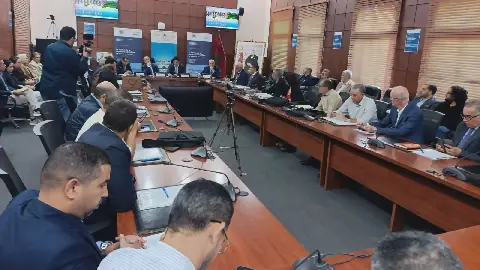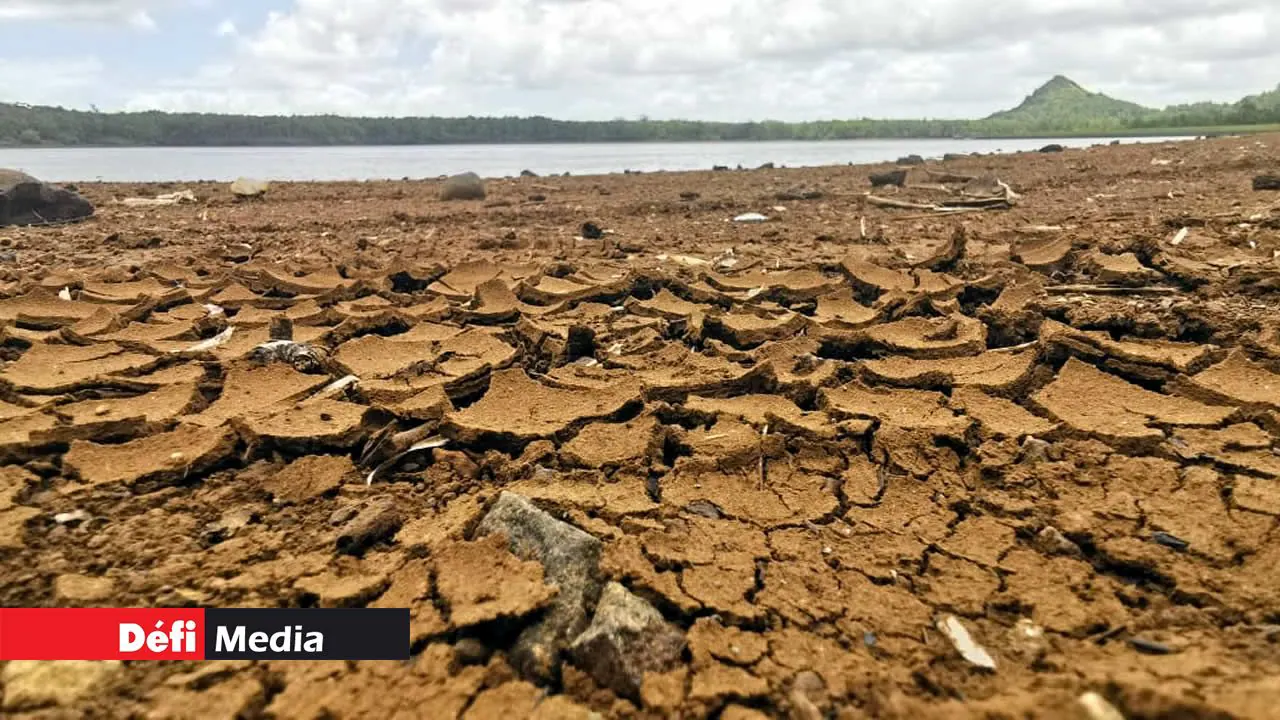
The Mauritian government has announced a series of measures to address the ongoing water crisis in La Marie, a region severely affected by the drought. A meeting of the inter-ministerial committee, chaired by Prime Minister Navin Ramgoolam, was held on October 22, 2026, to discuss the situation. The committee revealed that the Mare-aux-Vacoas reservoir, a major source of water for the region, was only 33.2% full.
The water supply to La Marie has been severely impacted, with the region currently receiving less than half of its usual daily allocation of 110,000 cubic meters of water. The government has attributed the shortage to the low water levels in Mare-aux-Vacoas. To mitigate the effects of the drought, the government plans to transfer an additional 10,000 cubic meters of water per day from Mare-Longue to La Marie starting from the following week.
In addition to the short-term measure, two long-term projects are planned to be completed by February 2027. The first project involves building a new station and pipeline to channel water directly from Tamarind Falls to La Marie, with a potential capacity of 20,000 cubic meters per day. The second project aims to upgrade the pipelines between Mare-Longue and La Marie, allowing for an additional 12,000 cubic meters of water to be transferred daily.
The government has also deployed several measures to support the affected communities. Since October 13, 2026, 14 boreholes on public and private land have been contributing to the water supply in the region. Mobile pumping and treatment stations have also been set up to extract water from rivers, with a projected daily output of 8,000 cubic meters. However, these sources have not always been able to maintain sufficient water pressure, particularly in elevated areas.
To support households, the Central Water Authority has installed ten 30,000-liter reservoirs, which are replenished daily. These reservoirs have been strategically located in various areas, including Cité Atlee, Cité Anoska, and L’Espérance. The authority has also relaxed the eligibility criteria for the Water Tank Grant Scheme, removing the monthly income ceiling of Rs 60,000 per household. Furthermore, 70 new staff members have been recruited to bolster the authority's operational capacity.
The government has also announced plans to upgrade the existing water infrastructure. The Pipe Replacement Programme aims to replace defective pipes, reduce water losses, and enable more durable repairs of leaks. A feasibility study on seawater desalination is set to be launched in the coming days. Additionally, the Wastewater Management Authority is working on projects to reuse treated wastewater for non-domestic purposes.
Despite the government's efforts, experts warn that the situation remains critical. Hydrologist Farook Mowlabaccus notes that the next significant rainfall is not expected until mid-December, and without substantial precipitation beforehand, the water levels in the reservoirs are likely to continue declining. Environmental consultant Sunil Dowarkasing emphasizes the importance of protecting forests and watersheds to sustainably preserve water resources.
Key points
- The Mauritian government has announced plans to transfer 10,000 cubic meters of water per day from Mare-Longue to La Marie to address the ongoing water crisis.
- Two long-term projects are planned to be completed by February 2027 to boost the water supply in La Marie.
- The government has deployed several measures to support affected communities, including the installation of reservoirs and relaxation of eligibility criteria for the Water Tank Grant Scheme.