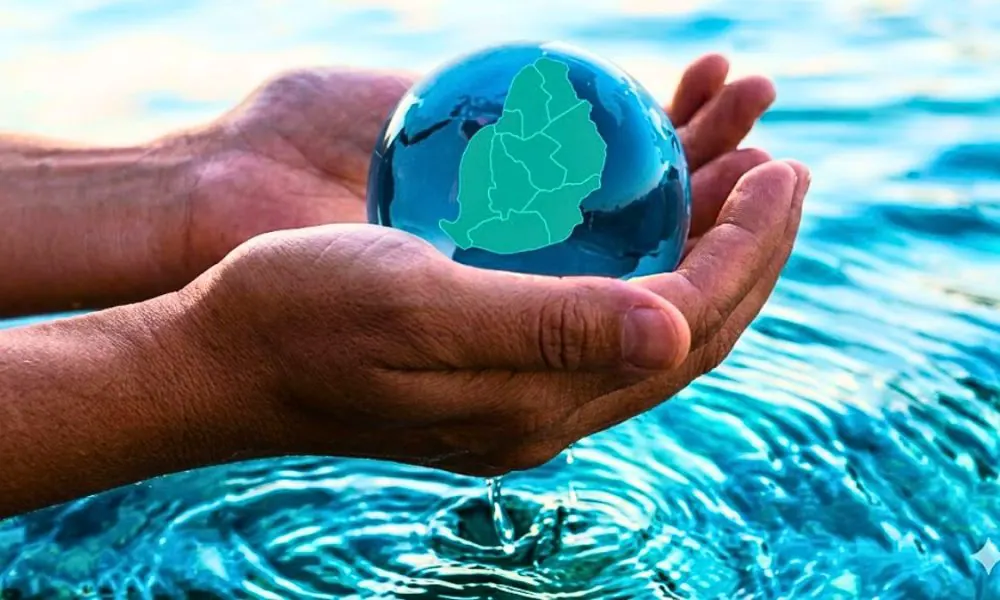
The government of Mauritius has established a Crisis Committee to address the country's worsening water scarcity, with the primary reservoir, Mare-aux-Vacoas, currently at a 36.6% fill level. The committee, chaired by the Minister of Energy and Public Utilities, will adjust supply measures based on ongoing reserves and meteorological forecasts. This move comes as the Central Water Authority (CWA) warns that reserves could drop to 20% by the end of November, potentially leading to even stricter water restrictions. Residents are already experiencing limited hours of water supply.
Mauritius has a long history of struggling with water scarcity, dating back to the creation of the CWA in July 1971. Despite numerous national studies, master plans, and infrastructure projects, the country has not been able to permanently eliminate network tensions. The first domestic storage at Mare-aux-Vacoas was established in 1885, with subsequent expansions in 1915, 1928, and 1961. Successive planning initiatives have been undertaken, including the FAO-UNDP Land and Water Resources study in the early 1970s and the 2012 Master Plan for Development of Water Resources.
The country has experienced several severe droughts, leading to strict rationing, notably in 1991 and April 1999. In January 2011, Mare-aux-Vacoas was at 39.7%, down from 70.5% the previous year, prompting the government to restrict usage and mobilize alternative sources. A combined meteorological and hydrological drought struck again in 2022 and 2023, followed by early warnings from the CWA in September 2024. Major infrastructure projects, such as the Midlands Dam and the Bagatelle Dam, have expanded capacity, but execution hurdles persist.
A 2010 study highlighted financing difficulties, procurement procedures, and a lack of dedicated monitoring teams as major challenges. A National Audit Office (NAO) performance audit in December 2025 revealed that only 39% of budgetary grants for pipe replacement programs were utilized over a 15-year span. However, the NAO noted recent acceleration, with internal CWA teams and SMEs replacing 385 kilometers of pipes over two years.
The distribution gap and non-revenue water are significant concerns, with treated water losses estimated at around 200,000 cubic meters daily in 2014. The NAO audit noted that approximately 60% of water was classified as Non-Revenue Water in 2024, hitting 195 million cubic meters for the 2024-25 financial year. Pipe replacement, leak detection, and meter reliability are critical priorities to address these issues.
To combat ongoing deficits, the Water Marshall Plan was approved in October 2025 to mobilize new resources over a two-to-three-year window. Immediate gains have been introduced, including eight new boreholes operational since November 2025, injecting an extra 24,800 cubic meters daily into the network, and seven filtration units installed since October 2025, delivering approximately 15,500 cubic meters daily.
Despite these additions, new resources cannot replace foundational work on storage and distribution infrastructure. As dry spells recur, water management in Mauritius repeatedly comes down to the same persistent challenge: bridging the gap between available resources and the water that actually reaches the tap. The Rivière-des-Anguilles Project, originally conceptualized in 2009, is slated to start construction in 2026, with commissioning eyed for late 2029.
Key points
- The Crisis Committee will adjust supply measures based on ongoing reserves and meteorological forecasts.
- The Water Marshall Plan aims to mobilize new resources over a two-to-three-year window.
- The country's water scarcity issues are exacerbated by a history of chronic shortages and infrastructure challenges.