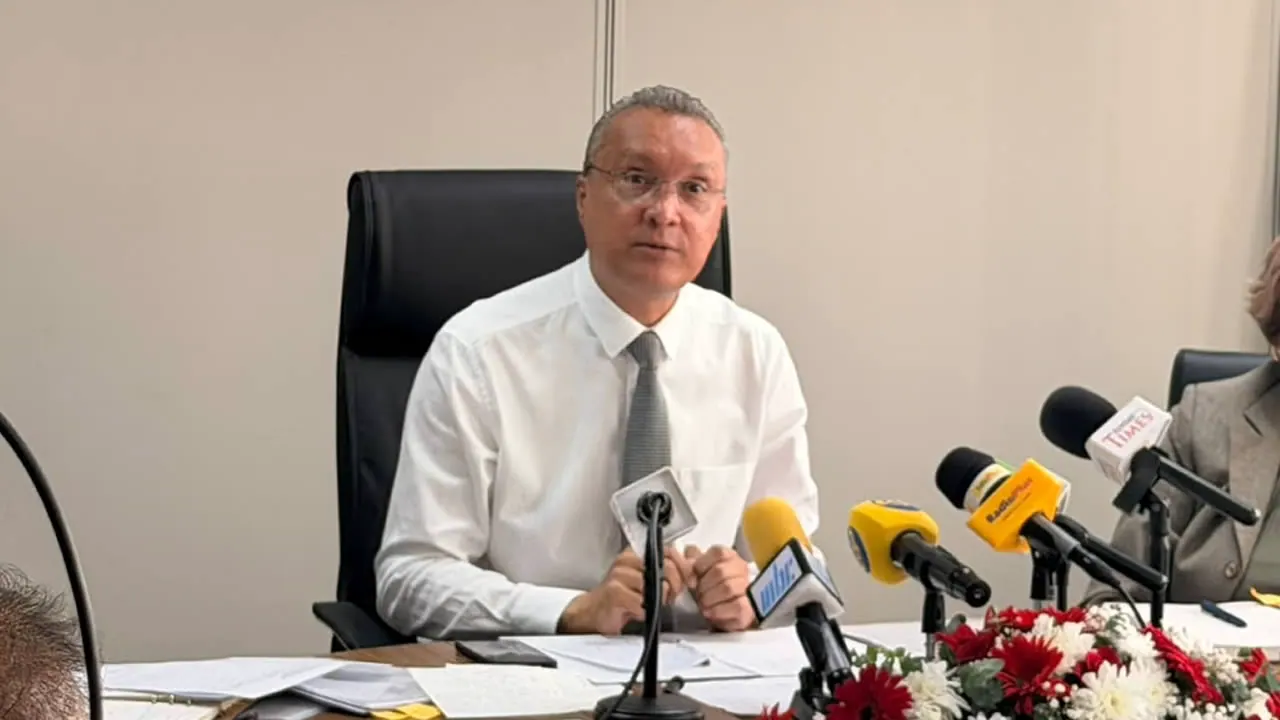
The water crisis in Mauritius has taken a turn for the worse, with the Mare-aux-Vacoas reservoir currently standing at 35.9% capacity, a significant drop from 88.6% at the same time last year. According to Minister Patrick Assirvaden, the situation is expected to worsen in the coming months, with no relief in sight until mid-December. The country's water authorities are scrambling to implement emergency measures to maintain the water supply.
The Central Water Authority (CWA) and other stakeholders have convened an emergency meeting to discuss the crisis. The data presented during the meeting revealed a worrying trend of below-normal rainfall over the past nine months. February was particularly dry, with only 115mm of rainfall recorded against an expected 328mm. This deficit has had a direct impact on the water reserves, with Mare-aux-Vacoas alone recording a 13 million m³ drop in water volume.
The consequences of the water shortage are already being felt, with 49,000 m³ less water being pumped daily from Mare-aux-Vacoas to La Marie compared to normal times. To mitigate the effects, the CWA is working to connect a dozen new boreholes to the network, which is expected to yield an additional 31,000 m³ of water. The water authority is also deploying mobile water treatment units to supplement the water supply.
The situation is further complicated by the changing rainfall patterns, which may be affecting the geographic distribution of rainfall. The minister noted that the rainfall regime could be shifting, with precipitation not necessarily occurring in areas where the main reservoirs are located. This has significant implications for the country's water management strategies.
To address the crisis, the authorities are exploring alternative sources of water. The Midlands reservoir, for example, is currently 78.7% full, but its water cannot be easily transferred to Mare-aux-Vacoas. The government is also working to increase the capacity of the Mare-Longue water transfer system, which could provide an additional 15,000 m³ of water.
The CWA is also enhancing its distribution capabilities, with 35 water tankers available to supply areas experiencing difficulties. A monitoring committee has been established to track the situation and ensure a coordinated response. The minister has appealed for understanding and cooperation from the public, acknowledging the challenges faced by those living in areas with low water pressure.
As the situation continues to unfold, the authorities are urging residents to conserve water and manage the resource carefully. With the dry season expected to persist until December, the government is working to implement emergency measures to mitigate the effects of the water shortage. The minister has emphasized the need for a coordinated response to address the crisis and ensure a stable water supply for the island nation.
Key points
- The Mare-aux-Vacoas reservoir has dropped to 35.9% capacity, a significant decline from 88.6% at the same time last year.
- The authorities are implementing emergency measures, including connecting new boreholes and deploying mobile water treatment units.
- The changing rainfall patterns may be affecting the geographic distribution of rainfall, complicating the country's water management strategies.