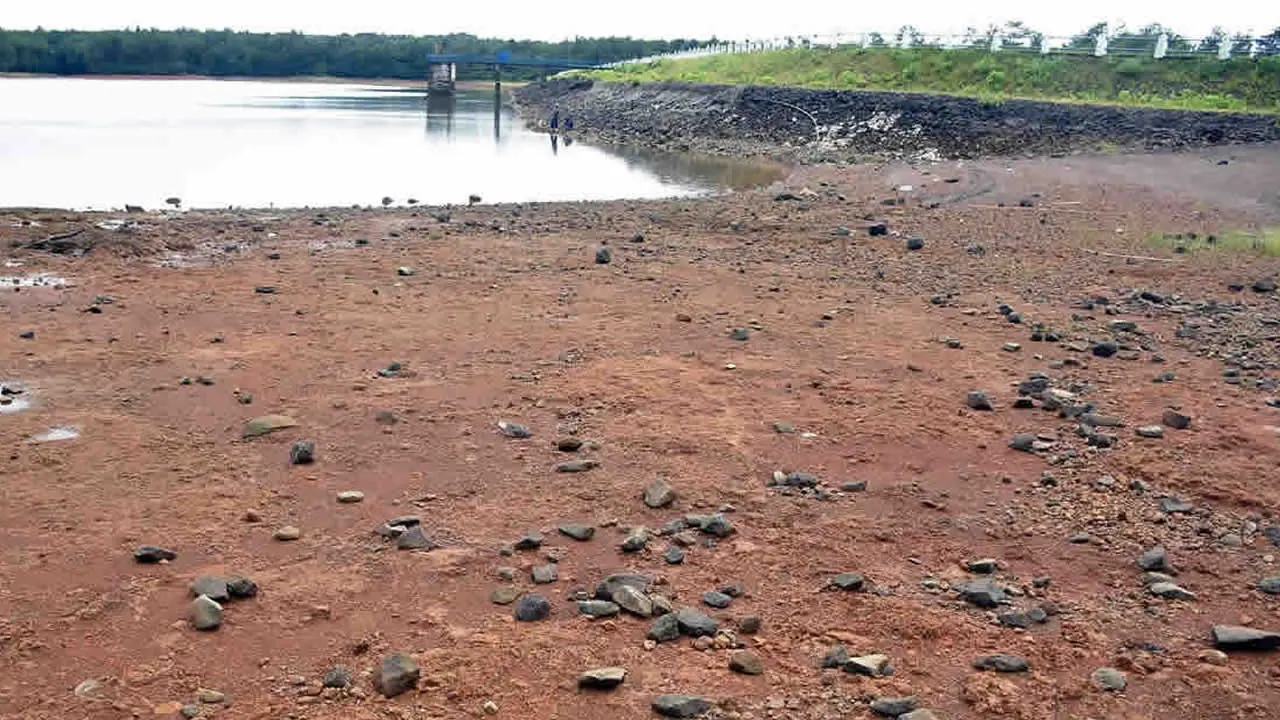
A severe water crisis has hit Mauritius, with prolonged cuts and rising public anger prompting emergency supply measures, expanded assistance for household storage, and plans for desalination. The crisis has brought households to struggle to meet their basic needs, with some residents reporting several days without running water. The authorities have announced emergency measures to increase supply, expand tanker deliveries, and help families obtain water storage equipment.
The pressure is particularly acute in areas supplied by Mare-aux-Vacoas, with the reservoir standing at 35.5% of capacity as of October 9. The overall filling level of the main reservoirs was 56.8%, compared with 87.0% at the corresponding point in 2025. Protests have erupted in several regions, including St-Paul, Allée-Brillant, Highlands, and Clairfonds No. 1, with residents demanding the restoration of water services.
The government has deployed water tankers and additional staff to affected areas, with Director General of the Central Water Authority (CWA) Shiam Thannoo reassuring residents about the quality of the water being delivered. The water in these tankers is treated water sourced from La Marie, the Bagatelle treatment plant, and the Candos reservoir. An additional 15 tankers have been deployed to support deliveries, with private operators also assisting the CWA in the Vacoas region.
Low pressure in the water distribution network is compounding the problem, with restricted supply periods and low pressure preventing some households from receiving sufficient quantities of water. In certain areas, distribution takes place between 3 a.m. and 8 a.m., sometimes resuming in the evening. However, the reduced volume available is affecting the network's ability to serve all consumers.
To address the crisis, the Cabinet has approved a series of measures, including the deployment of nine boreholes to provide an additional 30,000 cubic meters of water to the Plaines-Wilhems region. Around 4,000 cubic meters will also be drawn from the Pétrin and Papayes rivers to supply the La Marie treatment plant. The capacity of the pipeline connecting Mare-Longue reservoir to the plant is to be doubled.
The government has also announced plans to assist households in storing water, with Minister of Public Utilities Patrick Assirvaden announcing that assistance for water tanks and pumps would be extended to households without storage equipment, irrespective of income. The Development Bank of Mauritius's Water Tank and Water Pump Grant Scheme provides financial support for households to purchase water tanks and pumps.
Beyond the emergency response, Minister Patrick Assirvaden has identified climate change as a major influence on rainfall and said desalination would form part of the government's strategy against future water crises. Plans for a desalination plant in the north are underway, with a proposed capacity range of 10,000 to 50,000 cubic meters. The government is working to develop medium- and long-term solutions for the water sector.
Key points
- The water crisis in Mauritius has prompted emergency supply measures, including the deployment of water tankers and additional staff to affected areas.
- The government is considering desalination as a long-term solution to address future water crises.
- Assistance is being extended to households to store water, including financial support for water tanks and pumps.