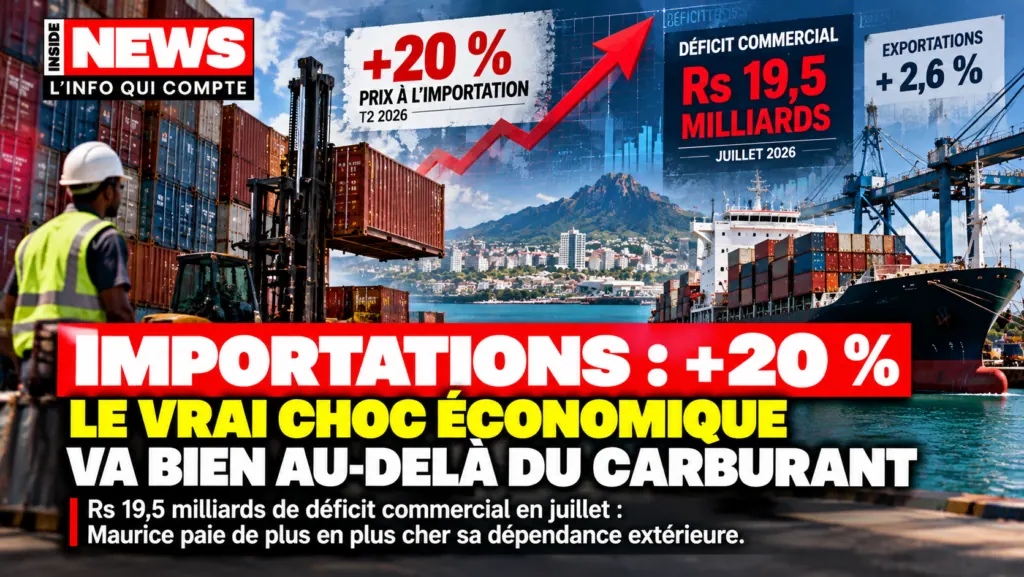
Mauritius is experiencing a substantial increase in import prices, with a 20% rise in the second quarter of 2026 compared to the previous quarter. This surge is largely attributed to the energy sector, with mineral fuels, lubricants, and related products seeing a 59.1% increase in import prices over the same period. The country's reliance on imported goods makes it vulnerable to external economic shocks.
The price hike is not limited to energy, as the country's trade deficit also widened. In July, Mauritius imported goods worth Rs 30.385 billion and exported Rs 10.871 billion, resulting in a trade deficit of Rs 19.514 billion. This represents a 35.2% increase compared to the same period in 2025. The growing trade deficit and rising import prices are two distinct indicators that together highlight the pressure on the country's external trade.
The impact of the import price hike is not immediately reflected in consumer prices, but it does indicate the challenges faced by the economy. The country's dependence on imported goods, including food, machinery, vehicles, and raw materials, is a significant concern. As a small island nation, Mauritius cannot produce all its consumption needs domestically, making it essential to identify areas where dependence can be reduced.
The recent price increases have sparked a debate on the country's energy production, local production, and competitiveness. To mitigate the effects of the import price hike, the focus should be on making informed choices about energy, local production, and competitiveness. This will require careful consideration of the costs and benefits of different options.
The energy sector is a significant contributor to the import price hike, with petroleum products and gas prices increasing by 64% and 42%, respectively. These price increases have a ripple effect on the economy, highlighting the need for a comprehensive strategy to address the country's energy needs and reduce its dependence on imported fuels.
The trade deficit and import price hike are pressing concerns for the Mauritian economy. The country's policymakers will need to carefully balance the need to reduce dependence on imported goods with the potential costs of increasing domestic production. This will require a nuanced understanding of the economy and the impact of different policy choices.
As the country navigates these economic challenges, it is essential to prioritize informed decision-making and strategic planning. By focusing on energy production, local competitiveness, and reducing dependence on imported goods, Mauritius can work towards mitigating the effects of the import price hike and promoting sustainable economic growth.
Key points
- Mauritius' import prices surged 20% in Q2 2026, driven by a 59.1% increase in mineral fuels, lubricants, and related products.
- The country's trade deficit widened to Rs 19.514 billion in July, a 35.2% increase compared to the same period in 2025.
- Policymakers face the challenge of reducing dependence on imported goods while balancing the potential costs of increasing domestic production.