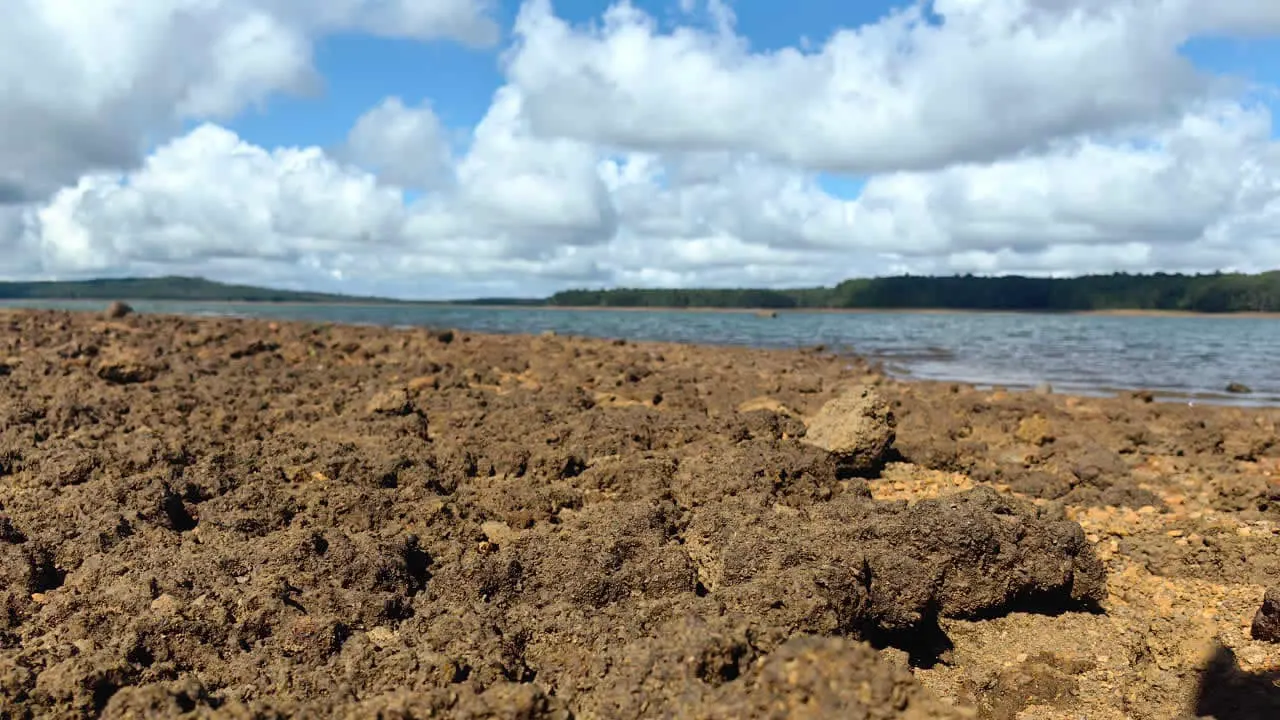
The island nation of Mauritius is once again grappling with a water crisis, as the country's main reservoir, Mare-aux-Vacoas, has dwindled to 36.6% capacity. The Central Water Authority (CWA) is considering stricter restrictions and warns that levels could drop to 20% by the end of November if dry conditions persist. In response, the government has established a Crisis Committee, led by the Minister of Energy and Public Services, to adjust measures according to reserves and weather forecasts.
This is not the first time Mauritius has faced a water crisis. The country's first water retention dam, Mare-aux-Vacoas, was built in 1885, and subsequent droughts have consistently led to restrictions. The creation of the CWA in 1971 marked a new era in water management, with the authority responsible for developing and conserving water resources, as well as treatment and distribution. Since then, numerous studies and plans have been conducted, but the country continues to struggle with water shortages.
The history of water management in Mauritius is marked by repeated attempts to address the issue. In the 1970s, the Land and Water Resources study, conducted under the FAO-PNUD cooperation, served as a basis for subsequent works. A 1974 study focused on developing the water supply, while a 1981 plan aimed to coordinate sector projects. The 1991 drought led to strict rationing, and in 1999, the Cabinet reviewed the challenges posed by prolonged droughts and decided to strengthen the CWA's management capacity.
Despite these efforts, water losses remain a significant challenge. In 2014, the National Economic and Social Council estimated that around 200,000 cubic meters of treated water were lost daily, primarily due to leaks. The National Audit Office reported that approximately 60% of water was classified as Non-Revenue Water in 2024, with this figure reaching 195 million cubic meters in the 2024-25 financial year. This includes not only leaks but also commercial losses and authorized but unpaid consumption.
The replacement of aging infrastructure is crucial to addressing the issue. However, a 2010 study by K. Lutchmun and V. Proag highlighted the challenges of implementing large hydraulic projects, including financing difficulties, procurement procedures, and a lack of dedicated teams. The National Audit Office has also noted delays in implementing successive plans, with only 39% of budgeted subsidies used for pipeline replacement over 15 years.
In recent years, the government has made efforts to accelerate infrastructure development. The Master Plan for Development of Water Resources, launched in 2012, outlined several projects to strengthen the country's water resources. However, several projects have been delayed, and some infrastructure expected to be operational by 2025 may not be completed for several years. The Rivière-des-Anguilles project, first conceived in 2009, has seen its estimated cost rise from Rs 2.6 billion to Rs 9.4 billion.
In response to the current crisis, the government has approved the Water Marshall Plan, which aims to mobilize new resources over two to three years. The plan includes developing groundwater and surface water, reusing treated water, and implementing small dams and desalination. Recent measures have already yielded additional water volumes, with eight new boreholes injecting 24,800 cubic meters of water into the network daily and seven filtration units providing 15,500 cubic meters daily.
Key points
- Mauritius has struggled with water crises for over 50 years, despite numerous plans and infrastructure development efforts.
- The country's water crisis is exacerbated by aging infrastructure, with significant water losses due to leaks and other issues.
- The government has established a Crisis Committee to manage the emergency and approved the Water Marshall Plan to address the issue.