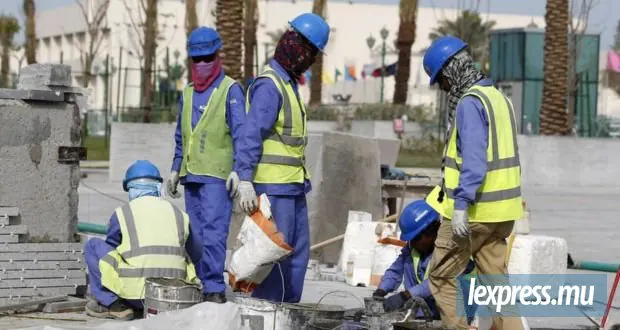
Mauritius is facing a significant demographic challenge, with a declining fertility rate and an aging population. The country's population has long been viewed as a constraint, but it is now becoming a scarce resource. Many young Mauritians are leaving the island to study, work, or settle abroad, while businesses are recruiting more foreign workers to keep the economy running. This paradox has significant implications for the country's economic growth and development.
According to expert Soorej Jose Puthoopparambil, Mauritius may need around 500,000 migrant workers to achieve its Vision 2050 goal of a $50 billion economy. The country's migration balance is a concern, with more Mauritians leaving than arriving. To address this issue, the government must consider why it needs foreign workers, which ones it wants to attract, and how it will utilize them. The question is no longer whether Mauritius needs foreign workers, but rather how it will integrate them into its economy.
Importing labor to compensate for a shortage is a short-term solution, while importing skills to increase productivity is a long-term development strategy. The government must determine whether it wants to attract workers who accept low-paying jobs that Mauritians are unwilling to take or those who can contribute to the country's economic growth. If the salaries, working hours, and conditions are not attractive enough to retain Mauritians, the labor shortage may not be just a matter of numbers, but also a lack of decent jobs.
The issue of brain drain is also a concern, with many Mauritians leaving the island to pursue better opportunities abroad. Hoping that they will return solely because they are called back is unrealistic. Talents return to places where living and working conditions are competitive. In the absence of a return, the diaspora can still contribute capital, networks, and knowledge to the country's economy.
The government must also address the issue of social integration, as migrants are not just labor containers, but also live, work, and access healthcare and education on the island. A policy that attracts workers without providing housing, schools, healthcare, and integration will not manage migration, but rather accumulate a future social crisis. Mauritius must choose between two visions: one where foreigners fill the gaps in an economy that refuses to reform, and another where migration is an instrument to transform the economy.
The first option may provide temporary relief, but the second option offers a more sustainable future. The real luxury for a small, aging island like Mauritius will not be having many workers, but rather knowing how to make each worker, whether Mauritian or migrant, produce more value. The government must prioritize the quality of the available human capital and create an environment that attracts and retains skilled workers.
Ultimately, Mauritius must adopt a comprehensive approach to address its demographic and economic challenges. This includes investing in education and training, promoting decent work conditions, and encouraging the diaspora to contribute to the country's development. By doing so, Mauritius can create a more sustainable and competitive economy that benefits both its citizens and migrant workers.
Key points
- Mauritius may need around 500,000 migrant workers to achieve its Vision 2050 goal of a $50 billion economy.