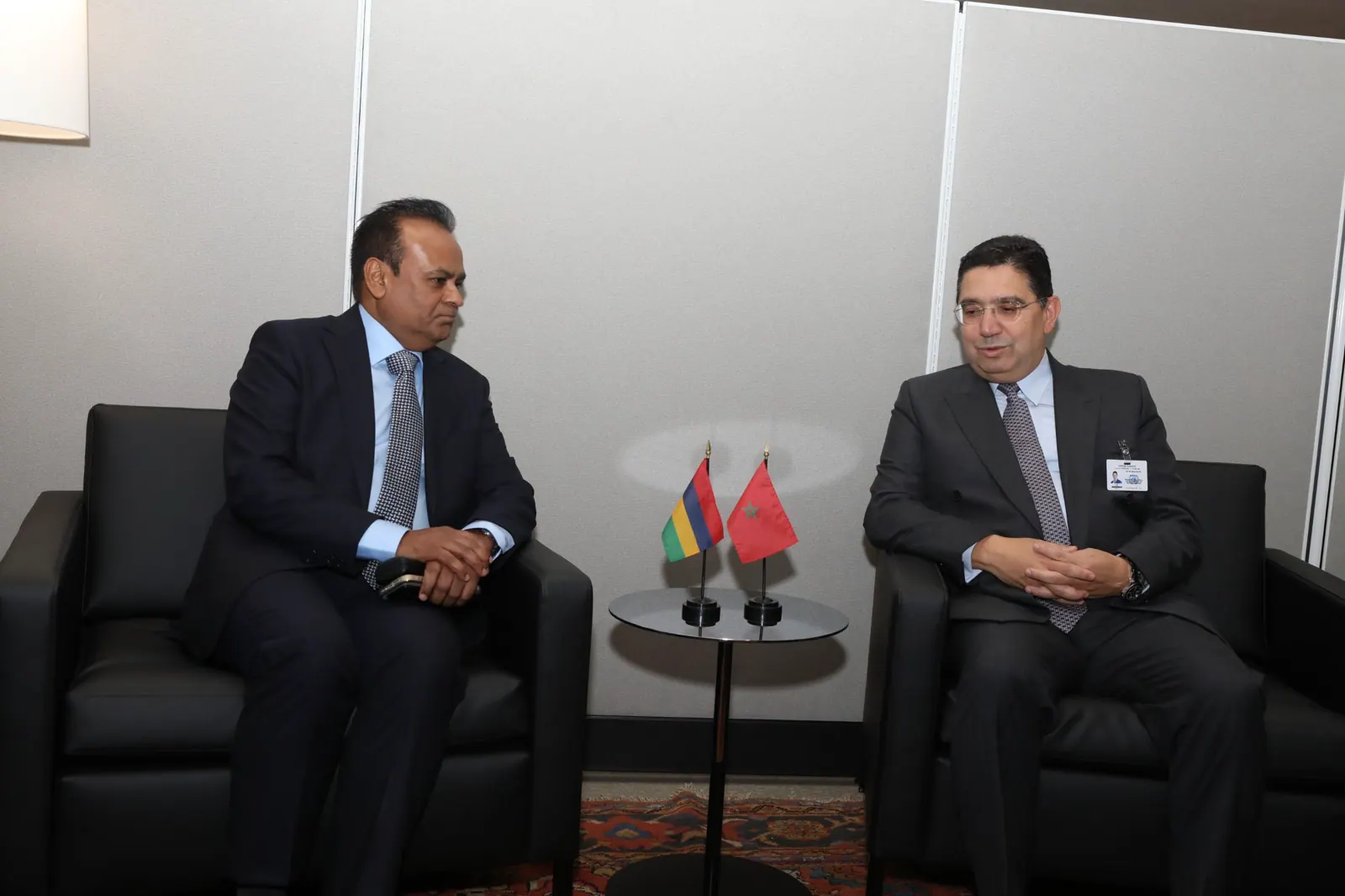
Mauritius has become the latest country to endorse Morocco's sovereignty over Western Sahara, with Foreign Minister Dhananjay Ramful announcing the shift during talks with his Moroccan counterpart, Nasser Bourita, on the sidelines of the 81st session of the UN General Assembly. Ramful stated that Mauritius had revised its stance at a recent cabinet meeting, following the adoption of UN Security Council Resolution 2797. The resolution is seen as "grounded in pragmatism" and autonomy under Moroccan sovereignty is viewed as "the most realistic, most just, and most durable" path to a settlement.
This development adds weight to the diplomatic momentum that Rabat has built around the Autonomy Plan, transforming it from a Moroccan proposal into the principal basis for a negotiated settlement. Moroccan officials now cite more than 130 countries as backing the initiative or positions aligned with it. Each new endorsement narrows the diplomatic space available to competing formulas and reinforces the autonomy framework as the reference point around which negotiations are expected to revolve.
The significance of Mauritius' endorsement is cumulative, contributing to the international isolation of the separatist option. What was once treated as one proposal among several is increasingly being positioned by Rabat and its partners as the organizing logic of the entire political process. This momentum framed Bourita's address to the General Assembly, where he argued that the Sahara question had reached a historic turning point.
Bourita traced the shift to Resolution 2797, adopted in October 2025, and maintained that the artificial dispute had since entered an irreversible course of rupture with the past and projection toward a definitive resolution. He laid out six principles that, he maintained, leave no room for interpretation or for any reading "between the lines." There is no solution outside autonomy under Moroccan sovereignty, and no mechanism beyond UN-led political negotiation based exclusively on the autonomy initiative.
Bourita rejected any survival of the status quo favored by the other parties, suggesting that "the train of the political solution is already moving." He denied all credibility to interlocutors who violate the ceasefire and refuse to honor Security Council resolutions, a direct strike at the Polisario separatists and, by extension, their patrons in Algiers. He warned that "no tolerance will be shown toward the continued holding hostage of the populations of the Tindouf camps for half a century."
Bourita also pointed to Morocco's accelerating development of its southern provinces under King Mohammed VI, spanning infrastructure, universities, health care, and airports. He projected that Sahrawis would again perform their national and political duty in Wednesday's legislative elections, reinforcing genuine democratic representation and their control over local affairs. This development is seen as a significant step toward a definitive resolution of the Sahara question.
The endorsement by Mauritius is seen as a major boost to Morocco's position on Western Sahara, with the country now joining over 130 nations that support autonomy under Moroccan sovereignty as the basis for resolving the regional dispute. The diplomatic momentum is expected to continue, with Morocco and its partners pushing for a negotiated settlement based on the Autonomy Plan.
Key points
- Morocco's autonomy plan gains international support
- Mauritius endorses Morocco's sovereignty over Western Sahara
- Over 130 countries now support autonomy under Moroccan sovereignty