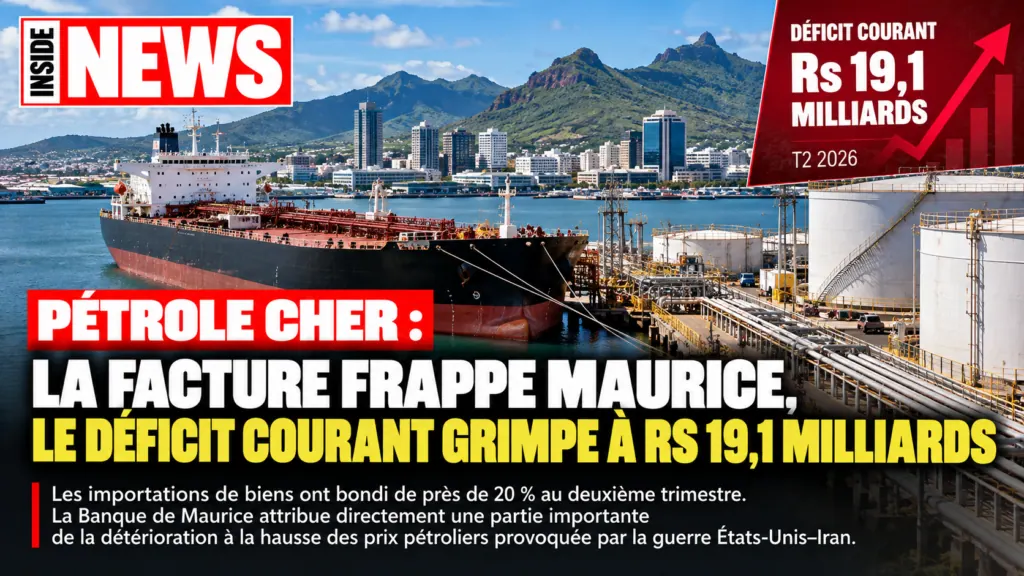
The current account deficit of Mauritius reached Rs 19.1 billion in the second quarter of 2026, up from Rs 13.1 billion in the same period of 2025, according to the Bank of Mauritius. This widening deficit is primarily attributed to the trade in goods, which saw a deterioration from Rs 40.9 billion to Rs 54.1 billion in a year. The increase in imports of goods, which rose by 19.5% to Rs 90.5 billion, was a major contributor to this deficit.
The Bank of Mauritius has directly linked a significant part of this deterioration to the rise in oil prices triggered by the US-Iran conflict. The global oil shock is now visibly impacting Mauritius' accounts, with the country importing nearly all its fossil fuel energy. As a result, when oil prices increase substantially, more foreign exchange is required to finance the same energy needs. This has led to a notable surge in imports of fuels, lubricants, and related products.
Despite the alarming increase in the current account deficit, some aspects of Mauritius' economy are showing resilience. The tourism sector continues to play a crucial role in mitigating the impact, with the services account recording a surplus of Rs 35.3 billion. Additionally, gross tourism receipts reached Rs 25.7 billion, representing a 7.9% increase year-over-year. This indicates that the tourism industry remains a vital component of Mauritius' economy.
The overall balance of payments for Mauritius remained largely positive, with a surplus of Rs 64.5 billion in the second quarter. This suggests that the country's external situation is not in a state of widespread crisis. However, the significant increase in energy import costs poses a risk to the current account balance. With global oil markets still experiencing disruptions due to tensions in the Middle East and exceptionally high transportation costs, this pressure is unlikely to dissipate soon.
For Mauritius, the impact of rising oil prices is not just a distant concern; it has tangible effects on the country's economy. The surge in oil prices leads to increased expenditure on energy imports, which can rapidly deteriorate the current account balance. Given the country's reliance on imported energy, the effects of oil price fluctuations are particularly pronounced.
The Bank of Mauritius' data highlights the challenges faced by the country in managing its external sector. While the tourism sector continues to perform well, the increase in oil prices and subsequent rise in energy import costs pose significant challenges. Policymakers will need to closely monitor these developments to mitigate the potential risks to the country's economic stability.
In conclusion, Mauritius' current account deficit has widened significantly due to the increase in oil prices caused by the US-Iran conflict. While some sectors, such as tourism, continue to show resilience, the country's reliance on imported energy makes it vulnerable to fluctuations in global oil prices. As the global oil market remains volatile, Mauritius will need to navigate these challenges carefully to maintain economic stability.
Key points
- The current account deficit of Mauritius widened to Rs 19.1 billion in Q2 2026 due to increased oil prices.
- The tourism sector continues to play a crucial role in mitigating the impact of the deficit.
- The country's reliance on imported energy makes it vulnerable to fluctuations in global oil prices.