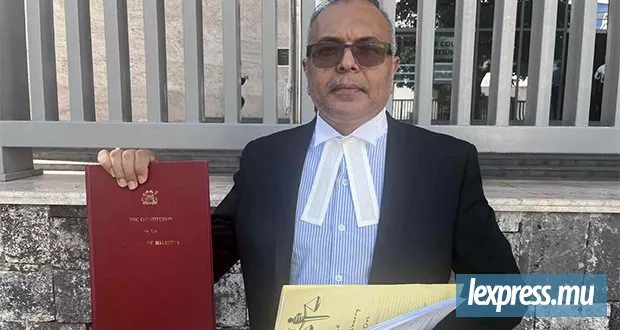
The Acquisition and Cross-Servicing Agreement (ACSA) between Mauritius and the United States, signed on July 16, continues to face opposition. Me Sanjeev Teeluckdharry, leader of the Congrès citoyen mauricien, has argued before the Supreme Court that the agreement can still be suspended pending a constitutional review. The case was presented during a Formal Matters Session, with Chief Judge Rehana Mungly-Gulbul presiding. Teeluckdharry countered claims from the state, the Prime Minister, and the Foreign Minister that the agreement has already been signed and is no longer a live issue.
The opposing parties, represented by an affidavit from Commissioner of Police Rampersad Sooroojebally, dated August 31, questioned Teeluckdharry's locus standi, or right to challenge the agreement. However, Teeluckdharry maintained that since the ACSA has not yet been implemented, its provisions remain uncertain and subject to court intervention. He expressed concerns that the agreement could pave the way for a US military presence in Mauritius. Teeluckdharry, as a Mauritian citizen, claimed a direct interest in the matter due to the sovereignty implications.
The constitutional petition, filed in June by Teeluckdharry and Me Sacheen Boodhoo, seeks to have the ACSA declared unconstitutional and therefore null and void. The petitioners argue that the agreement contravenes several constitutional provisions. The Supreme Court has adjourned the case until October 5, with the in-depth examination yet to be scheduled. Teeluckdharry emphasized the role of the Supreme Court as the guardian of the Constitution, citing Article 1, which defines Mauritius as a "sovereign democratic state."
The ACSA has sparked concerns among various stakeholders in Mauritius. The agreement aims to enhance cooperation between the two countries but has been met with resistance from those worried about the potential erosion of national sovereignty. Teeluckdharry's legal challenge reflects broader concerns within Mauritian society about the implications of closer ties with the US.
The Supreme Court's decision on whether to grant a stay on the ACSA's implementation will have significant implications for Mauritius-US relations. The court's role in balancing national security concerns with constitutional obligations will be closely watched. The case has been closely followed by various interest groups and citizens.
The Mauritian government has yet to comment on the specifics of the case. However, the Attorney General's office has indicated that it will present its arguments in due course. The case is expected to continue to attract significant attention in the coming weeks.
The outcome of this case could have far-reaching consequences for Mauritius's foreign policy and strategic partnerships. The Supreme Court's ruling will provide clarity on the constitutional limits of executive actions in matters of international agreements.
Key points
- The Supreme Court of Mauritius will hear a petition challenging the constitutionality of the Acquisition and Cross-Servicing Agreement with the US.
- The petition, filed by Me Sanjeev Teeluckdharry, argues that the agreement could compromise Mauritian sovereignty.
- A decision on whether to grant a stay on the agreement's implementation is pending.