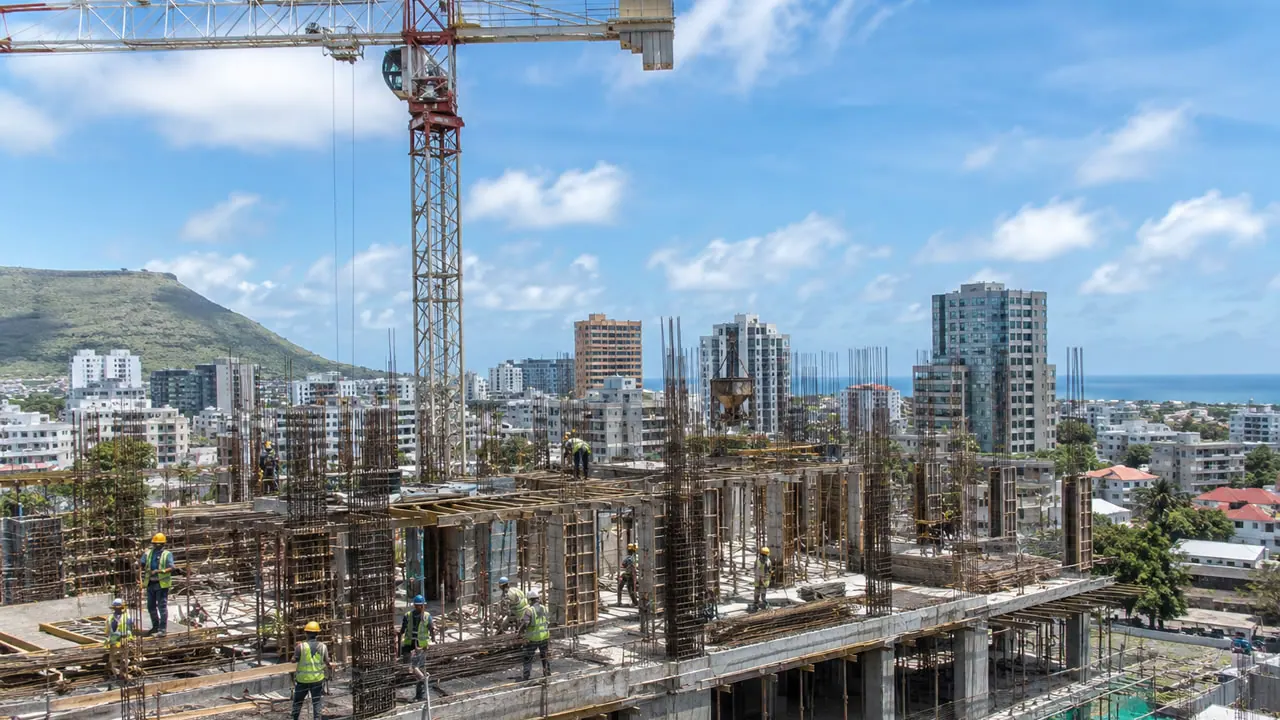
The construction industry in Mauritius accounts for nearly two-thirds of the country's investments, making it a crucial sector for economic growth. The Building and Civil Engineering Contractors Association (BACECA) recently gathered industry stakeholders, including contractors, engineers, consultants, and jurists, to discuss the importance of balanced risk distribution in construction contracts. The meeting, held on October 7 in Port-Louis, aimed to highlight the consequences of unbalanced contracts and promote best practices.
The BACECA is advocating for a return to international best practices in contract management, citing the importance of fair risk distribution for project success. According to Ravi Gutty, president of the BACECA, well-structured contracts are essential for reducing risks, controlling costs, and ensuring project success. The association is pushing for contracts that reflect the principles of the Fédération internationale des ingénieurs-conseils (FIDIC), which emphasize that each risk should be assumed by the party best equipped to manage it.
FIDIC contracts are widely used in Mauritius' public and private projects, but the BACECA argues that modifications to these contracts often disrupt the balance of risks. Specifically, certain clauses can transfer significant risks to contractors, including price fluctuations, unforeseen site conditions, payment delays, and dispute resolution. This can lead to increased costs, reduced competition, and more frequent disputes, according to Gutty.
The consequences of unbalanced contracts can be severe, with contractors often incorporating unmanageable risks into their prices. This can result in higher costs, reduced competition, and more frequent disputes. The FIDIC has recognized these issues and published its "Golden Principles" in 2019, which aim to preserve contract balance. The BACECA has been following this issue closely and had previously engaged with FIDIC on the matter in 2022.
To promote best practices, the BACECA organized a workshop led by Robert Aloys Werth, an accredited international trainer with FIDIC. The workshop used real-life examples and case studies to illustrate the consequences of poorly drafted contracts. According to Gutty, participants gained a deeper understanding of how certain contract clauses can escalate project issues into costly and prolonged conflicts.
The BACECA emphasizes that its push for balanced contracts is not about pitting contractors against project owners, but rather about protecting the interests of all parties involved and improving project performance. The association plans to continue engaging with public bodies, professional associations, and private sector stakeholders to promote the adoption of more transparent and balanced contracts that align with international standards.
The industry's move towards more balanced contracts is seen as essential for maintaining competitiveness and ensuring project success in Mauritius. With the construction sector playing a vital role in the country's economy, stakeholders are keen to address the challenges posed by unbalanced contracts. The BACECA's efforts aim to create a more sustainable and equitable construction industry in Mauritius.
Key points
- Construction industry stakeholders in Mauritius are calling for fairer risk distribution in contracts to ensure project success and competitiveness.
- The Building and Civil Engineering Contractors Association (BACECA) is promoting a return to international best practices in contract management.
- Unbalanced contracts can lead to increased costs, reduced competition, and more frequent disputes in the construction sector.