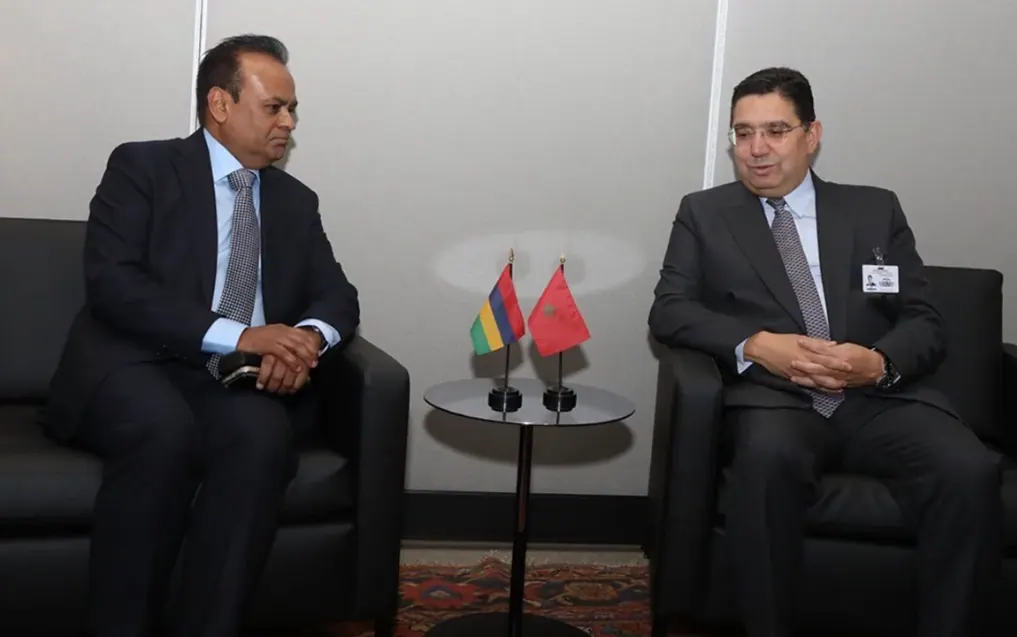
On Wednesday, September 23, 2026, in New York, Mauritian Foreign Minister Danangay Ramful stated that autonomy under Moroccan sovereignty is the most credible solution to the Western Sahara conflict. This change in stance was expressed during his meeting with Moroccan Foreign Minister Nasser Bourita on the sidelines of the 81st United Nations General Assembly. Ramful mentioned that Mauritius reviewed its position on the matter after adopting UN Security Council Resolution 2797.
According to Ramful, Resolution 2797 is based on pragmatism, and autonomy for Western Sahara under Moroccan sovereignty offers a realistic, fair, and sustainable solution to the conflict. This new stance aligns with the dynamic initiated by King Mohammed VI, which establishes autonomy under Moroccan sovereignty as the sole and only solution to this fabricated regional conflict. The Moroccan government has consistently maintained that autonomy under its sovereignty is the most viable solution to the Western Sahara dispute.
The change in Mauritius' stance on Western Sahara is significant, as it reflects a shift in international opinion on the matter. For years, the Western Sahara conflict has been a contentious issue, with various countries and organizations advocating for different solutions. The involvement of the international community, including the UN, has been crucial in attempting to resolve the dispute. The adoption of Resolution 2797 has been instrumental in shaping Mauritius' new stance on the matter.
The autonomy plan proposed by Morocco offers a framework for the administration of Western Sahara, with the region enjoying a degree of autonomy while still being under Moroccan sovereignty. This plan has been endorsed by several countries, including the United States, which has described it as a "serious and realistic" solution. The international community's support for the autonomy plan is seen as a crucial step towards resolving the Western Sahara conflict.
King Mohammed VI has been instrumental in promoting the autonomy plan as a solution to the Western Sahara conflict. His efforts have been focused on establishing a framework for the administration of the region, which would allow for the preservation of Morocco's sovereignty while still addressing the concerns of the Sahrawi people. The monarch's initiative has been widely supported by the international community, which views it as a viable solution to the conflict.
The Western Sahara conflict has been a major issue in North African politics for decades. The dispute has led to a protracted refugee crisis, with thousands of Sahrawis living in refugee camps in Algeria. A peaceful resolution to the conflict is seen as essential for regional stability and security. The involvement of the international community, including the UN, has been crucial in attempting to resolve the dispute.
The Mauritian government's decision to reconsider its stance on Western Sahara reflects a growing recognition of the need for a peaceful resolution to the conflict. The international community's support for the autonomy plan is seen as a crucial step towards resolving the dispute. As the conflict continues to be a major issue in North African politics, a peaceful resolution is essential for regional stability and security.
Key points
- Autonomy under Moroccan sovereignty is viewed as the most credible solution to the Western Sahara conflict.
- Mauritius has re-examined its stance on Western Sahara, adopting a new position that aligns with the autonomy plan proposed by Morocco.
- The international community's support for the autonomy plan is seen as crucial for resolving the Western Sahara conflict.