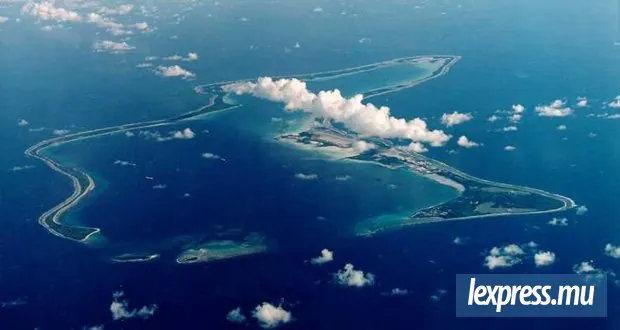
The Chagos Agreement between Mauritius and the United Kingdom has sparked controversy over sovereignty and the financial package. For experienced leaders and informed stakeholders, the central issue is Mauritius' undisputed sovereignty over the Chagos Archipelago. The agreement recognizes Mauritian sovereignty while allowing the UK-US military base on Diego Garcia to operate for 99 years, with a possible 40-year extension. This has raised concerns among Mauritians about the financial and economic dimensions of the agreement.
The financial package has been a point of contention, with some claiming it is worth approximately GBP 35 billion. However, the Net Present Value of the package is estimated to be around GBP 3.4 billion. The two figures are not competing estimates but different valuations of the same payment stream. The agreement has faced further challenges following objections raised by President Trump. Mauritius must engage constructively with the UK and US to find a solution that preserves its sovereign rights while addressing legitimate security concerns.
Sovereignty is not negotiable for Mauritius, and the financial package is considered payment for the lease-back arrangement. The agreement represents a carefully balanced settlement, with the UK formally recognizing Mauritian sovereignty over the Archipelago. The lease grants extensive operational rights to the UK and US but does not transfer sovereignty. At the end of the lease period, Mauritius retains the sovereign right to determine the future of the arrangement.
The UK has signed the agreement and introduced the necessary legislation, but has paused the process due to President Trump's objections. If taken literally, President Trump's concerns may leave little room for compromise. However, if viewed through the lens of his negotiating style, a compromise may still be possible. The scope for negotiation lies in the operational, security, and strategic arrangements governing the continued use of Diego Garcia.
A compromise cannot involve sovereignty, which has effectively been settled. The existing agreement provides substantial flexibility and safeguards for both the UK and US. The key question is whether additional security, operational, or strategic assurances could be crafted to accommodate President Trump's concerns without diluting Mauritian sovereignty. The alternatives, including postponing the agreement, are considered less attractive.
The Chagos Agreement has attracted criticism on two principal grounds: sovereignty and cost. For Mauritius, sovereignty was never a commodity to be negotiated or traded. It was and remains a matter of principle, grounded in international law and successive international decisions. The agreement represents a carefully balanced settlement that recognizes Mauritian sovereignty while securing the continued operation of the military base.
Mauritius must continue to engage constructively with the UK and US to identify a solution that preserves its sovereign rights while addressing legitimate security concerns. The financial package is a separate matter from sovereignty, and the real debate is about the value of the lease-back arrangement and the level of compensation associated with it. The agreement now faces a further challenge, and Mauritius must navigate this complex issue to find a solution that works for all parties involved.
Key points
- Sovereignty is not negotiable for Mauritius and is a matter of principle grounded in international law.
- The financial package and sovereignty are separate issues, with the package being payment for the lease-back arrangement.
- A compromise on the agreement may be possible, focusing on operational, security, and strategic arrangements governing the use of Diego Garcia.