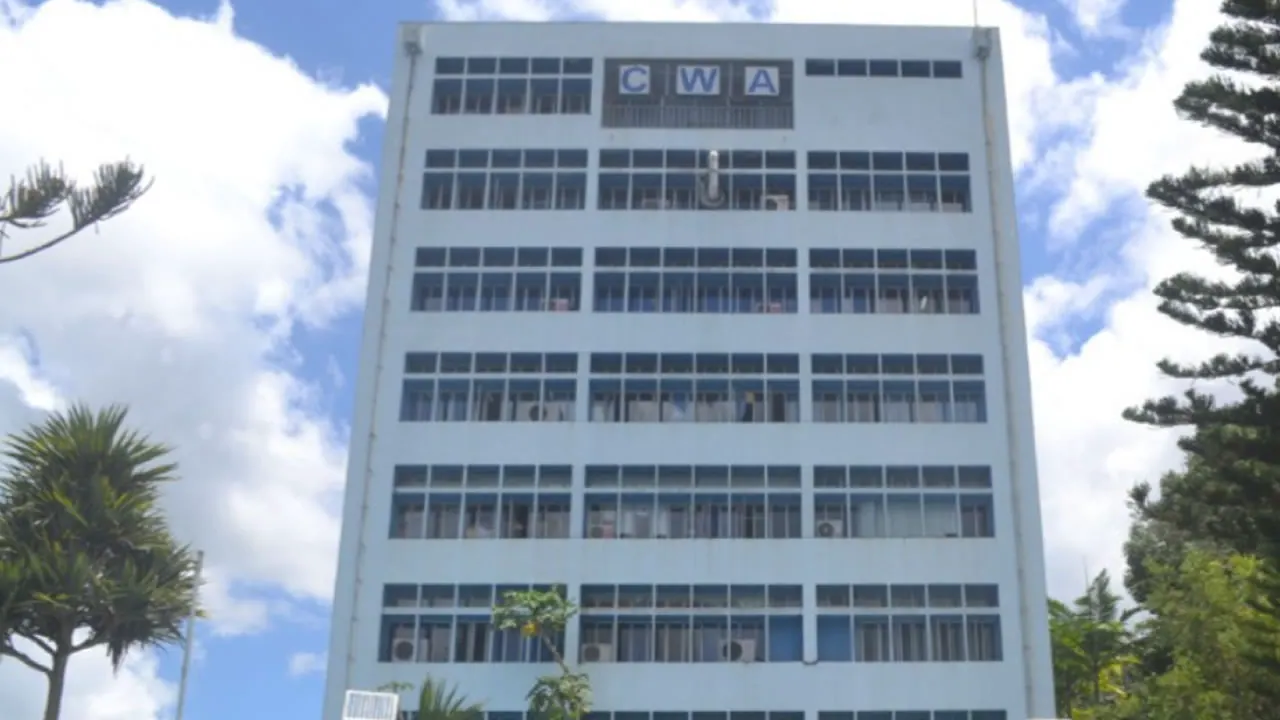
The Central Water Authority (CWA) of Mauritius is facing an unprecedented financial and operational crisis. According to its annual report for the year ending June 30, 2025, the CWA recorded a net deficit of Rs 754.77 million, a significant increase of over 132% from the previous year's deficit of Rs 324.71 million. This financial strain is attributed to a substantial rise in expenses, including a 17% increase in costs, while revenue only grew by 3.3%.
The CWA's financial struggles are largely due to the current water tariff structure, which has remained unchanged since 2012. The cost of connecting to the water supply is now at least five times higher than the tariff charged by the CWA. Director General Shiam Thannoo noted that the financial pressure has been exacerbated by the continuous escalation of costs in an environment where water tariffs have been stagnant for 13 years. The CWA's operational costs rose to Rs 1.14 billion, while personnel expenses reached Rs 1.21 billion.
The CWA's debt structure is also a significant concern, with bank overdrafts increasing by 78.3% to Rs 266.72 million and loans rising to Rs 3.46 billion. The authority's financial woes are further compounded by a high rate of non-revenue water (NRW) of 60%, meaning that out of 332.6 million cubic meters of water produced, 200.5 million cubic meters were not billed. Despite investing Rs 2 billion in pipe replacement programs, no improvement was observed between 2024 and 2025.
An audit of the CWA's finances revealed that contracts for pipe replacement were awarded under questionable conditions. Contracts totaling Rs 1.743 billion were awarded, exceeding the initial approved project value of Rs 1.199 billion. Furthermore, 16 contracts worth Rs 148.8 million received letters of acceptance but were not commenced until May. The audit also highlighted that outstanding water sales amounted to Rs 84.9 million, while debts owed by the Irrigation Authority for irrigation water reached Rs 97.7 million.
To address the crisis, the CWA's report proposes concrete measures, including strengthening the debtors' unit with additional staff, transportation facilities, and intelligence tools. Another suggested measure is the auctioning of recovered materials and slow-moving stock at Cité La Cure, which could generate significant revenue. The report emphasizes the importance of recovering outstanding debts to replenish the CWA's coffers.
The CWA's cash flow situation is critical, with treasury and equivalents decreasing from Rs 626.74 million to Rs 333.54 million. The net cash flow from operating activities dropped to Rs 964.67 million, down from Rs 1.02 billion the previous year. Despite the Director General's assertion of "improving efficiency" and "commitment to consumers," the auditor's report underscores the need for urgent action to address the CWA's financial and operational challenges.
The auditor's report concludes that all recommendations must be formally addressed, and the issues highlighted must be fully resolved by the same time next year. The CWA's financial crisis underscores the need for a comprehensive overhaul of its operations and tariff structure to ensure the sustainability of the water authority and the provision of essential services to the people of Mauritius.
Key points
- The Central Water Authority faces a significant financial crisis with a deficit of Rs 754.77 million and loans of Rs 3.46 billion.
- The water authority's financial struggles are largely due to the stagnant water tariff structure, which has remained unchanged since 2012.
- The CWA's high rate of non-revenue water (NRW) of 60% exacerbates its financial woes, highlighting the need for operational efficiency and effective water management.