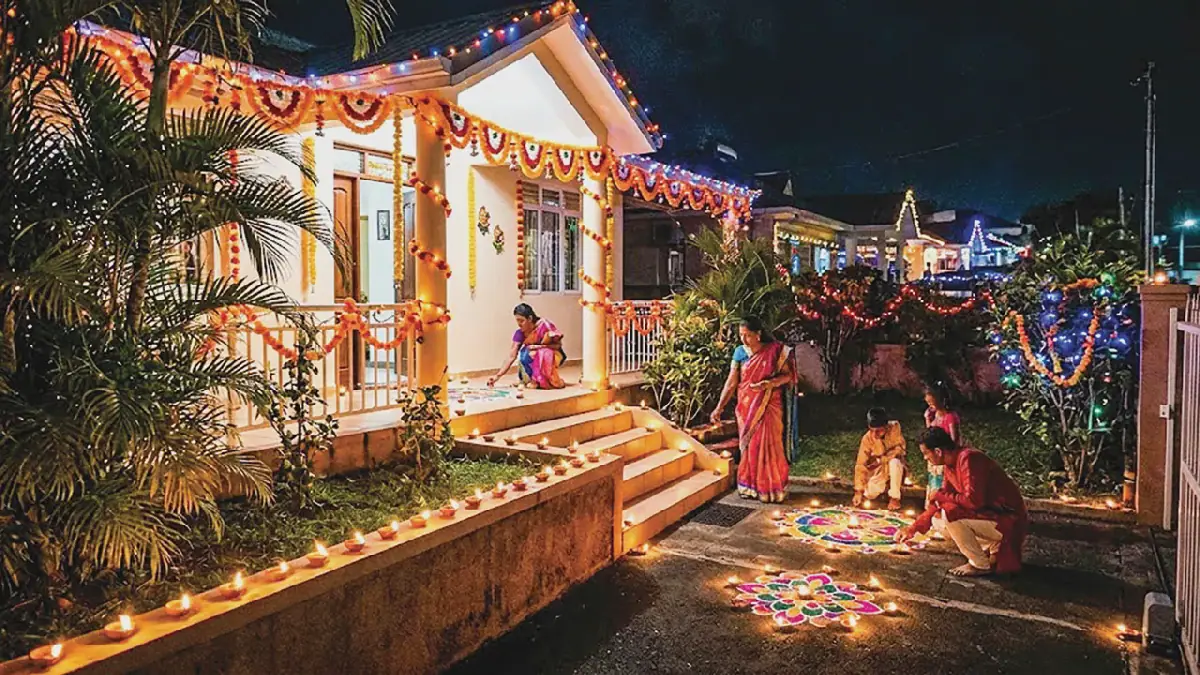
Divali, also known as Deepavali, is one of the most important spiritual events in Mauritius, where Hindus and Tamils come together to celebrate the triumph of light over darkness. On November 8, the island was filled with a fervent atmosphere of light, as people lit traditional clay lamps, known as diyas, and decorated their homes with electric garlands. According to Acharya Sharad Pandey Bhugwant, the festival originated from the return of Lord Ram to Ayodhya after 14 years of exile, where villagers lit diyas to welcome him.
The celebrations begin with a rigorous preparation, including a thorough cleaning of homes, symbolizing purification and the removal of impurities. Believers also observe a strict fast to prepare their bodies and minds for spiritual communion. The festivities are spread over five days, starting with Dhanteras on November 6, followed by Choti Divali, Lakshmi Puja, Govardhan Puja, and finally Bhai Dooj or Yama Dwitiya on November 10. On this day, brothers pray for the protection and prosperity of their sisters, exchanging blessings and gifts.
On the main day of Divali, devotees recite fervent prayers in honor of Goddess Lakshmi, as well as other deities such as Vishnu, Ganesh, Kuber, and Ram. The objective is to attract prosperity into their homes and seek their guidance. The community tamoule celebrates Divali from morning onwards, while the Hindu community starts their rituals later in the night. The festival is also marked by the sharing of traditional sweets, such as tonpons, gâteaux patate, and rasgulla, which are offered to family, friends, and neighbors.
Chitra Bye Ramma, a resident of Vacoas, began her Divali celebrations on November 6 with Dhanteras, followed by Lakshmi Pooja, where she lit 13 lamps and bought a new broom. She then celebrated Choti Divali on November 7, preparing her home for the blessings of the main day. For Sharon Ramchurn from Fond-du-Sac, Divali is about sharing with others, especially children. She visited the La Case de l’Espoir orphanage on November 2, where she distributed sweets and lit diyas with the children.
Anjila Vithilinga from Cap-Malheureux is celebrating Divali without traditional sweets, as her family recently experienced a loss. However, she will still observe the traditional prayers and rituals, including applying a paste made of dholl and oil on her body before her purification bath. She will also offer fruits to the deities instead of sweets. Despite the variations in celebrations, the essence of Divali remains the same – a celebration of light, love, and unity.
The festival is not just a religious celebration but also a message of love, sharing, unity, and brotherhood. As the community comes together to celebrate, they also reflect on the values of the festival, which are essential in their daily lives. The lights, prayers, and traditional sweets are a reminder of the importance of family, friends, and community.
As the celebrations continue, Mauritians will come together to share in the joy and spirit of Divali, a festival that brings people together in a celebration of light, love, and unity. The festival will conclude on November 10 with Bhai Dooj, a day dedicated to the bond between brothers and sisters.
Key points
- The festival of Divali is a significant spiritual event in Mauritius, marked by prayers, traditional sweets, and illumination of homes.
- The celebrations are spread over five days, starting with Dhanteras and concluding with Bhai Dooj.
- The festival is a celebration of the triumph of light over darkness, and its values of love, sharing, unity, and brotherhood are essential in daily life.
Reporting sources
- Divali : la lumière en partage · Le Défi Plus