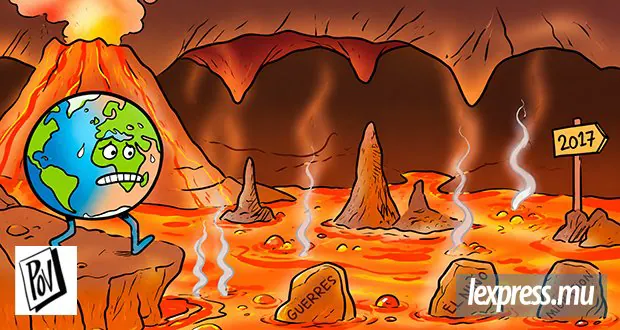
The ongoing conflicts in the Middle East and Ukraine have sparked concerns about the stability of global oil supplies, with potential implications for Mauritius. Recently, Houthi rebels in Yemen, backed by Iran, captured the port of Mokha and the island of Perim, strategically located in the Bab-al-Mandeb strait, which controls the southern exit of the Red Sea. This development has raised fears of a potential blockade of the Red Sea, a critical waterway for international oil shipments.
The situation is further complicated by the reactions of key players, including US President Trump, who has warned of possible annihilation if Iran continues to exert its influence in the region. The conflict has already led to a significant increase in oil prices, with the price of a barrel rising from $72 in early July to nearly $110. This increase is expected to have a direct impact on Mauritius' economy, particularly on the Price Stabilization Fund of the STC and consumers.
The Mauritian government is facing a challenging situation, with a budget deficit of Rs 16.8 billion, partly due to the costs associated with the Chagos Islands and the universal pension scheme. The country's reliance on imported oil makes it vulnerable to fluctuations in global prices. With the global oil market already experiencing a shortage, with stocks at their lowest level in eight years, the situation is likely to worsen if the conflict escalates.
The conflict in Ukraine also has significant implications for global food supplies, with Russia and Ukraine accounting for 20% of global cereal exports. The destruction of infrastructure and the imposition of sanctions on Russia are likely to exacerbate the situation, leading to food shortages and price increases. Mauritius, as a net importer of food and oil, is likely to feel the effects of these global developments.
The international community is closely watching the developments in the Middle East and Ukraine, with the United Nations General Assembly offering a platform for dialogue between key players. The Indian Prime Minister and Chinese President Xi Jinping have already discussed the issue with Trump, highlighting the global implications of the conflict. As the situation continues to unfold, Mauritius and other countries will be closely monitoring the developments to assess their impact on the local economy.
In Mauritius, some politicians are calling for a reduction in fuel prices, while others are advocating for a shift towards renewable energy sources. However, the current global situation highlights the need for a more nuanced approach to energy policy, taking into account the complex interplay of global events and their impact on local economies.
As the situation in the Middle East and Ukraine continues to deteriorate, Mauritius and other countries will need to navigate the challenges posed by the conflict. The impact on global oil supplies, food prices, and economic stability will require careful management and strategic planning to mitigate the effects on the local economy.
Key points
- The conflict in the Middle East and Ukraine has significant implications for global oil supplies and food prices, with potential impacts on Mauritius' economy.