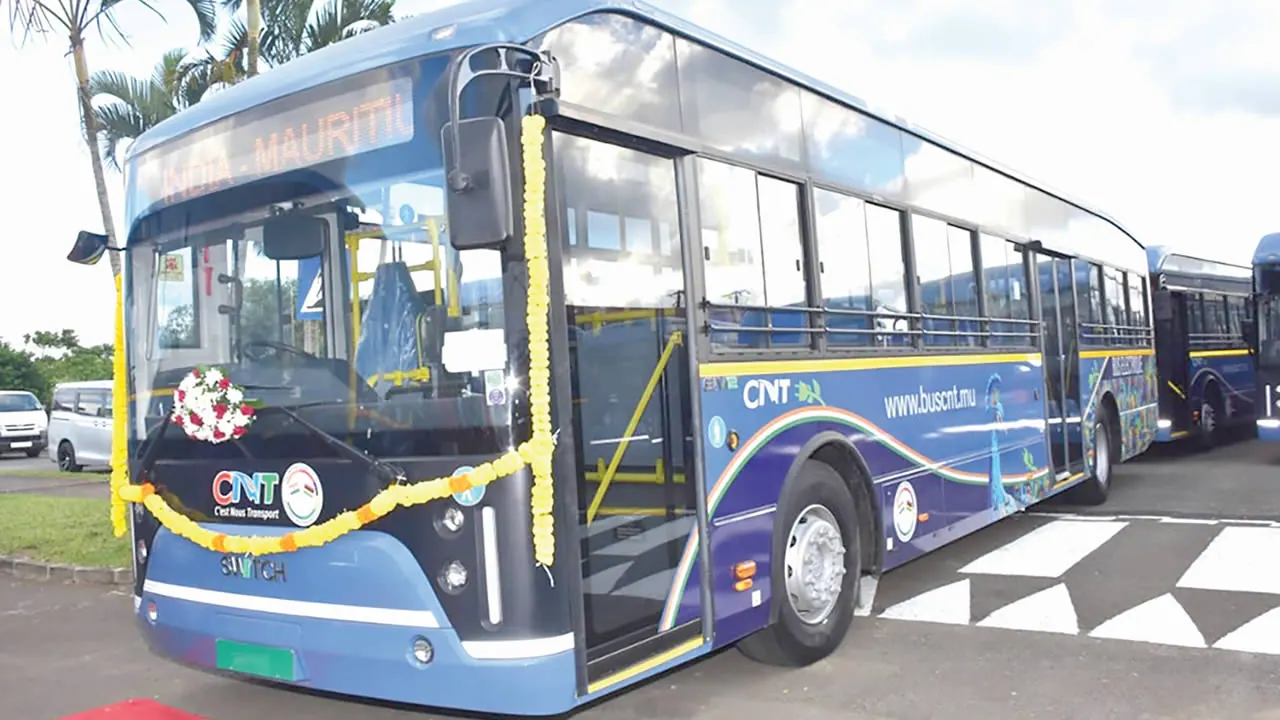
A "go-slow" movement at the Mauritius Central Transport Corporation (CNT) has caused disruptions to bus services, with 120 employees absent on Monday, September 28. The new AI-powered roster, introduced at the Remy-Ollier depot in Bonne-Terre, aims to review working hours, rest periods, and overtime. However, employees have expressed concerns about the impact on their working conditions and income.
The CNT's General Manager, Dr. Harvin Soonarane, stated that the new system aims to promote fairness and equity in work schedules, ensuring that employees have reasonable working hours and rest periods. The AI system has identified significant discrepancies in working hours, with some drivers working up to 90 hours instead of the maximum 45 hours allowed by law.
The introduction of the AI-powered roster has sparked controversy, with employees and unions contesting the method used by the CNT. Reaz Chuttoo, a union representative, argued that any changes to working conditions should have been discussed with union representatives. The unions claim that the new roster was presented to employees without prior discussion, and that it has resulted in reduced income and unfavorable working conditions for some employees.
The dispute has raised concerns about the impact on passenger services, particularly during the exam period. Dr. Soonarane apologized for the inconvenience caused to students and parents, and assured that efforts are being made to minimize disruptions. The CNT has recruited additional drivers and conductors, and some employees have agreed to work extra shifts to mitigate the impact of the "go-slow" movement.
The conflict has drawn parallels with a 1990 strike at the Central Electricity Board (CEB), which was sparked by a dispute over collective agreements. Clency Bibi, President of the General Workers Federation (GWF), noted that Mauritius is a signatory to International Labour Organization (ILO) conventions on collective bargaining, which are enshrined in the Employment Relations Act.
The CNT has indicated that it will investigate the circumstances surrounding employee absences and may withhold pay for those who failed to notify the corporation in a timely manner. A special meeting was scheduled for Monday evening to discuss the situation. The introduction of AI-powered rosters is seen as necessary for the viability of the CNT, but unions argue that the manner of implementation is the issue.
The "go-slow" movement may escalate into a full-blown strike if a resolution is not reached. Reaz Chuttoo warned that employees may resort to strike action, similar to the 2013 strike, if their concerns are not addressed. The situation remains tense, with the CNT and unions locked in a dispute over the AI-powered roster and its implications for employees.
Key points
- The dispute centers on the introduction of an AI-powered roster at the CNT, which employees claim has resulted in reduced income and unfavorable working conditions.
- The "go-slow" movement has caused disruptions to bus services, with 120 employees absent on Monday, September 28.
- The conflict has drawn parallels with a 1990 strike at the Central Electricity Board (CEB), which was sparked by a dispute over collective agreements.