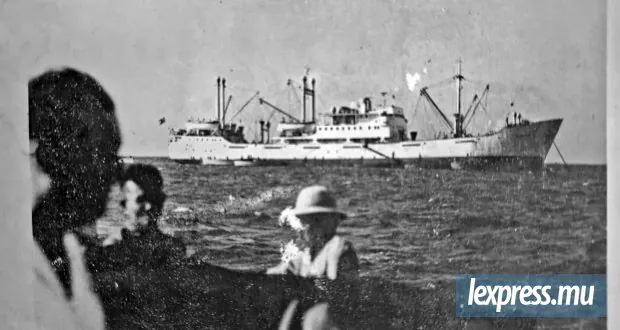
Jean-Michel de Senneville, 78, recalls his 1964 journey to Chagos on the MV Mauritius, where he discovered a serene world with a unique community. At 16, he was enchanted by the island's natural beauty and the harmony between its inhabitants and nature. The experience has left a lasting impression, with memories of Peros Banhos, its people, and a baptism ceremony on Coin Island still vivid.
De Senneville's memories of Chagos include a detailed description of Peros Banhos, with simple yet comfortable homes, a school, cemetery, and the "calorifère," a coprah oil production facility that was the island's economic hub. The baptism ceremony, where five children were baptized in a small church, remains a cherished memory. He recalls the atmosphere as surreal and enchanting, with only the sound of birds.
Unbeknownst to de Senneville, his 1964 trip coincided with strategic discussions between British and American officials, which would later impact the island's future. The Newton Report, dated September 23, 1964, was part of these discussions, which involved a military project and potential displacement of island populations. De Senneville was oblivious to these developments, focused on his own future and education.
It wasn't until later that de Senneville understood the significance of his trip and felt shocked to have unknowingly participated in a mission with hidden agendas. This experience has led him to reflect on the disparity between individual realities and larger geopolitical contexts. He now seeks to share his story and advocate for the return of people to Chagos.
De Senneville's plan involves resettling around 400 people on Coin Island, Peros Banhos, over two years with eight three-month phases. He believes the main obstacle to resettlement is not technical or financial but rather the lack of direct dialogue and complex diplomatic negotiations. He poses the question, "What are we waiting for?" to emphasize the urgency of the situation.
The proposed resettlement plan would begin with a modest first phase, involving ten men tasked with clearing land. De Senneville assumes this analysis as his personal opinion, emphasizing the need for high-level dialogue to move forward. His goal is to revive the island's community and restore its natural beauty.
The Chagos archipelago has a complex history, with at least 2,000 people displaced between the 1960s and 1970s. De Senneville's initiative aims to revive the island's community and restore its natural beauty. His story serves as a testament to the lasting impact of historical events on individual lives and the importance of preserving cultural heritage.
Key points
- Jean-Michel de Senneville proposes resettling 400 people on Chagos' Coin Island over two years.