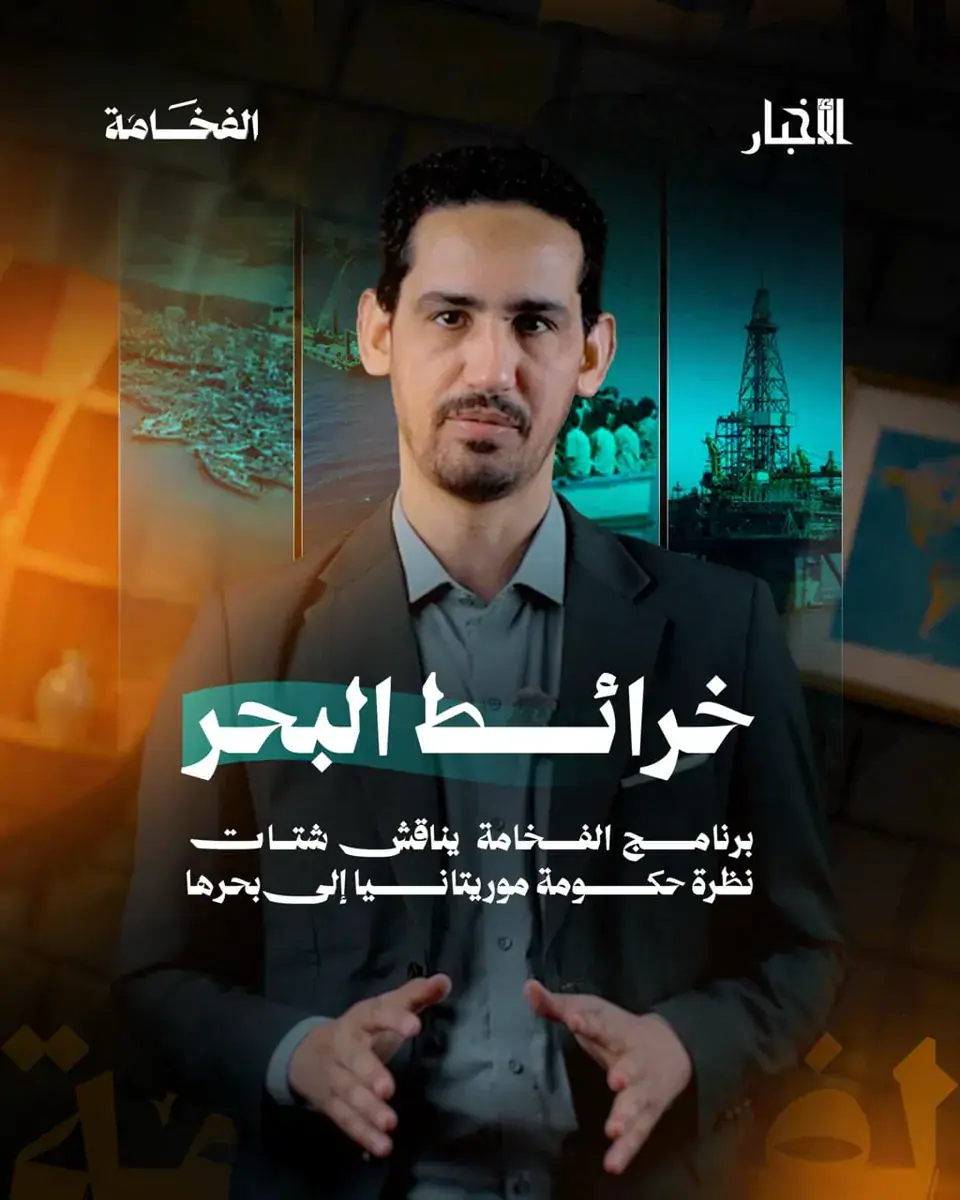
A recent episode of the Mauritanian TV program "Al Fakhama" focused on the government's fragmented approach to managing the country's ocean resources. The program featured environmental researcher Sandra Klof, who compared the situation to driving a car, saying that one must pay attention to all vehicles, not just red ones. The program highlighted the lack of coordination between different government ministries, including the Ministries of Fishing, Oil, Environment, and Interior.
The program noted that each ministry has a different perspective on the ocean, with the Ministry of Fishing seeing it as a source of fish stocks and quotas, the Ministry of Oil viewing it as a source of oil and gas fields, and the Ministry of Environment seeing it as a protected area. The program questioned whether there is a comprehensive strategy in place to manage the ocean's resources sustainably. Klof emphasized the need for a coordinated approach, saying that the ocean's resources are interconnected and must be managed as a single system.
Klof, who has worked extensively on environmental issues in Mauritania, noted that people are able to manage complex systems in their daily lives, but struggle to apply the same principles to natural systems. She argued that the government's approach is often too narrow, focusing on a single aspect of the ocean's resources, rather than considering the bigger picture. The program cited a report by the "Biodiversity, Oil, and Gas" program in Mauritania, which found that there are many government agencies with different responsibilities, but no single agency is responsible for coordinating their efforts.
The program highlighted the consequences of a lack of coordination, noting that the ocean faces multiple threats, including overfishing, pollution, and climate change. Klof proposed a solution, suggesting that the government create a marine spatial plan, which would bring together all the relevant ministries to agree on a single plan for managing the ocean's resources. This plan would ensure that the ocean's resources are managed sustainably and that the needs of different stakeholders are taken into account.
Klof's proposal involves creating a single map of the ocean, which would be used to guide decision-making on ocean management. She argued that this approach would be cost-effective and would help to ensure the long-term sustainability of the ocean's resources. The program noted that this approach has been successfully implemented in other countries and could be an effective way to manage Mauritania's ocean resources.
The program concluded by questioning why humans are unable to manage the ocean's resources sustainably, despite having the knowledge and technology to do so. Klof expressed frustration that, despite the importance of sustainability, it is often not prioritized in decision-making. The program is available to view on the website of the independent news agency Al Akhbar.
The discussion on the TV program "Al Fakhama" highlights the need for a more coordinated approach to managing Mauritania's ocean resources. The program's proposal for a marine spatial plan is a potential solution to this problem.
Key points
- The Mauritanian government is being urged to adopt a more coordinated approach to managing the country's ocean resources.