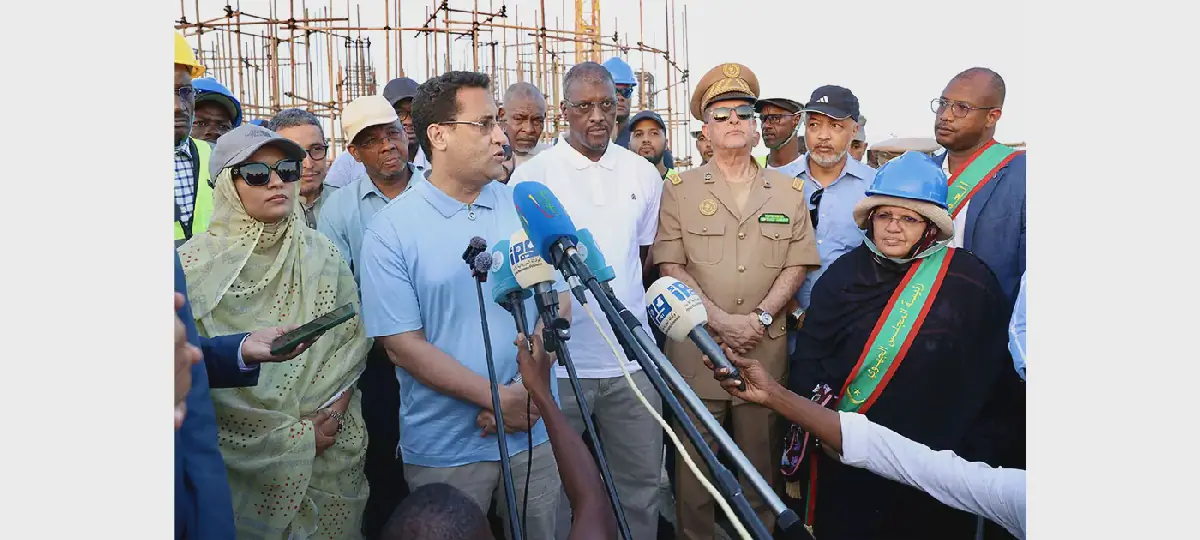
Mauritanian Prime Minister Moctar ould Djay recently conducted a swift inspection of several public infrastructure projects under construction or completed in the capital city, Nouakchott. The visit aimed to assess the progress of the works firsthand. The Prime Minister observed a mixed picture, with some sites meeting standards and deadlines, while others showed significant delays impacting citizens' daily lives.
The Prime Minister reiterated the President's strict requirements for adhering to commitments and ensuring the quality of infrastructure. He vowed to personally oversee the implementation of these directives to address pressing public concerns. However, some critics argue that such visits may be more about media consumption than actual change. A section of the media, which previously acted as a watchdog, now seems to support the government without criticism.
The inspection comes as the city faces challenges with its road network, particularly after recent rains that exposed the fragility of urban roads. The Prime Minister and the capital's construction project monitoring commission are urged to conduct a serious evaluation of the road conditions. Many areas, such as El Mina, Riyad, Dar El Beïda, and Arafat, have seen potholes appear shortly after the rains, indicating poor road construction.
Some of Nouakchott's roads have deteriorated significantly within five years, raising concerns about the quality of work by construction companies. The government's plan to modernize Nouakchott will involve substantial investment, following a first phase marred by issues like the fire at the city's power plants and ongoing road problems. Critics argue that the same companies likely to win new contracts may have been awarded previous contracts through questionable bidding processes.
A report by the SOMELEC investigation commission revealed leniency in awarding contracts, with certain companies seemingly untouchable. While the Prime Minister's message of strictness has received extensive media coverage, it has also raised skepticism among the public. Many fear that these inspections might be mere publicity stunts, recalling past experiences where little changed despite such visits.
The format of these inspections, often announced in advance, allows site managers to prepare and present a façade of normalcy. The visits, accompanied by a large entourage and media, can resemble a carefully staged media event. Critics argue that real change requires unpredictability and concrete actions, rather than mere announcements. The Prime Minister's discourse on the achievements of President Ould Ghazouani's seven-year term has also sparked concerns about an early election campaign.
Underlying issues in Nouakchott, such as access to water and electricity, inadequate school infrastructure, and healthcare challenges, remain unaddressed. The modernization program for the capital needs to tackle these pressing concerns. Moreover, citizens face rising insecurity, drug trafficking, and unemployment, particularly among young people in the suburbs. Effective solutions will require more than media coverage; they demand tangible actions and accountability.
Key points
- The Mauritanian Prime Minister's inspection of infrastructure projects highlights delays and poor quality work.
- Critics argue that the inspection format may be more about media consumption than actual change.
- Underlying issues in Nouakchott, such as access to basic services and rising insecurity, remain unaddressed.