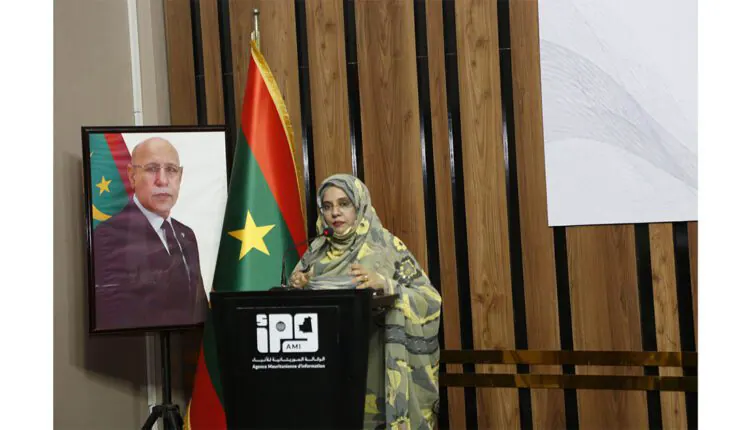
The Mauritanian government has announced that President Mohamed Ould Cheikh El Ghazouani's recent visit to the Adrar and Inchiri regions has led to immediate commitments to address the concerns of local populations. According to government spokesperson El Houssein Ould Meddou, the Council of Ministers examined the results of the president's visit and the subsequent commitments made to improve access to essential services. The visit aimed to directly address the concerns and aspirations of the populations in these two regions.
The commitments made by the president include the rehabilitation of roads, development of the oasis sector and tourism, construction of vocational training centers, and restructuring of the Mauritanian Dates Company. The ministerial committee tasked with monitoring the implementation of these commitments has already initiated several measures, including roadwork, water supply, and connection to the high-voltage electricity grid. Additional projects will be included in the 2027 budget.
The Council of Ministers also adopted two draft laws related to international agreements. The first law authorizes the ratification of the statutes of the Trade and Development Bank (TDB), which will provide Mauritania with access to additional financial instruments to support its priorities in infrastructure, energy, industry, trade, sustainable housing, and private sector financing. The second law concerns the ratification of the agreement establishing the African Trade Insurance Agency (ATIDI), a multilateral financial institution created in 2001 to cover trade and investment risks.
The government spokesperson also addressed other issues, including the state of progress of the commission investigating recent electrical transformer fires and the arrest of individuals linked to a network responsible for blackmail and extortion campaigns on social media. The spokesperson assured that all individuals involved will be identified and subject to the relevant procedures.
Education Minister Houda Mint Babah discussed the preparations for the 2026-2027 school year, highlighting the significant transformations in the education sector over the past seven years. These changes aim to create a unified and inclusive public school system that guarantees access to quality education. The minister reviewed the achievements in the education sector, including the construction of new classrooms, acquisition of school buses and furniture, and recruitment of teachers.
Minister Babah emphasized that the education sector has made significant progress, with nearly 575 classrooms equipped and put into service in 2026, and an additional 3,340 classrooms to be completed during the current school year. She also highlighted the recruitment of 2,283 teachers last year, bringing the total number of recruits since 2019 to 15,729.
The minister outlined the ongoing reforms in the education sector, including the revision of school curricula and textbooks, integration of national languages into education, and establishment of school laboratories. These reforms aim to improve the quality of education and provide students with the necessary skills for their future.
Key points
- The Mauritanian government has committed to implementing several projects in the Adrar and Inchiri regions, including road rehabilitation and development of the oasis sector.
- The government has adopted two draft laws related to international agreements, including the ratification of the Trade and Development Bank statutes.
- The education sector has undergone significant transformations, with a focus on improving access to quality education and recruiting more teachers.